
Mammoth Tusk vs Elephant Ivory: How to Tell the Difference
The fastest way to tell a mammoth tusk from elephant ivory is the Schreger line test: the cross-hatch pattern in a cut surface meets at acute angles below about 90 degrees in mammoth ivory and wider angles above about 115 degrees in elephant ivory. Color, cracking, and patina back this up. The difference matters, because mammoth ivory is legal in most places while elephant ivory is banned. This guide shows you how to tell them apart with confidence.
Products by Category
-
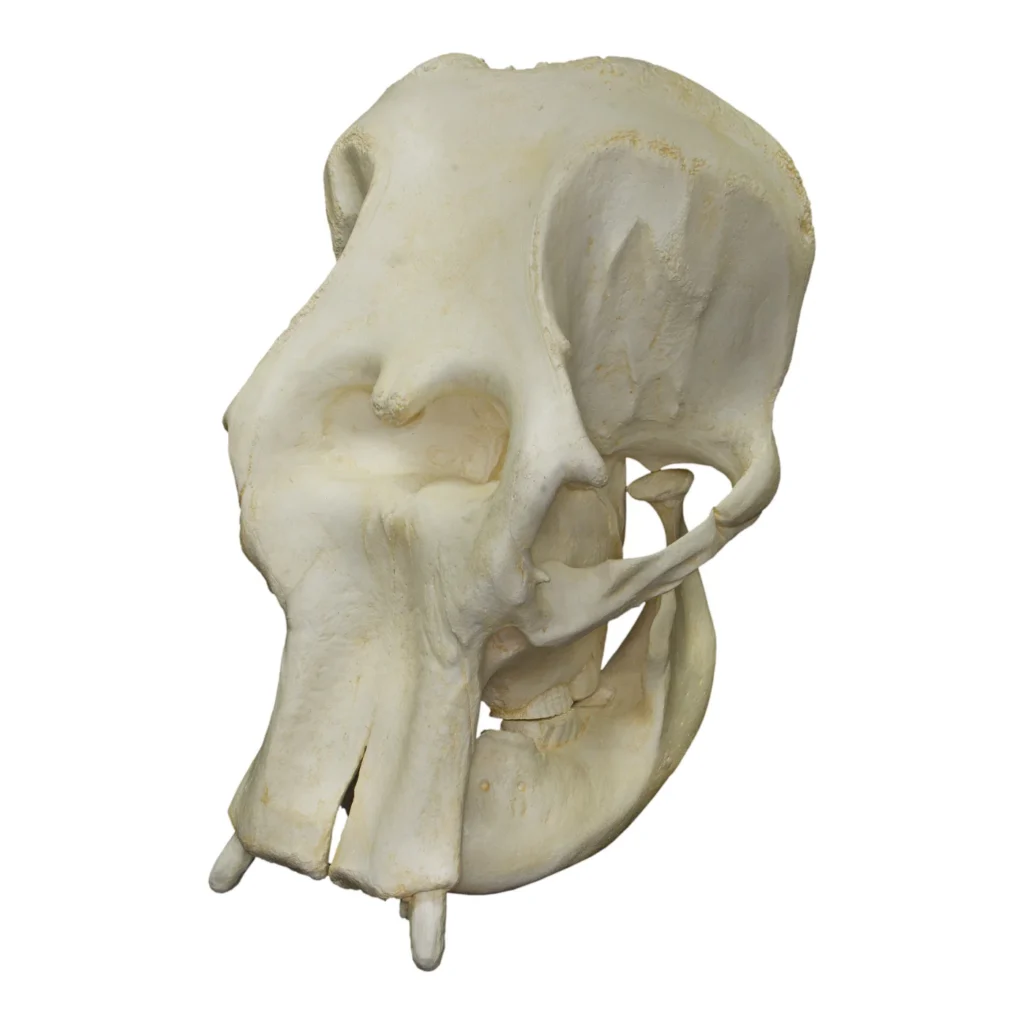
Asian Elephant Female Skull
-
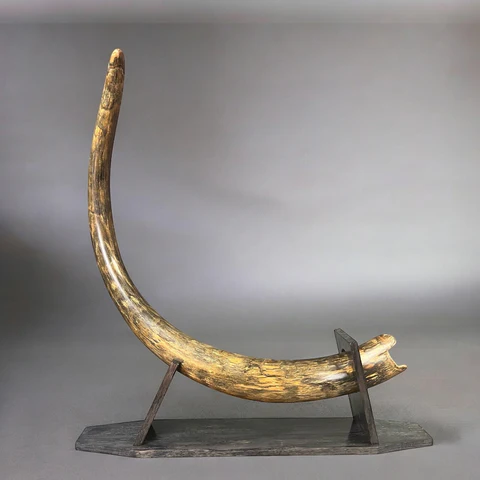
Fossilized Woolly Mammoth Tusk (Mammuthus primigenius, 64″)
-
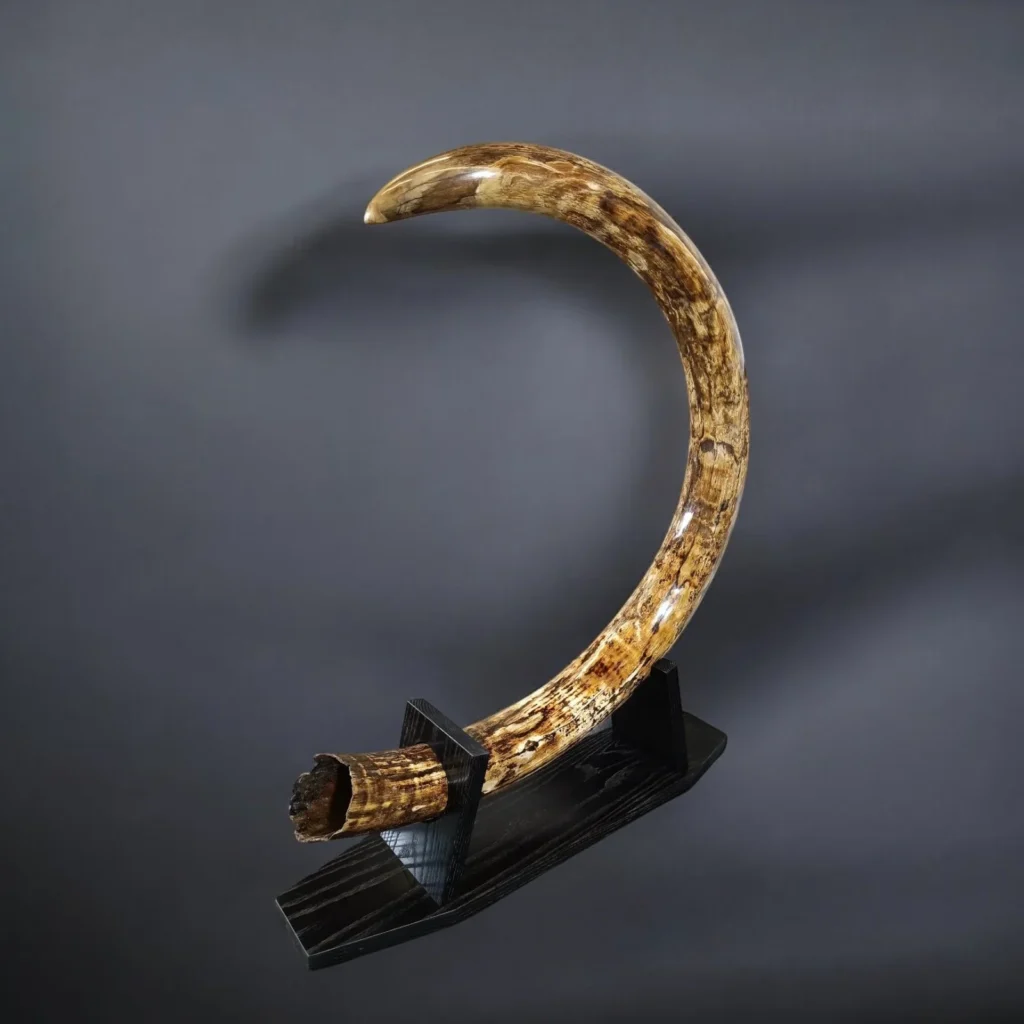
Large Woolly Mammoth Tusk (Mammuthus primigenius, 9′ / 100 lbs)
-
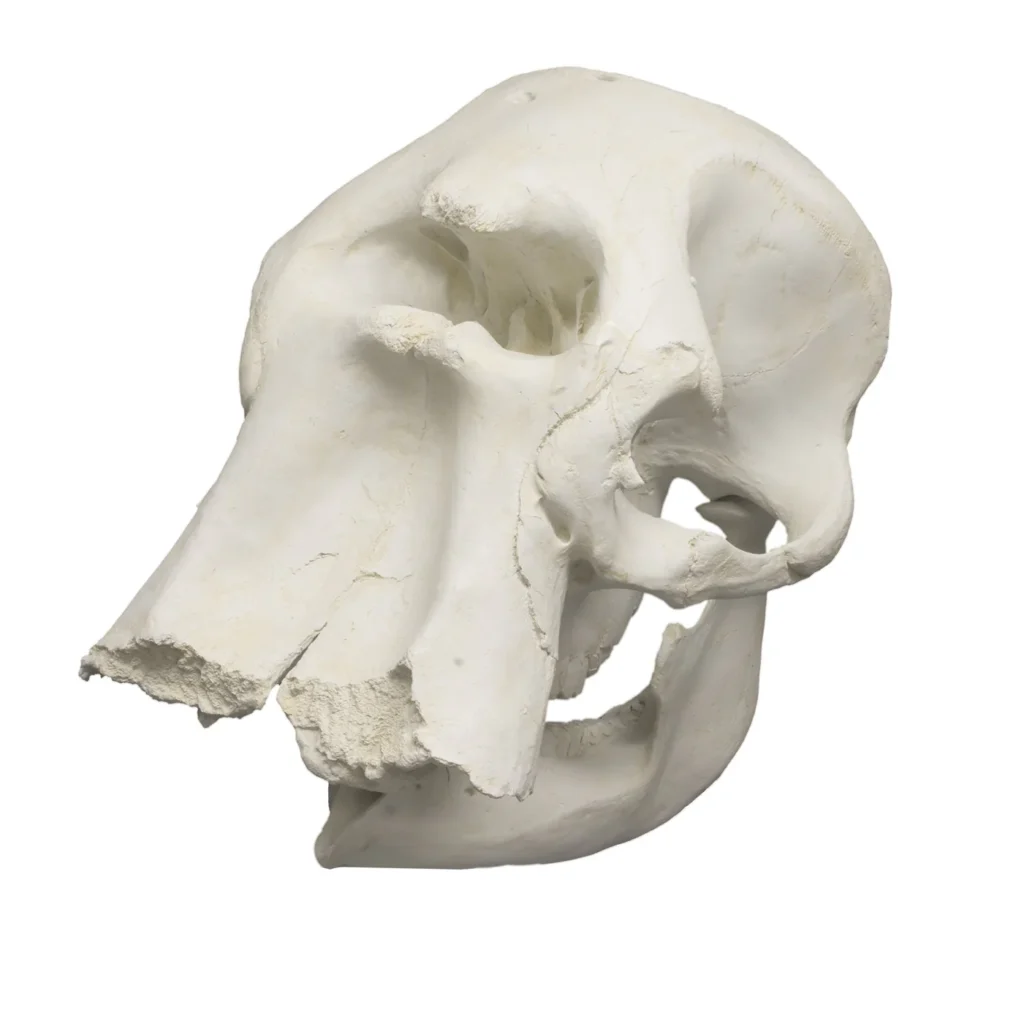
Replica African Elephant Skull
-
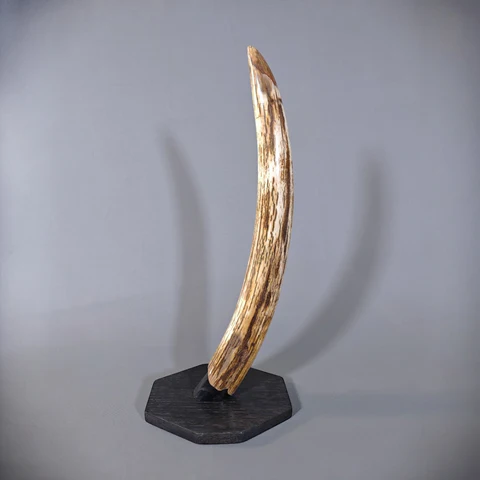
Woolly Mammoth Ivory Tusk (Mammuthus primigenius, 23.5″)
-
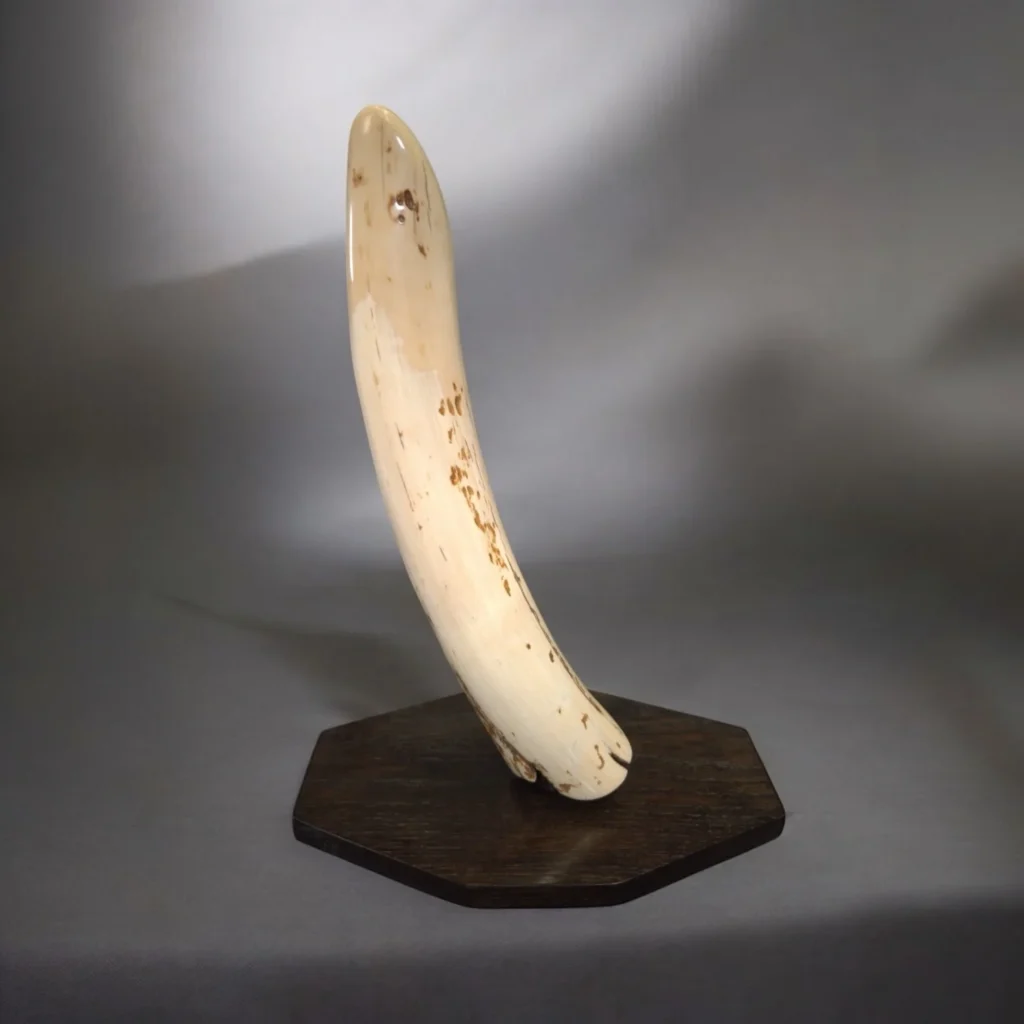
Woolly Mammoth Tusk (Mammuthus primigenius, 18″)
-
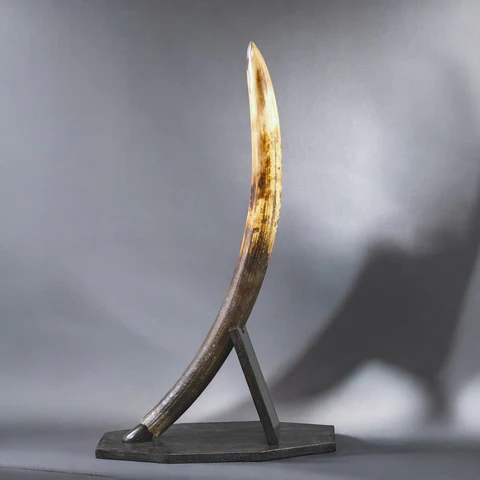
Woolly Mammoth Tusk (Mammuthus primigenius, 32.5″)
-
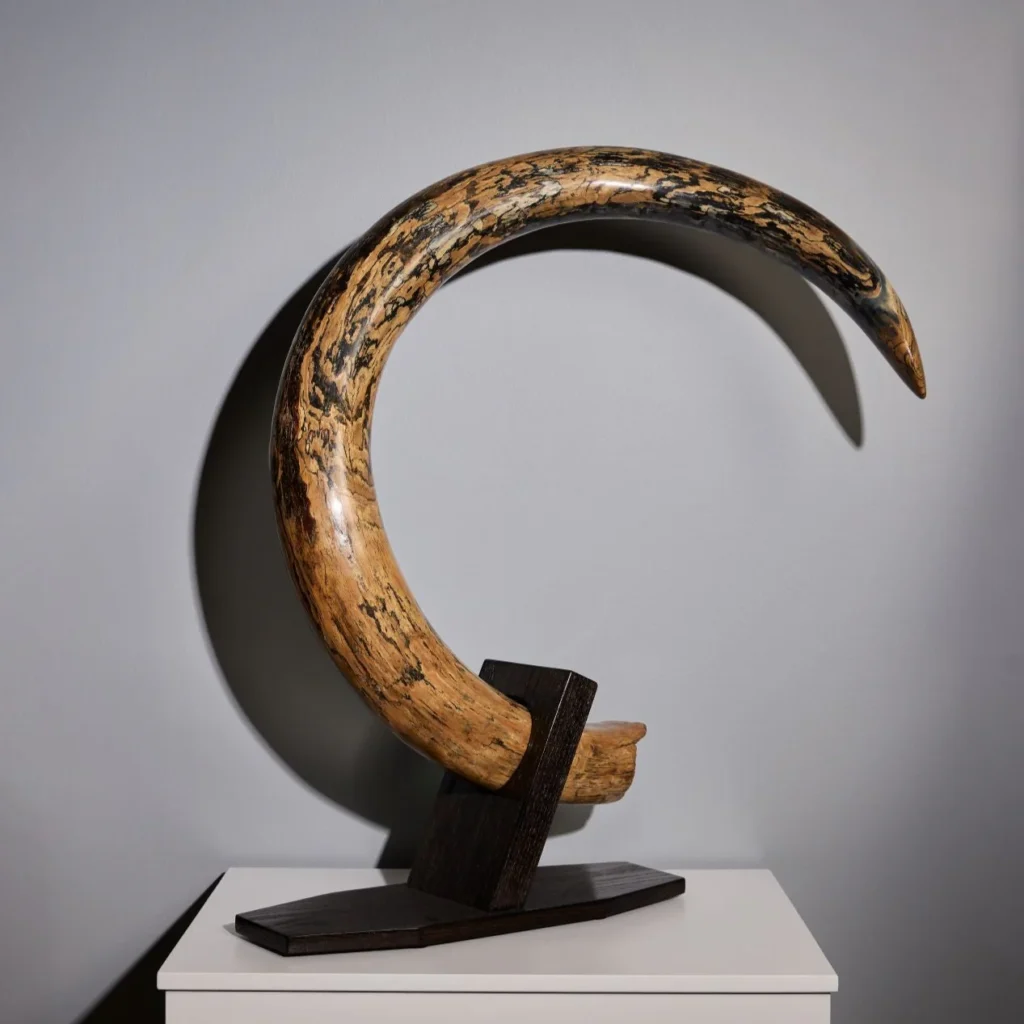
Woolly Mammoth Tusk (Mammuthus primigenius, 69″)
-
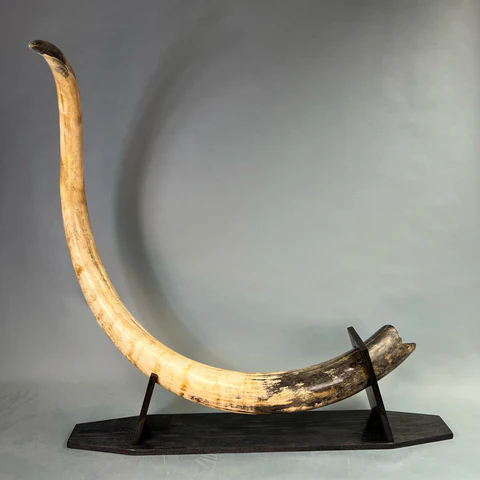
Woolly Mammoth Tusk (Mammuthus primigenius, 7′ 6″)
Why the difference matters
Mammoth ivory and elephant ivory look almost identical to the untrained eye, yet the law treats them as opposites. Mammoth comes from an extinct animal and is legal in most of the world. The elephant comes from a living, endangered species and is banned almost everywhere.
That gap creates a real risk. Smugglers try to pass elephant ivory off as mammoth to dodge the ban. So knowing the difference protects you from buying illegal material by mistake and from paying mammoth prices for the wrong thing. It is the single most important skill for an ivory buyer.
Whole tusks are easy; cut pieces are hard.
Before the tests, one practical point: a whole tusk is easy to identify, while a small cut or carved piece is where the real difficulty begins. Knowing which situation you are in tells you how careful to be.
A complete mammoth tusk is unmistakable. It is huge and dramatically curved, often spiraling, with a brown, weathered outer peel and fossil color throughout. A complete elephant tusk is straighter, paler, and smoother. At this scale, you rarely need a test at all. The problem comes with jewelry, carvings, beads, knife handles, and offcuts, where the telltale shape is gone and only the internal structure remains to identify. This is exactly where the Schreger test and the other checks below earn their keep, and it is why cut pieces demand more caution and better documentation. If you are buying a whole genuine mammoth tusk, identification is usually straightforward; if you are buying a small worked piece, insist on provenance.
The Schreger line test
The Schreger lines are the definitive test, and it is the same one customs labs use. When you cut across any proboscidean tusk, a fine cross-hatch pattern appears, sometimes called engine turning. Where these lines cross, they form angles, and the angles differ by species.
- Mammoth ivory: the outer Schreger angles are acute, below about 90 degrees.
- Elephant ivory: the outer Schreger angles are obtuse, above about 115 degrees.
This test is decisive because it reflects the internal structure of the ivory, which cannot be faked. If you can see a clean cross-section, look at the angles. “Acute” means mammoth. “Wide” means elephant.
Color and patina
Patina is the next clue. A genuine mammoth tusk is a fossil, so it has spent tens of thousands of years in the ground. That gives it color: warm gold and tan, deep brown, or rare blue and black from mineral staining.
Elephant ivory is not fossilized. It is pale, creamy, and even in color, without the earthy tones of long burial. If a piece shows rich fossil color and staining, it points to mammoth. If it looks fresh and white, be cautious.
Cracking and weathering
Age leaves marks. Mammoth ivory usually shows fine surface cracking along its length, called checking, caused by thousands of years of freezing and thawing in permafrost. It may also show weathered, textured outer surfaces.
Elephant ivory, being recent, has smoother, cleaner surfaces with far less checking. Heavy natural cracking and a weathered skin suggest a fossil mammoth tusk rather than modern elephant ivory.
Weight, feel, and other ivories
Real fossil ivory is dense and cool to the touch. Resin and plastic fakes feel light and warm, and they show no Schreger pattern at all. If a supposed tusk feels like plastic, it is plastic.
Bear in mind that other animals produce ivory too, including walruses, hippos, and narwhals. These have their own internal patterns and are covered by their own laws. If a piece does not match either mammoth or elephant, it may be one of these, and you should ask the seller to identify it precisely.
A short history: why the trade turned to mammoth ivory
The mammoth ivory trade grew directly out of the effort to protect elephants. When international rules began restricting elephant ivory in the 1970s, and especially after the near-total ban of 1990, the industries that relied on ivory needed a legal alternative. Mammoth ivory filled the gap.
From around 1980, carvers, instrument makers, and craftspeople increasingly turned to fossil mammoth ivory. It looks similar, works similarly, and comes from an animal that cannot be poached. Thawing permafrost in Siberia and Alaska supplied the raw material. This history is why the two ivories are so often confused today and why clear identification matters so much.
Other ivories you might encounter
Mammoth and elephant are not the only sources of ivory, and a careful buyer should know the others. Each has its own structure and its own legal status.
- Walrus. Walrus ivory has a distinctive marbled core and is regulated in many places.
- Hippopotamus. Hippo ivory is dense and hard, and it is now covered by several ivory bans.
- Narwhal and sperm whale. These marine ivories are protected under CITES and recent extensions of ivory law.
- Mastodon. A close relative of the mammoth, mastodon ivory is also fossil ivory and is often treated the same way in law.
Products by Category
-
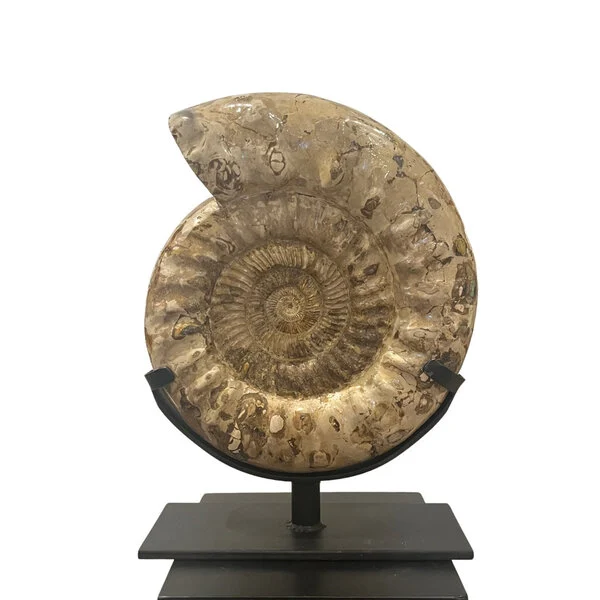
Ammonite XL on Stand (Ammonoidea, Polished Fossil)
-
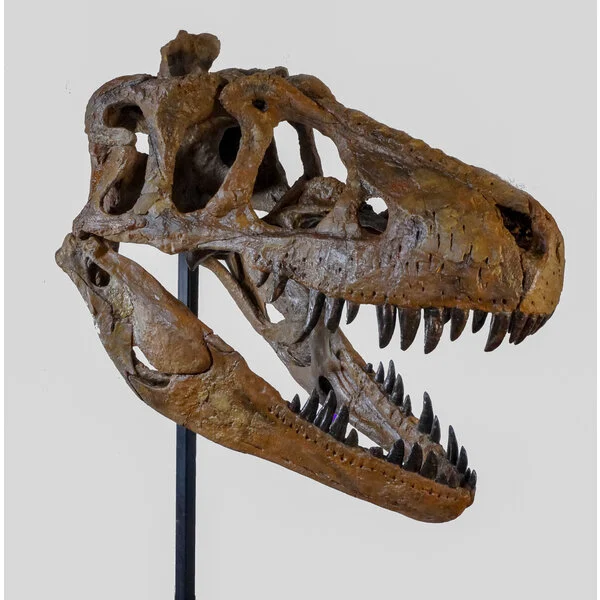
Daspletosaurus Skull (Daspletosaurus torosus, Museum Replica)
-
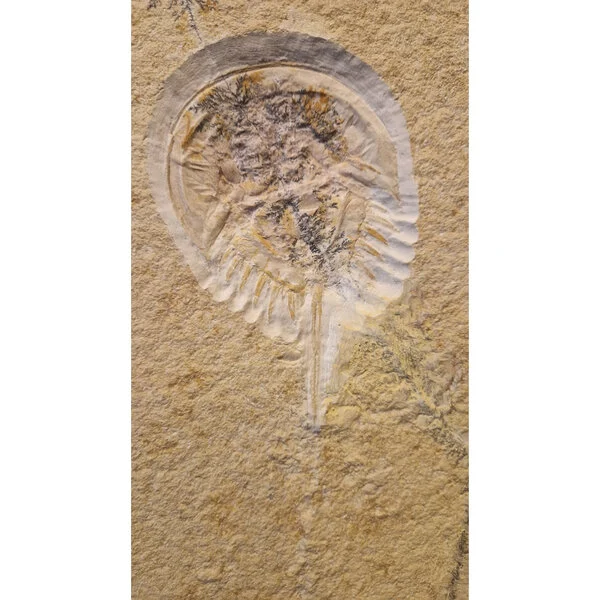
Fossil Sword Crab on Stand (Horseshoe Crab Fossil)
-
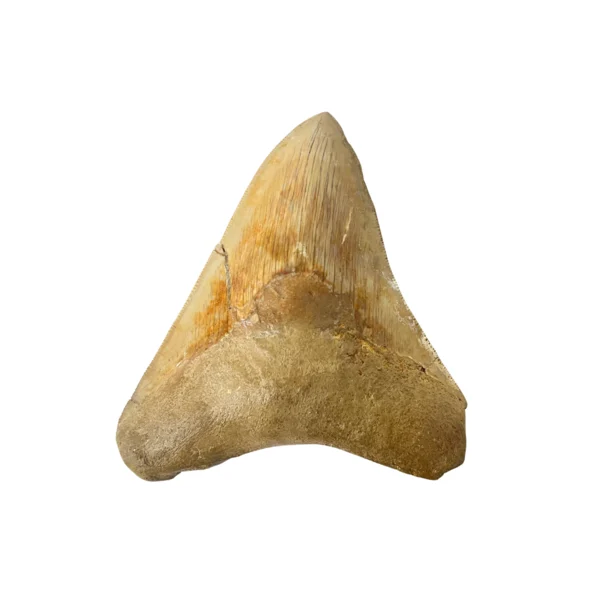
Large Megalodon Tooth (Otodus megalodon, Fossil)
-
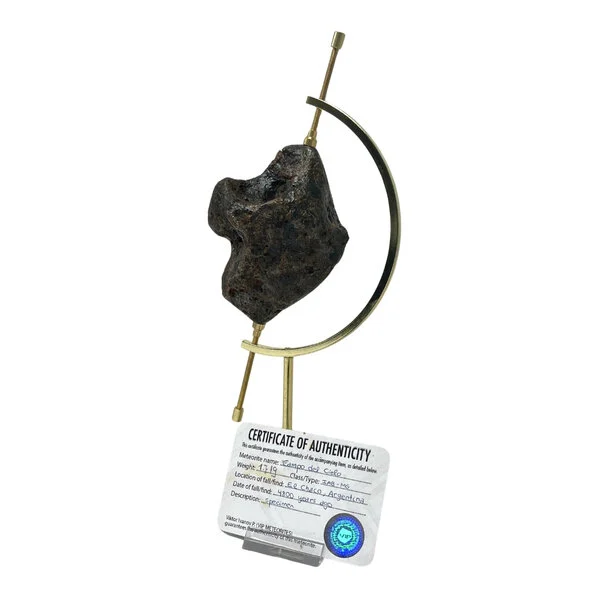
Meteorite XL (Iron/Stony Meteorite Specimen)
-
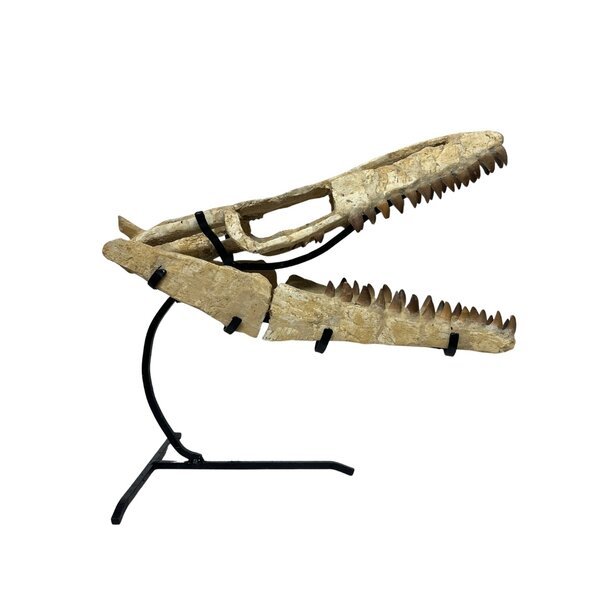
Mosasaurus Skull Reconstruction (Mosasaurus sp. Replica)
If a piece does not match a mammoth or elephant, ask the seller to identify the exact material and confirm its legal status before you buy.
Common mistakes when identifying ivory
Even careful buyers slip up. Avoid these four mistakes, and your identification will hold.
- Judging by color alone. Fossil color is a strong hint, but some mammoth tusks are pale, and some materials are stained to mislead. Confirm with the Schreger angles where you can.
- Trusting a certificate blindly. A printed certificate is only as good as the seller behind it. Pair documentation with the physical signs above.
- Ignoring the cross-section. The Schreger test is the most reliable check, yet buyers often skip it because they do not want to look closely. A naturally exposed end or a small polished area is enough.
- Assuming all old ivory is mammoth. Walrus, hippo, and other ivories turn up too, each with its own law. If a piece does not match a mammoth or elephant, ask exactly what it is.
Quick comparison table
| Feature | Mammoth ivory | Elephant ivory |
|---|---|---|
| Source | Extinct animal (fossil) | Living, endangered animal |
| Schreger angles | Acute, under about 90 degrees | Obtuse, over about 115 degrees |
| Color | Gold, brown, blue, and black patina | Pale, creamy, even |
| Cracking | Fine checking, weathered | Smoother, less checking |
| Legality | Legal in most places | Banned almost everywhere |
| Feel | Dense, cool | Dense, cool |
How experts confirm it
For high-value pieces, experts go beyond the eye. Forensic labs measure Schreger angles precisely from a polished cross-section. In some cases they use imaging or chemical analysis to confirm the material and, where possible, its age.
For a buyer, you rarely need lab work. A clear cross-section, honest fossil patina, natural checking, and a seller who documents the fossil mammoth origin are enough to buy with confidence. When in doubt on an expensive piece, ask for expert verification.
The new science: how labs tell them apart in 2026
Identification has advanced fast, and recent forensic methods can now separate mammoth from elephant ivory even in polished or carved pieces where the shape gives nothing away. These techniques matter because they close the loophole smugglers rely on.
The most promising recent advance is stable isotope analysis. Because mammoths lived in the cold tundra and modern elephants live in the tropics, the two drank water with different isotopic signatures, and those signatures are locked into the ivory. A 2025 study showed this can distinguish legal mammoth ivory from illegal elephant ivory even when other clues are missing. Researchers have also developed Raman spectroscopy methods, which read the molecular fingerprint of the material without damaging it, fast enough for customs officials to use on the spot. For heavily worked pieces where even the Schreger angles are ambiguous, laboratories can also use DNA analysis and radiocarbon dating, though these are slower and more expensive. You will not need any of this to buy a documented whole tusk, but it is reassuring to know the science now firmly backs the legal distinction. For a buyer, the practical takeaway is simple: buy from a seller who documents the fossil mammoth origin, and the identification is settled long before any lab is needed.
The honest problem: ivory laundering
There is an uncomfortable truth every ethical ivory buyer should understand: the legal mammoth trade can be misused to launder illegal elephant ivory. Knowing this is part of buying responsibly.
Because the two materials look so similar in cut form, smugglers sometimes mix elephant ivory into shipments labelled as mammoth or carve elephant ivory and sell it as mammoth to dodge the ban. Conservationists warn that demand for ivory of any kind can indirectly sustain the market that drives elephant poaching, which still kills tens of thousands of elephants a year. This is not a reason to avoid genuine, documented mammoth ivory, which harms no living animal and comes from a creature extinct for thousands of years. It is a reason to buy only from sellers who source transparently and document every piece, so your purchase supports the legal fossil trade and never the illegal one. This is exactly why we document provenance on every tusk we sell. Our guide on whether mammoth ivory is legal covers the regulations in full, and our mammoth tusk value guide explains what genuine documented ivory is worth.
Why this protects you legally
Getting the identification right keeps you legal. Because elephant ivory is banned in most countries, buying it, even by accident, can mean seizure and penalties. Mammoth ivory is legal in most places, but only if it really is mammoth. Documentation and the tests above are how you prove that. For the full legal picture, read our guide on whether mammoth ivory is legal.
Why collectors choose mammoth ivory
Beyond legality, there are good reasons collectors and artists actively prefer mammoth ivory, and they are worth knowing when you weigh a purchase. Mammoth ivory is not just a legal substitute; it has qualities of its own.
The first is conscience: a genuine mammoth tusk comes from an animal that died tens of thousands of years ago, so owning one harms no living creature, unlike elephant ivory, which carries the weight of a poaching crisis. The second is character: fossil mammoth ivory offers colors no fresh ivory can, from warm golds and deep browns to the prized blue and black of mineral staining, each tusk unique. The third is story: a mammoth tusk is a genuine piece of the Ice Age, a relic of a lost world, which gives it a resonance a modern material cannot match. For collectors, that combination of legality, beauty, and deep history is exactly the appeal. The rare blue specimens are especially sought after, and our guide to the blue patina mammoth tusk explains how that color forms and why it commands a premium.
A buyer’s checklist: buying mammoth ivory with confidence
When you are ready to buy, a short checklist keeps you safe and ensures you get genuine, legal fossil ivory. Run through these points before any purchase.
- Confirm it is mammoth, not elephant. Use the Schreger angles on any visible cross-section (acute means mammoth), and look for fossil colour and natural checking.
- Ask for provenance. A reputable seller documents the fossil origin, usually Siberia or Alaska, and states plainly that it is mammoth.
- Check the seller understands the law. They should know that mammoth ivory is legal in most places, that a few US states restrict all ivory, and that they can lawfully ship to your location.
- Be wary of anything too pale, too cheap, or undocumented. Fresh-looking, unusually cheap “mammoth” ivory with no provenance is a warning sign.
- For worked or carved pieces, insist on more. Since shape offers no clue, documentation and, for high-value items, expert verification matter most here.
Follow these and you can buy a genuine mammoth tusk with complete confidence. Browse our documented woolly mammoth tusk collection, every piece genuine fossil ivory with honest provenance, and see our complete woolly mammoth tusk guide for authentication, value, and display. If you are drawn to the rare blue specimens, our guide to blue patina mammoth tusks explains how that color forms.
The shape difference: why mammoth tusks curve
On a whole tusk, shape alone often tells the story, because mammoth and elephant tusks grew very differently. A mammoth’s tusks are far more dramatically curved than an elephant’s, and understanding why helps you read a specimen at a glance.
A woolly mammoth’s tusks swept out, forward, and then strongly inward, sometimes curving so far that the tips of old bulls’ tusks crossed over each other. This extreme curl helped mammoths sweep snow off the vegetation they grazed through the long Ice Age winters. Elephant tusks, by contrast, are longer relative to their curve and much straighter. So a tightly spiralling, heavily curved tusk points to a mammoth, while a long, gently curved, straighter tusk points to an elephant. Add the mammoth’s brown weathered peel and fossil color, and a whole tusk is usually identifiable across a room. For the full story of the tusks and the animal that carried them, see our woolly mammoth tusk guide and our mammoth skull guide.
Where genuine mammoth ivory comes from
Understanding where mammoth ivory originates helps you judge whether a piece is genuine, because real fossil ivory has a specific and traceable source. It is not manufactured or farmed; it is excavated.
Almost all genuine mammoth ivory on the market comes from the permafrost of Siberia and, to a lesser extent, Alaska and northern Canada, where woolly mammoths were preserved in frozen ground for tens of thousands of years. As the permafrost thaws, tusks emerge and are collected, increasingly by dedicated “mammoth hunters” who search the Arctic in the short summer months. This origin is why genuine mammoth ivory carries fossil color and mineral staining, and why a reputable dealer can tell you roughly where a tusk was found. A piece sold as a mammoth with no plausible origin story deserves caution. Documented provenance, tying a tusk to its fossil source, is both a mark of authenticity and part of buying responsibly. Every tusk in our woolly mammoth tusk collection is documented this way, and our mammoth tusk value guide explains how origin and condition set the price.
Frequently asked questions
How can you tell mammoth ivory from elephant ivory?
Use the Schreger line test. In cross-section, mammoth ivory forms acute angles below about 90 degrees, while elephant ivory forms wider angles above about 115 degrees. Fossil color and natural cracking support the mammoth identification.
Is mammoth ivory legal but elephant ivory illegal?
Yes, in most places. Mammoth is an extinct animal and is not CITES-listed, so it is legal in most countries. Elephant ivory is from an endangered species and is banned almost everywhere.
Why do mammoth tusks have cracks?
Fine cracking, called checking, forms over thousands of years of freezing and thawing in permafrost. It is a normal sign of a genuine fossil tusk.
Can you tell ivory apart without cutting it?
Often yes, using color, patina, and cracking. But the Schreger test needs a cut or naturally exposed cross-section. For valuable pieces, expert verification is worth it.
What other animals produce ivory?
Walrus, hippopotamus, narwhal, and sperm whale also produce ivory, each with its own structure and legal status. A good seller will identify exactly which material a piece is.
Is buying mammoth ivory bad for elephants?
Genuine, documented mammoth ivory harms no living animal, since the mammoth is extinct. The concern is that some traders launder elephant ivory as mammoth, so buying only from transparent, documented sellers ensures your purchase supports the legal fossil trade and never the illegal elephant trade.
Is mammoth ivory worth more than elephant ivory?
Generally no. Elephant ivory has historically commanded higher prices, which is part of why it is trafficked. Genuine mammoth ivory is valued on its own terms, by size, colour, preservation and the rare blue patina, and it has the decisive advantage of being legal.
Buy genuine, documented ivory.
Now that you can tell mammoth from elephant ivory, buy with confidence from a seller who documents every piece. Explore the woolly mammoth tusk collection at The Bones Vault, all genuine fossil ivory with honest provenance, and read our full woolly mammoth tusk guide for authentication, value, and display. To go deeper, see our guides on whether mammoth ivory is legal, what a mammoth tusk is worth, and the striking blue patina of a mammoth tusk. Curious about the animal itself? Our mammoth skull guide covers the tusks in the context of the whole skull. Every specimen we sell is documented, ethically sourced, and ships worldwide in secure, insured packaging.