
How Much Is a Mammoth Tusk Worth? A 2026 Price Guide
A woolly mammoth tusk is worth anywhere from a few hundred to tens of thousands of euros, depending on its size, patina, condition, and provenance. Small accent tusks and fragments start low. Large, complete tusks with rare colors reach the top of the market. This guide breaks down exactly what drives mammoth tusk value so you can judge a fair price and spot a bad deal.
What determines mammoth tusk value?
Five factors set the price of any mammoth tusk. Understand them and you understand the whole market.
Size
Size is the biggest single driver. Length and weight decide where a tusk sits, from a hand-held accent piece to a monumental specimen over eight feet. Bigger tusks are rarer and far more dramatic, so they command far higher prices. Weight matters too, since a dense, solid tusk carries more material.
Patina
Patina is the surface color a tusk gains during fossilization, and it strongly affects value. Common gold and tan tusks sit at the lower end for their size. A rare blue-patina mammoth tusk, colored by the mineral vivianite, commands a clear premium. Collectors pay for color, contrast, and character.
Completeness and condition
A whole, undamaged tusk is worth far more than a partial or heavily repaired one. Natural cracking is normal in fossil ivory, but breaks, missing sections, and heavy restoration all lower value. Always ask how much of a tusk is original.
Provenance
Documented origin adds real value. A tusk with a clear source, whether Siberia, Alaska, or the North Sea, is worth more and is easier to own legally. Undocumented ivory is worth less and carries risk.
Preparation and mount
Professional stabilization and a quality custom mount raise both value and display appeal. A monumental tusk on a well-built stand is worth more than the same tusk unmounted and unstable.
Mammoth tusk price ranges
The table below gives a realistic guide to mammoth tusk value by size. Treat it as a starting point, since patina, condition, and provenance move prices up or down.
| Size tier | Typical length | Indicative price range |
|---|---|---|
| Accent / fragment | 12 to 30 in | Low thousands |
| Mid-size | 30 to 60 in | Mid-four to low-five figures |
| Large | 5 to 7 ft | Five figures |
| Monumental | 8 ft and above | High five figures and up |
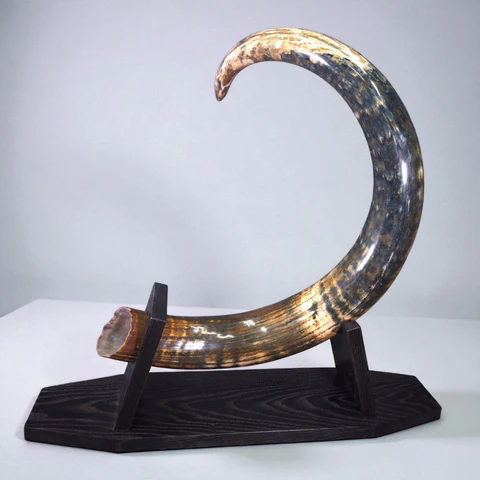
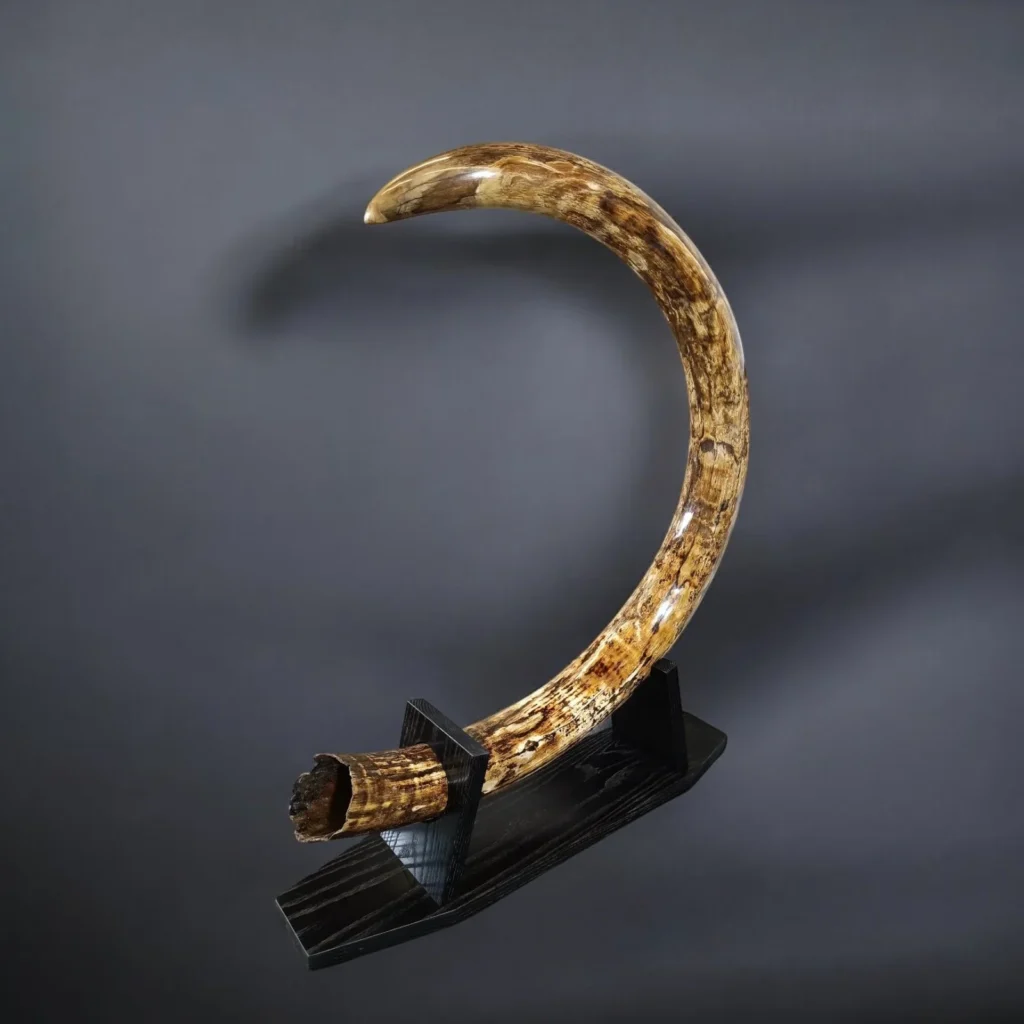
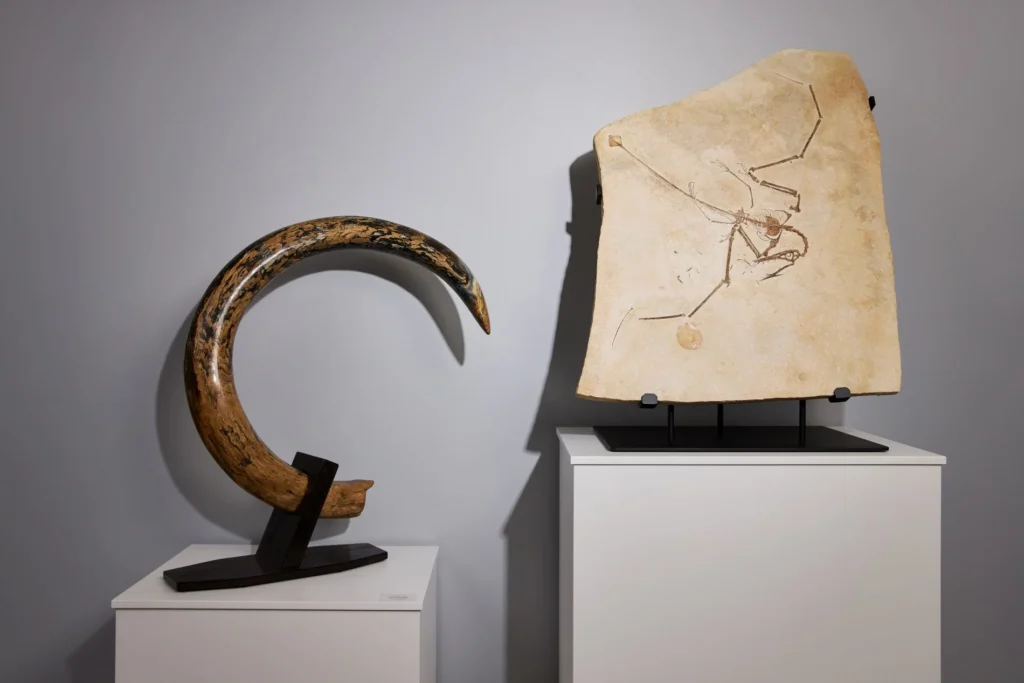
For comparison, our own woolly mammoth tusk collection runs from accent pieces to a monumental blue patina specimen over eight feet, which sits at the top of the range because it combines great size with the rarest color.
The blue patina premium
A blue patina adds a significant premium to mammoth tusk value. Blue is the rarest fossilization color, formed when the iron phosphate mineral vivianite stains the ivory in oxygen-poor ground. Very few tusks develop a strong, even blue.
Because supply is so limited and demand is high, a blue tusk can be worth considerably more than a gold tusk of the same size. If color matters to you, expect to pay for it. We cover this in detail in our guide to blue patina mammoth tusks.
Real tusk vs replica: the cost gap
A genuine mammoth tusk costs far more than a replica, and for good reason. A real tusk is authentic Ice Age fossil ivory, finite and irreplaceable. A cast replica reproduces the shape and color for a fraction of the price, but it holds no fossil value and will never appreciate.
If you want authentic provenance and long-term value, buy real. If you want the look for display or teaching on a tight budget, a replica is a sensible choice. Just know which you are buying, and never pay real-tusk prices for a cast.
Why cheap mammoth tusks are a warning sign
If a large mammoth tusk is priced far below the ranges above, be careful. Unusually low prices often signal a problem: heavy hidden restoration, poor provenance, or, in the worst case, elephant ivory being passed off as mammoth. A fair price reflects genuine size, color, condition, and documentation.
“Cheap” can also mean incomplete. A price that looks like a bargain for a five-foot tusk may be for a tusk that is mostly restored or reassembled from pieces. Always ask what you are actually getting.
Why mammoth tusk prices are changing
Mammoth tusk prices are shaped by a supply that is both finite and, for now, growing. Understanding this helps you time and judge a purchase.
On the supply side, warming temperatures have thawed vast areas of Siberian and Alaskan permafrost, exposing more tusks than in the past. Each summer, collectors recover material from eroding riverbanks. That flow keeps mid-range tusks reasonably available today.
On the demand side, interest in fossils, natural history, and statement decor has grown, and mammoth ivory is one of the few legal ivories on the market. Tightening laws in some regions also concentrate demand into the areas where the trade remains legal.
The long-term picture is clear, though. Mammoths are extinct, so the total supply is fixed. As accessible deposits are worked out, and as more regions restrict the trade, fine tusks become harder to find. Large, complete, well-colored specimens are the ones most likely to hold and grow their value.
Where to buy at a fair price
Buy from a specialist fossil dealer rather than a general auction or an anonymous online listing. A specialist prices tusks on their real merits, documents provenance, and can explain condition and restoration honestly. That transparency is what protects you from overpaying and from legal risk.
Avoid pressure to buy sight-unseen. A reputable seller provides clear photographs of the full tusk, the tips, and any repairs and answers questions about origin and preparation. If a seller will not discuss these, walk away.
Does the mount and restoration affect value?
Yes, and buyers often underestimate this. A monumental tusk is heavy and curved, so it needs a purpose-built stand or wall bracket to display safely. A quality custom mount is expensive to commission on its own, so a tusk that comes already mounted saves you that cost and adds to the value on offer.
Restoration cuts both ways. Skilled, honest stabilization that preserves the natural patina protects value and makes a fragile tusk safe to own. Heavy restoration that hides breaks or rebuilds missing sections reduces value, even if the tusk looks whole at a glance. When you compare two tusks at similar prices, the one with light, transparent restoration and a solid mount is usually the better buy. Always ask what work has been done.
How to pay a fair price for a mammoth tusk
Getting fair value comes down to comparing like with like and checking the details.
- Match the tier. Compare tusks of similar size, since size drives price most.
- Weigh the patina. Decide whether you want rare blue or classic gold, and price accordingly.
- Confirm completeness. Ask how much is original and how much is restored.
- Check provenance. A documented origin is worth paying for.
- Factor the mount. A quality stand adds value and saves you a separate cost.
- Confirm legality. Make sure the tusk can ship to you before you commit. See our guide on whether mammoth ivory is legal.
Frequently asked questions
How much is a mammoth tusk worth?
Anywhere from a few hundred to tens of thousands of euros. Small accent pieces start in the low thousands, mid-size tusks reach the low five figures, and large or monumental tusks with rare patina cost far more.
Why are mammoth tusks so expensive?
Because supply is finite. Mammoths are extinct, so no new tusks are made. Large, complete, well-colored specimens are rare, and rarity drives price.
Does patina color affect the price?
Yes, significantly. Common gold and tan tusks are more affordable, while rare blue patina tusks command a clear premium.
Is a real mammoth tusk a good investment?
Well-chosen tusks with good size, color, condition, and provenance tend to hold value because supply is fixed and demand is steady. Condition and documentation matter most.
Why is one tusk far cheaper than another of the same size?
Usually condition or provenance. A cheaper tusk may be heavily restored, incomplete, or poorly documented. Always ask what you are buying.
Ready to buy?
Now that you know what drives mammoth tusk value, browse the woolly mammoth tusk collection at The Bones Vault, from accessible accent pieces to monumental centerpieces. Every tusk is documented and priced on its real merits. For the full background, read our woolly mammoth tusk guide.