Taxidermy: The Complete Guide
Taxidermy is the art and craft of preserving an animal’s body, usually its skin, and mounting it over a form so it can be displayed in a lifelike pose. The word comes from the Greek “taxis,” meaning arrangement, and “derma,” meaning skin: literally, the arrangement of skin. This guide explains everything about taxidermy in one place: what it means, how it is done, the different types, what it costs, the law and ethics, and how to buy and care for a mount. Whether you are curious about the word or ready to buy your first piece, start here.
What is taxidermy? Meaning and definition
Taxidermy is the practice of preserving a dead animal and mounting it for display, study, or keepsake. A taxidermist removes the skin, preserves it, and fits it over a sculpted form that recreates the animal’s body. Done well, the result looks alive.
The taxidermy meaning is often misunderstood. People imagine the whole animal is “stuffed,” but modern taxidermy does not stuff anything. The original body is not kept. Instead, the preserved skin, and sometimes the real skull, antlers, or horns, is mounted over a manufactured form. This is why the old word “stuffing” has fallen out of professional use.
So the short taxidermy definition is this: taxidermy is the preservation and lifelike mounting of an animal’s skin over a form. When people ask what taxidermy means, that is the answer. The craft sits at the meeting point of art, anatomy, and natural science.
A brief history of taxidermy
Taxidermy as we know it grew out of the age of exploration and natural history collecting. As naturalists brought specimens back from expeditions, they needed ways to preserve them for study, and early methods were crude, using arsenic and rough stuffing that rarely lasted.
The craft matured in the nineteenth century. The Victorians made taxidermy a popular art, filling cabinets of curiosities with mounted birds and naturalistic scenes. Firms like Rowland Ward produced cased dioramas that are prized antiques today. Museums drove the science forward, developing the sculpted-form method that underpins modern work.
Today taxidermy spans everything from traditional trophy mounts to fine-art pieces in major galleries. The tools and materials have changed, but the goal is the same as it always was: to preserve an animal in a lifelike, lasting form.
How does taxidermy work? The process explained
Modern taxidermy follows a clear sequence. The exact steps vary by animal, but the taxidermy process is broadly the same whether the subject is a deer, a duck, or a mouse.
- Skinning. The taxidermist carefully removes the skin from the body. The original carcass is not used in the finished mount.
- Preservation (tanning). The skin is cleaned, treated, and tanned so it will not decay. This is the single most important step for a mount that lasts.
- Form and mannequin. A sculpted form, historically wood wool and clay, now usually polyurethane foam, recreates the animal’s body and pose. Forms are made in standard sizes and poses or sculpted custom.
- Mounting. The tanned skin is fitted over the form and secured. The taxidermist rebuilds the animal’s shape, muscle by muscle.
- Finishing. Glass eyes are set, the skin is groomed, and detail work restores lifelike color to areas that fade, such as the nose, lips, and eyes.
- Drying and grooming. The mount dries over days or weeks, then receives final grooming and touch-up.
For a full walkthrough, see our guide on how taxidermy works. The craft rewards patience and anatomical knowledge, which is why quality varies so much between practitioners.
The stuffing myth, and why the word matters
It is worth dwelling on this, because it is the most common misconception about the craft. When people say an animal has been “stuffed,” they picture the skin packed with filling like a cushion. That is how the earliest attempts were made, and the results sagged, cracked, and rarely survived.
Modern taxidermy abandoned that approach more than a century ago. The skin is now stretched over a precisely sculpted form that carries the animal’s exact anatomy, every muscle, tendon, and bony landmark. Nothing is packed inside. This is why professionals dislike the word “stuffed” and why the search term “stuffed animals name” leads people to the correct term, taxidermy. Understanding this distinction is the first sign of a knowledgeable buyer.
The science behind a good mount
Good taxidermy is applied anatomy. A skilled taxidermist is part sculptor and part naturalist, and the difference between a lifelike mount and a lifeless one comes down to anatomical knowledge.
Consider the face alone. The set of the eyes, the tension around the eyelids, the exact position of the ears, and the color of the nose and lips all signal whether an animal looks alert and alive or awkward and wrong. These areas lose their natural color as they dry, so the taxidermist rebuilds them with careful detail work. This is why two mounts of the same species can look so different in quality and why fine-art taxidermy commands the prices it does.
The form underneath matters just as much. A form in the wrong size or pose will never carry the skin naturally, no matter how good the finishing. This is why custom sculpting, rather than a standard off-the-shelf form, marks the finest work.
Types of taxidermy
Taxidermy comes in several formats, and knowing them helps you choose what suits your space and purpose. These are the main types.
| Type | What it is | Best for |
|---|---|---|
| Shoulder mount | Head, neck, and shoulders for the wall | Deer, big game trophies |
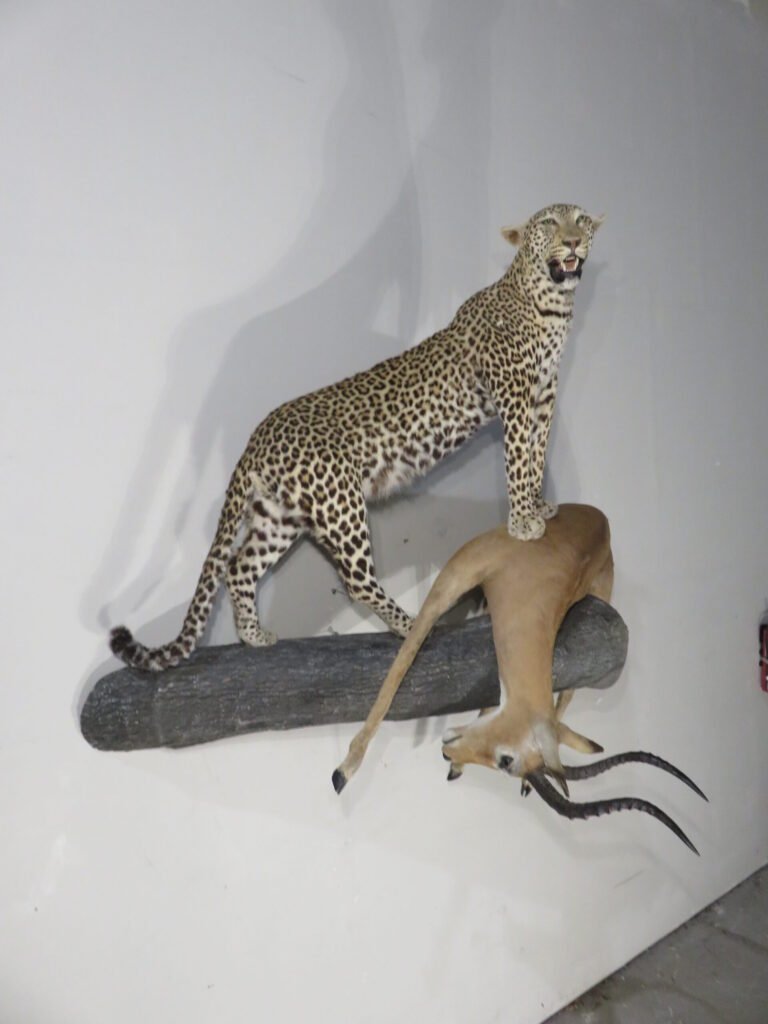
| Full mount | The whole animal in a pose | Predators, birds, statement pieces |
| European mount | Cleaned skull and horns, no skin | Modern, minimalist display |
| Pedestal mount | A full or half animal on a base | Rotating displays, room centrepieces |
| Rug mount | Flat skin, often with head | Bears and big cats |
| Diorama | Animals in a naturalistic cased scene | Birds, antique and fine-art pieces |
| Reproduction | A cast replica, no real animal | Fish, an endangered species |
Each format has its own look and price. A European mount is clean and contemporary. A full mount has the most presence. A shoulder mount is the classic trophy. We cover display in depth in our guide to displaying taxidermy.
Taxidermied animals: what can be preserved?
Almost any animal can be preserved, and taxidermy animals fall into a few broad groups. Each has its own techniques and challenges.
Mammal taxidermy
Mammals are the classic subject, from small squirrels and foxes to big game. Deer taxidermy is the most common of all, especially the whitetail shoulder mount, the single most popular trophy in North America. Large mammals like bears, elk, and moose make monumental mounts. Browse our taxidermy mammals.
Bird taxidermy
Bird taxidermy is prized for color and delicacy. Pheasants, ducks, owls, and peacocks are popular, and the feathers demand careful handling. See our taxidermy birds and our dedicated bird taxidermy guide.
Fish taxidermy
Fish taxidermy is a special case. Because fish color fades fast after death, many modern fish mounts are reproductions: painted casts made from a mold, so no real fish is needed. Bass and trout are the most mounted. Our fish taxidermy guide explains skin mounts versus replicas.
Reptile taxidermy
Reptiles such as snakes, lizards, and crocodilians can be preserved, though their scaled skin behaves differently from fur or feathers and demands its own techniques. Crocodile and alligator mounts are dramatic, and their regulated status under CITES means documentation matters.
Deer taxidermy in focus
Products by Category
-
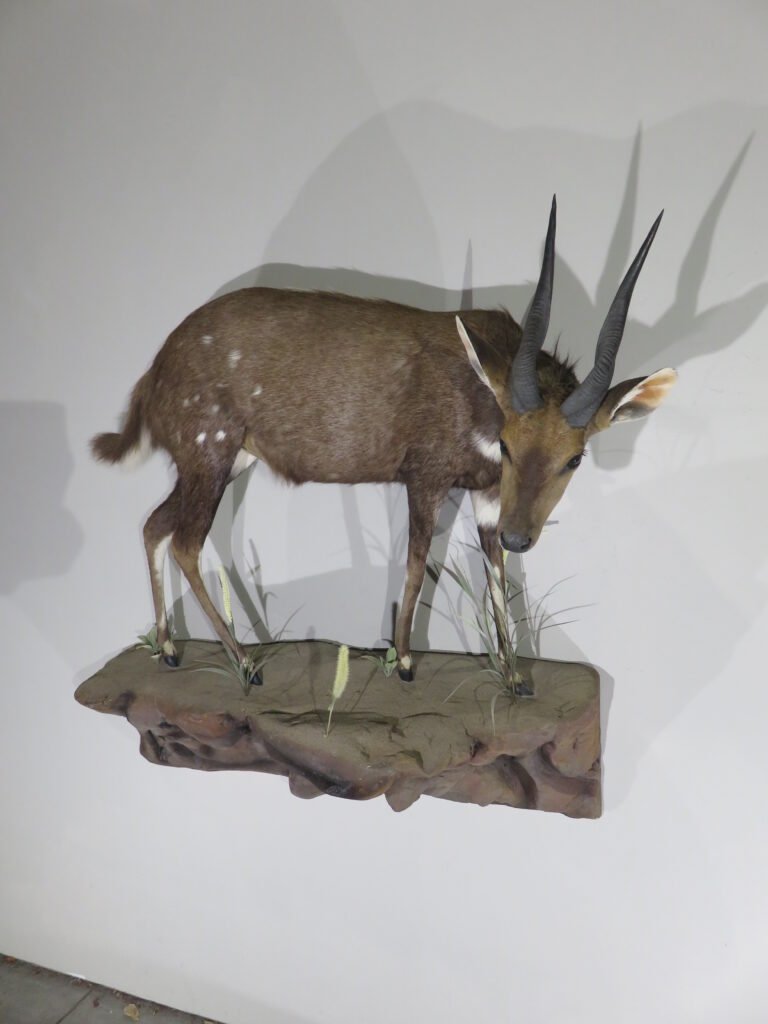
African Bushbuck Life-Size Mount (Tragelaphus scriptus)
-
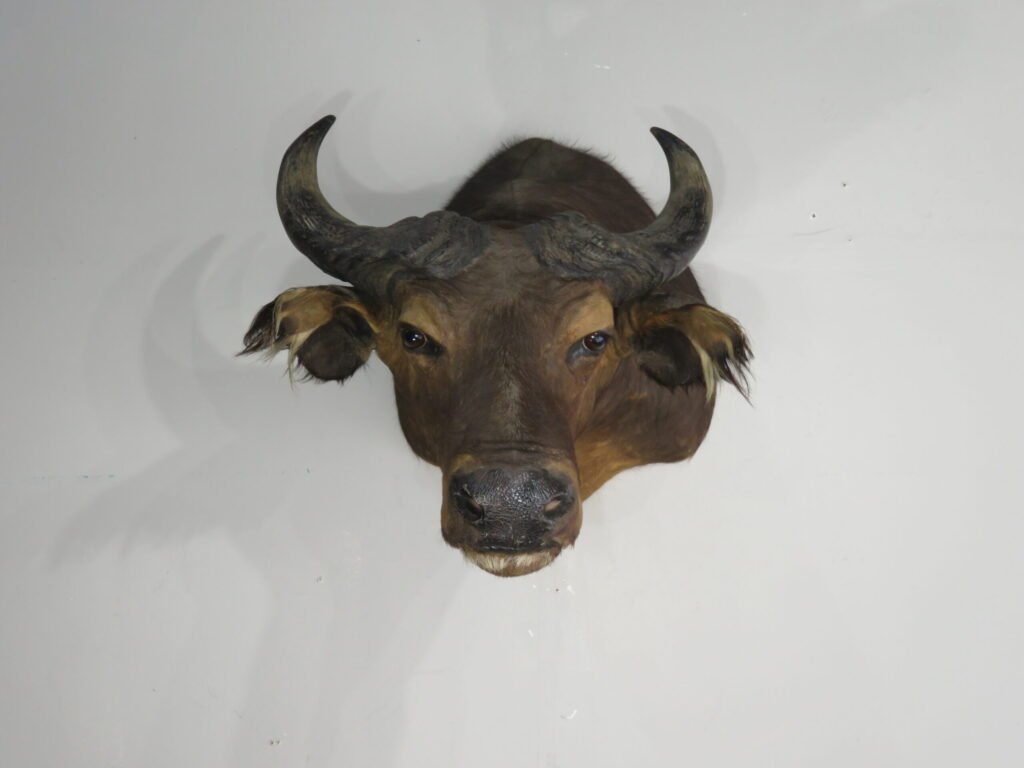
African Forest Buffalo Shoulder Mount (Syncerus caffer nanus)
-
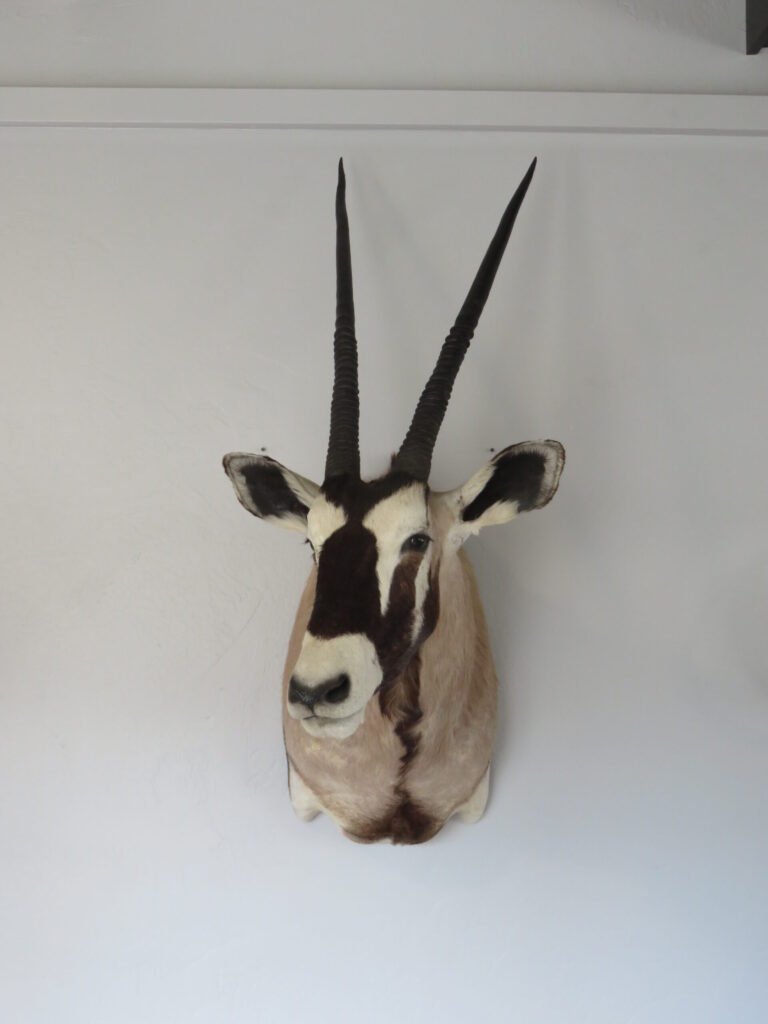
African Gemsbok Shoulder Mount (Oryx gazella)
-
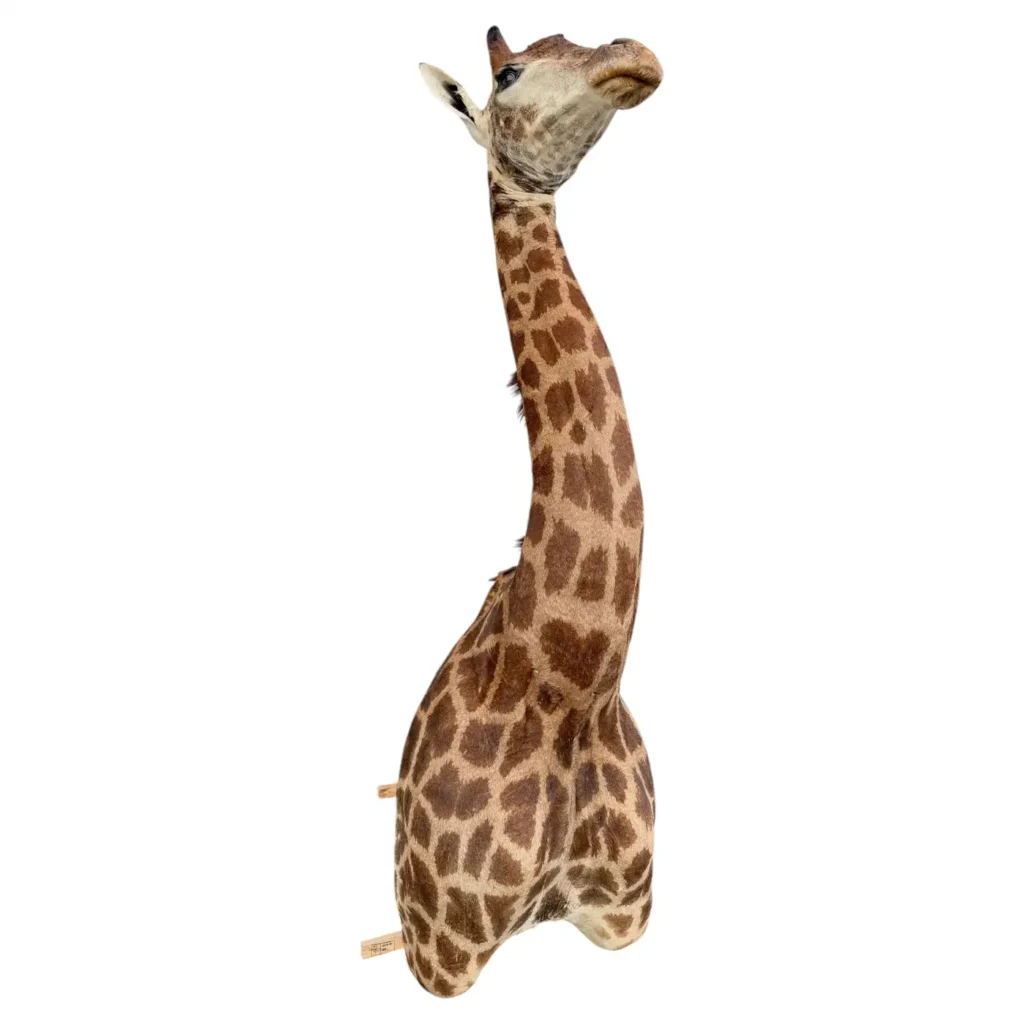
African Giraffe Shoulder Mount on Custom Wooden Base (Giraffa camelopardalis)
-
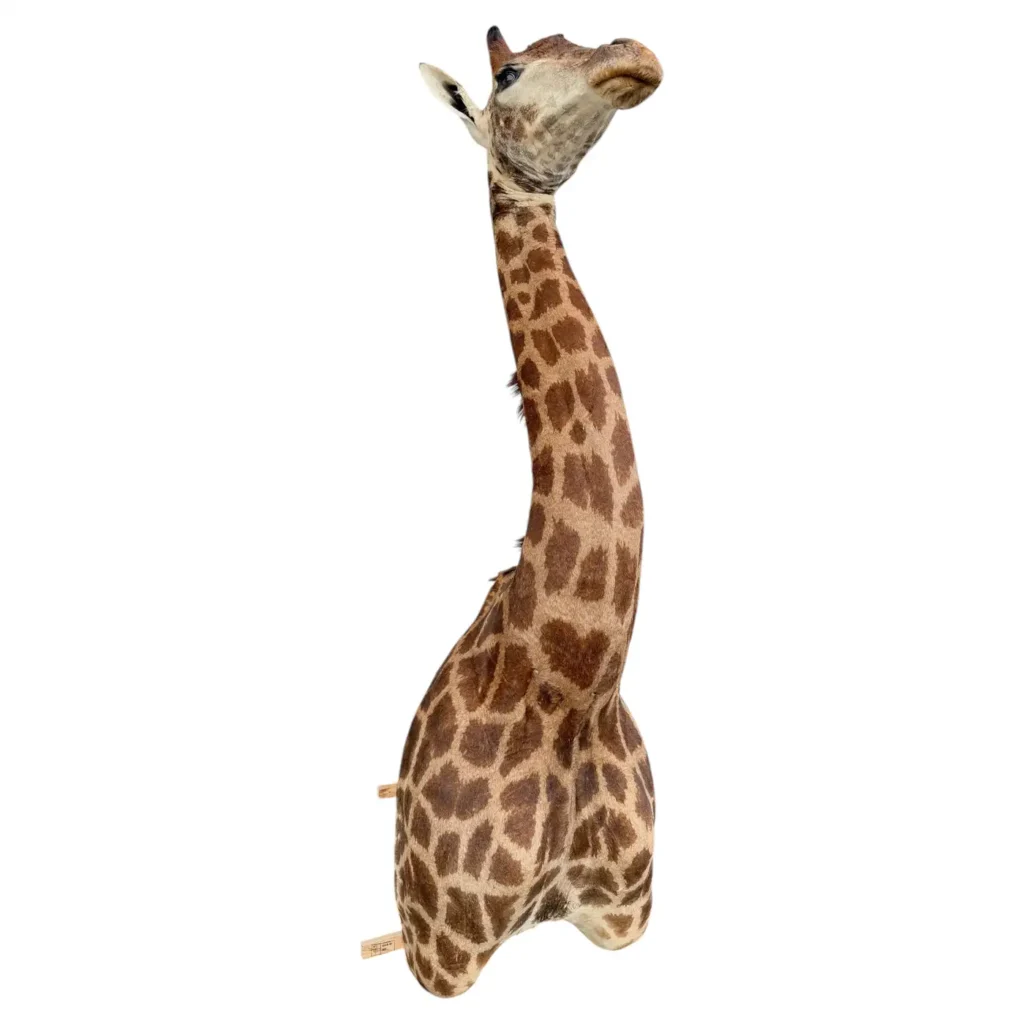
African Giraffe Taxidermy Shoulder Mount, 1980s (Giraffa camelopardalis)
-
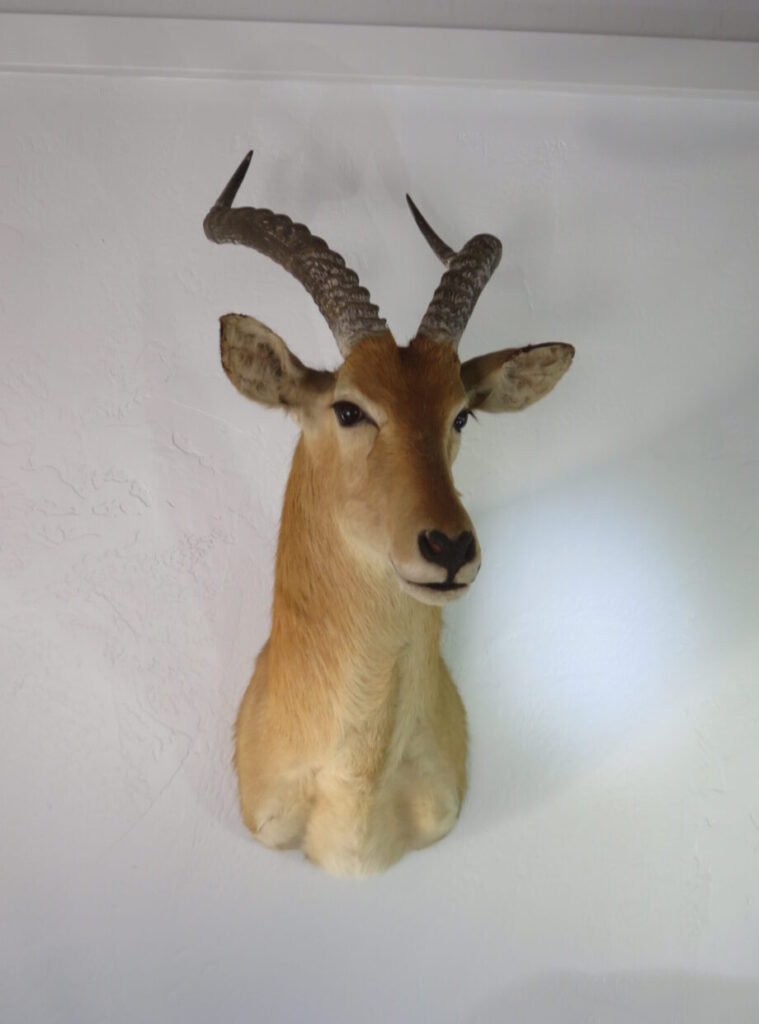
African Puku Taxidermy Mount (Kobus vardonii)
-
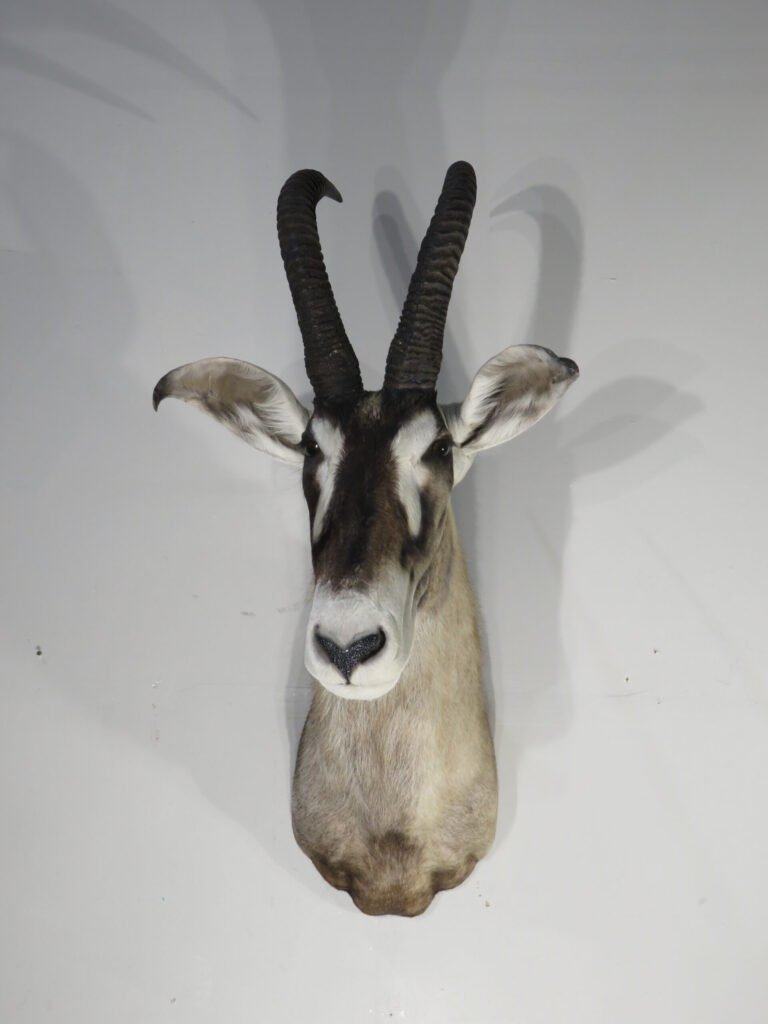
African Roan Antelope Trophy Mount (Hippotragus equinus)
-
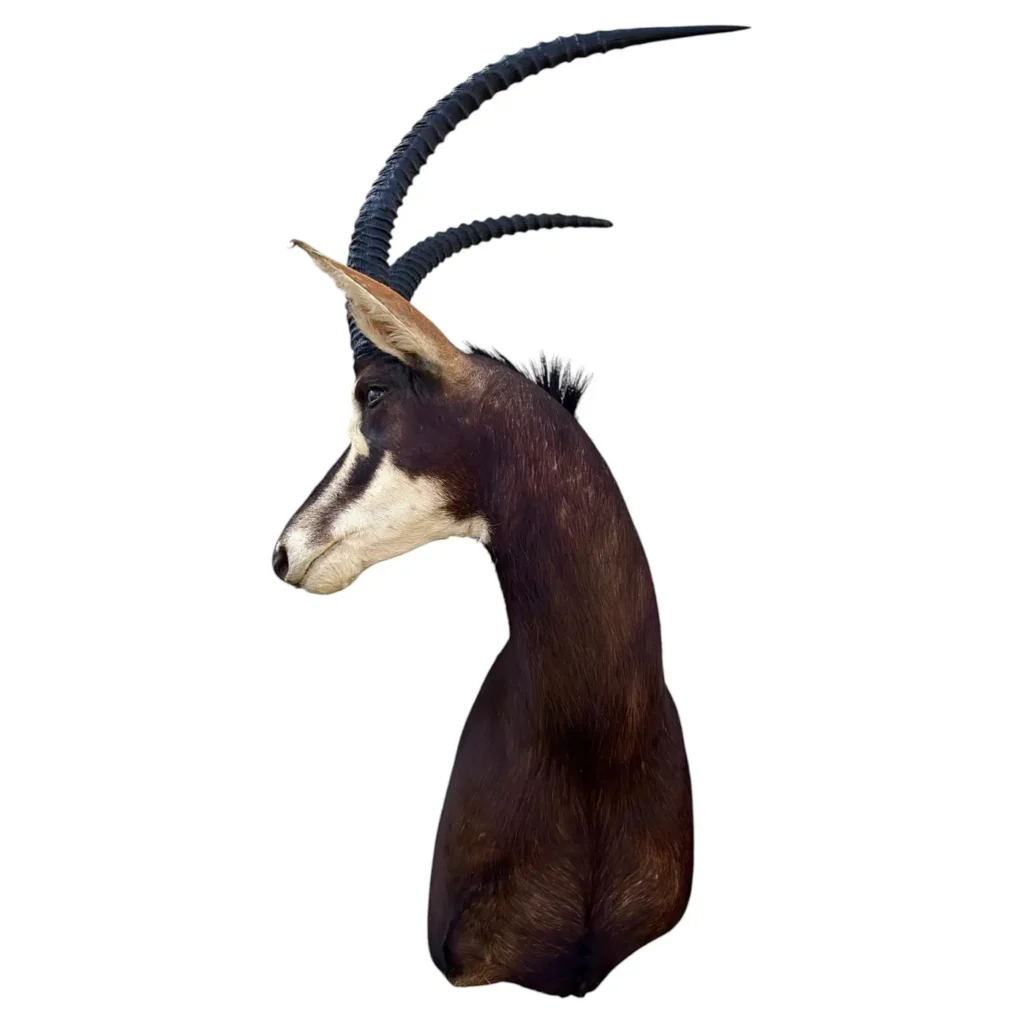
African Sable Antelope 5ft Safari Shoulder Mount (Hippotragus niger)
-
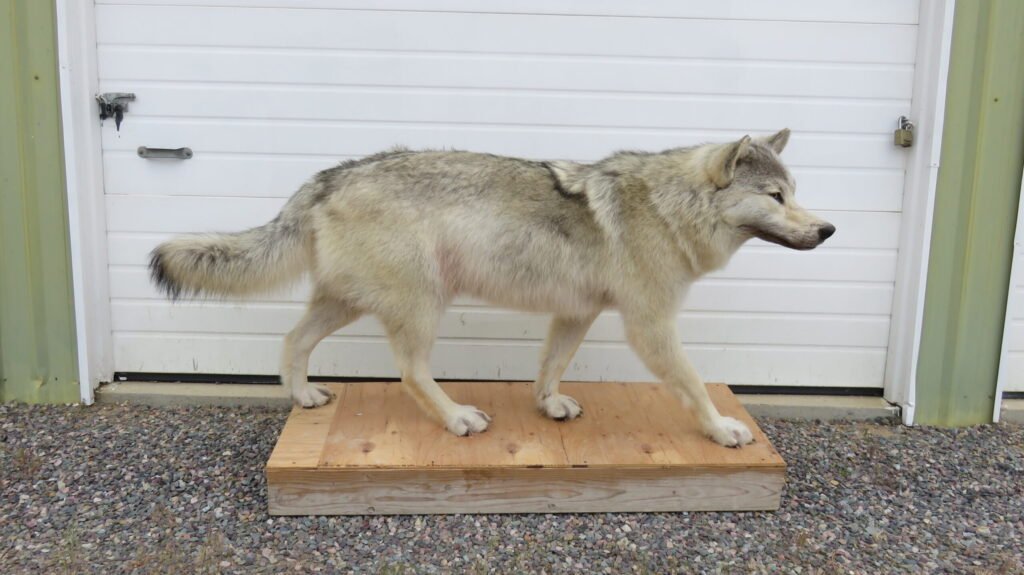
Alaskan Wolf Life-Size Mount (Canis lupus)
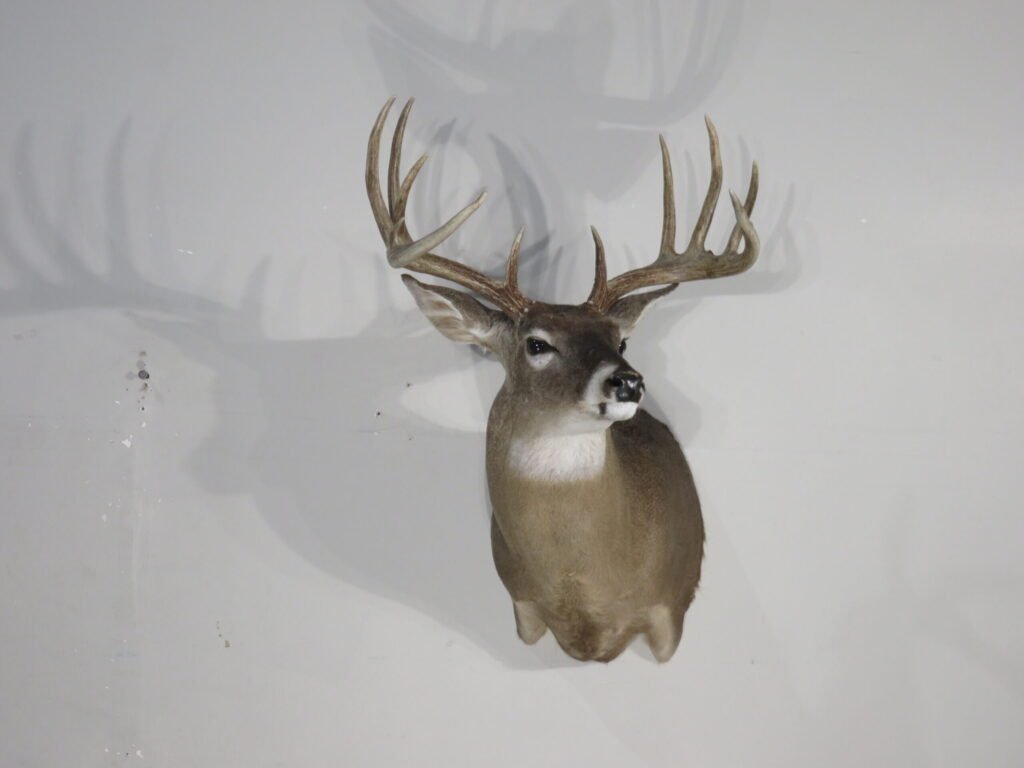
Because deer taxidermy is by far the most common, it is worth understanding on its own. The whitetail shoulder mount is the default trophy across North America, and the choices a hunter makes, the pose, the turn of the head, and whether the mount looks up or straight ahead all shape the finished piece. Deer mount poses are a genuine craft decision, not a formality.
Deer also drive the two big format choices. A traditional shoulder mount keeps the cape and antlers together on the wall. A European mount presents just the cleaned skull and antlers, which suits modern interiors and costs less. A skull mount or antler mount on a plaque is the most affordable option of all. This range is exactly why deer are where most people first encounter the craft and why “deer skull,” “deer mount,” and “deer shoulder mount” are among the most searched terms in the whole field.
Other subjects
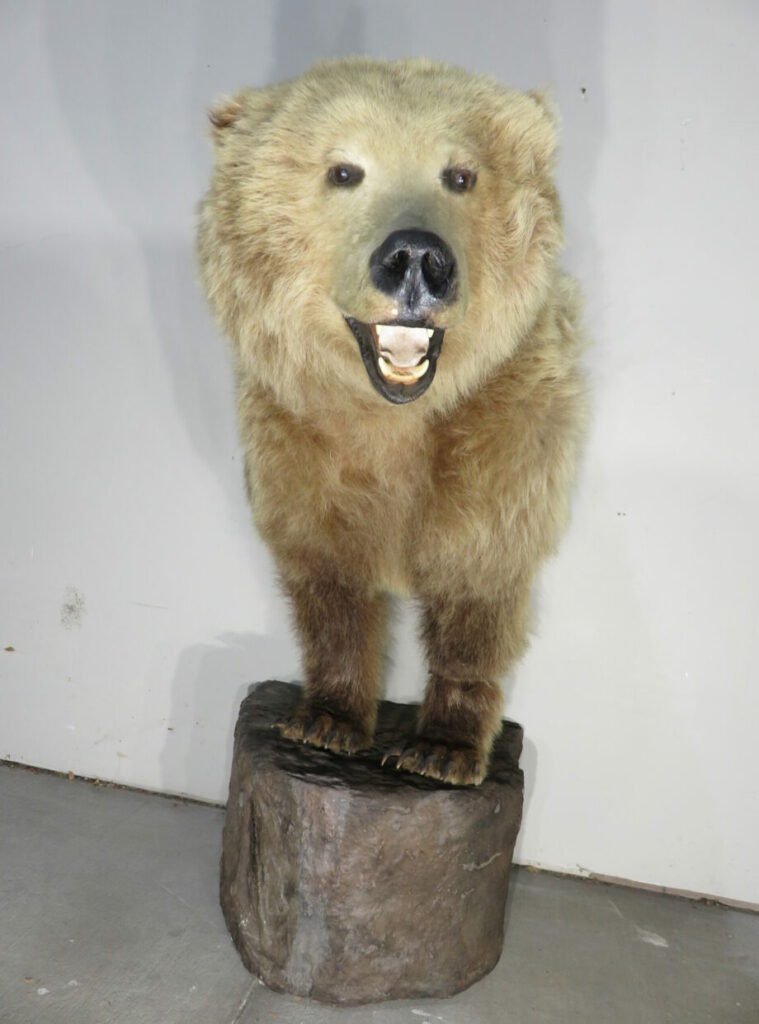
Insects, small rodents, and novelty or “funny” taxidermy have grown popular with a new generation of collectors. Insect taxidermy, pinning and framing beetles, butterflies, and other invertebrates, is one of the most accessible ways into the hobby, and it sidesteps most of the legal and ethical complications of vertebrates. Novelty and anthropomorphic taxidermy, which poses small animals in playful human scenes, has a long history going back to the Victorians and a strong following today, often under the “funny taxidermy” and jackalope tradition. These smaller subjects are also where many beginners start, because the materials are affordable and the stakes are low.
A note on the domestic pet
Many people ask about preserving a pet. This is possible, and specialist pet taxidermists and freeze-drying services exist, but it is emotionally and technically different from wildlife taxidermy. A pet has an expression its owner knows intimately, which is far harder to recreate than a wild animal’s. Most who go ahead choose freeze-drying or a discreet keepsake rather than a full mount. It is a personal decision with no wrong answer.
Taxidermy mounts for sale: what you can buy
If you want to buy taxidermy, the market is broad. Trophy mounts, antique pieces, fine-art taxidermy and reproductions all sit under the same heading. Prices range from modest to many thousands.
The most collected categories are deer and big-game mounts, exotic and safari species, birds, and antique Victorian pieces. At the top of the market sit fine-art taxidermy by named studios and rare antique dioramas. Browse everything in our taxidermy collection, or read the trophy-mount buyer’s guide for help choosing.
When you buy, the things that drive value are species and rarity, size, the quality of the mount, condition, and provenance. A well-made mount in good condition from a documented source is worth far more than a cheap, poorly prepared one.
Fine-art and antique taxidermy
Two kinds of taxidermy sit at the top of the market and deserve their own mention: fine-art pieces and genuine antiques.
Fine-art taxidermy treats the mount as sculpture rather than a trophy. Contemporary studios such as Sinke & Van Tongeren create museum-grade works that appear in major collections and galleries, where the pose, presentation, and concept matter as much as the animal. These are collector pieces, priced as art.
Antique taxidermy carries history. A Victorian cased diorama by a firm like Rowland Ward, or an Edwardian pet mount, involves no modern animal and tells a story new work cannot. Because the animal died long ago, antique taxidermy is also among the most ethical materials you can buy. The Victorian era was the golden age of the craft, and surviving cased birds and naturalistic scenes are prized today.
If you are drawn to the history and artistry of the craft rather than the trophy tradition, this is where to look. Our collector’s guide to natural history specimens covers fine-art and antique pieces in depth.
Who collects taxidermy?
Taxidermy attracts a broader range of people than the stereotype suggests. Hunters preserve trophies from meaningful hunts. Interior designers use a mount or a European skull to anchor a room. Educators and museums build reference collections. Artists work from real anatomy. And a growing community of collectors, many of them young and design-led, gather antique, novelty, and fine-art pieces for the history and craft.
What unites them is an appreciation of the natural world and the skill of the craft. The modern taxidermy revival, driven partly by social media and the oddities and curiosities scene, has brought a new generation to a very old art.
Antlers, horns and skulls
Not all taxidermy involves skin. Antlers, horns, and skulls are a huge part of the market, and they suit modern interiors especially well.
Antlers and horns are collected loose, on plaques, or as part of European mounts. Deer, elk, and moose antlers are the most sought after. Animal skulls, cleaned and whitened, have become popular decor in their own right, from deer skulls to bear and buffalo. We cover this fully in our antlers and horns guide and our animal skulls guide.
A European mount, the clean skull and antlers with no skin, has become the contemporary alternative to the traditional shoulder mount. It is simpler, more affordable, and suits a modern room.
How much does taxidermy cost?
Taxidermy cost depends on the animal, the mount type, and the taxidermist’s skill. As a rough guide, a deer shoulder mount typically runs from a few hundred to around a thousand, a bird from the low hundreds, and a life-size big game mount into the thousands. European mounts are cheaper than shoulder mounts. Fine-art and antique pieces are priced as art.
Several factors move the price: the size and complexity of the animal, the pose, the quality of the form and finishing, and turnaround time. Buying a ready-made mount from a dealer is different from commissioning a taxidermist to prepare your own animal, which adds labor and time.
For a full breakdown, including what a taxidermist near you is likely to charge, see our taxidermy cost and services guide.
Buying a ready-made mount vs commissioning one
There are two ways to acquire taxidermy, and they cost very differently. Buying a ready-made mount from a dealer means you see exactly what you are getting and pay a single price. Commissioning a taxidermist to prepare an animal you provide adds labor, materials, and months of turnaround, and the final quality depends heavily on who you choose.
For most buyers, especially collectors and decorators, a ready-made mount is simpler and safer. You judge the finished piece rather than gambling on a result. Commissioning makes sense mainly for hunters preserving their own trophy or for a specific custom piece you cannot find ready-made.
What makes taxidermy valuable
Five factors set the value of any mount, and understanding them protects you from overpaying.
- Species and rarity. Rare, exotic, and protected species command more, as do unusual color forms.
- Size and drama. A monumental full mount or big-game piece is worth more than a small shoulder mount.
- Quality of the work. Fine anatomy, natural pose, and clean finishing separate a valuable mount from a cheap one.
- Condition. Insect damage, fading, and loose seams all reduce value, particularly on antiques.
- Provenance. A documented source, a named maker, or genuine antique status all add value.
A suspiciously cheap mount usually means poor work, hidden damage, or unclear provenance. As with most things, you get what you pay for.
Is taxidermy ethical?
Taxidermy can be ethical, and it depends entirely on where the animal came from. This is the question thoughtful buyers ask most, so it deserves a straight answer.
The ethical concern is not the craft itself, which is simply preservation. It is the animal’s death. A mount made from an animal that died naturally, was culled for management, came from the food chain, or is a genuine antique raises very different questions from one made from a hunted, endangered, or poached animal.
The most defensible sources are natural deaths, including zoo and aviary animals, management culls, food-industry animals, and antique or vintage pieces where the animal died long ago. Buying antique taxidermy is one of the most ethical routes of all, because no new death results from your purchase. We cover this fully in our guide on whether taxidermy is ethical.
What to avoid is any piece that is, or might be, from an endangered or protected species taken without permits or that a seller cannot or will not explain. Transparency is the mark of ethical taxidermy.
Taxidermy and the law
The law around taxidermy is about the species and its origin, not the craft. Most taxidermy is perfectly legal to own and sell, but some is restricted.
Many species are covered by CITES, the international convention controlling trade in endangered species. This includes big cats such as leopards, many exotic birds, sea turtles and some big game. Trading these requires documentation and, in some cases, permits. Individual countries add their own rules: some protect native birds and their feathers, some restrict certain species entirely, and migratory birds are protected in many places.
The practical rule for buyers is simple. Confirm what a specimen is, confirm it was lawfully obtained, and confirm you can legally own and receive it where you live. A reputable seller documents origin and confirms they can lawfully ship to you before a sale. Always check your local rules before buying across borders.
A few specifics are worth knowing. Migratory birds are protected in many countries, which can make even a found feather illegal to possess without a permit. Marine species such as sea turtles are strictly protected under CITES and should only ever change hands as documented antiques. Big cats like leopards are CITES Appendix I, the most restricted category. Ivory, whether from elephants or mammoths, has its own separate and shifting rules. None of this makes taxidermy hard to buy; the vast majority of species are unrestricted, but it does mean the responsible path is always to ask about a specimen’s identity and origin before you buy.
How to buy taxidermy
Buying taxidermy well comes down to matching the piece to your space and budget, then checking quality, provenance, and legality. Follow these steps.
- Choose the type and subject. Decide between a shoulder mount, full mount, European mount, or antique piece, and which animal suits your space.
- Set a budget. Prices range widely. Antique and reproduction pieces can be affordable entry points.
- Judge the quality. Look at the eyes, the set of the ears, the seams, and the grooming. Good taxidermy looks alert and natural. Poor work looks lumpen or startled.
- Check condition. Look for insect damage, fading, cracking, and loose seams, especially on older pieces.
- Confirm provenance and legality. Ask where the animal came from and whether the species is protected. Buy documented pieces.
- Buy from a specialist. A dedicated dealer curates quality, documents origin, and ships securely.
Major marketplaces restrict much of this material, which is why buying from a specialist matters. Browse our curated taxidermy for sale, from birds and mammals to big-game mounts and antique pieces.
How to care for taxidermy
Taxidermy lasts for generations with the right care, and only a little is needed. The essentials are simple.
- Keep it out of direct sunlight, which fades fur and feathers and dries the skin.
- Control humidity. Dampness causes mold; very dry air causes cracking. Aim for stable, moderate conditions.
- Dust regularly with a soft brush, working in the direction of the fur or feathers.
- Watch for pests. Moths and dermestid beetles eat fur and feathers. Inspect mounts, especially in spring and summer.
- Handle with support, never by legs, wings, antlers, or tails.
- Use a case for delicate or valuable pieces.
Our full guide to caring for taxidermy covers cleaning each type of specimen, pest control, and storage in detail.
Getting started in taxidermy yourself
If you want to try the craft rather than buy, taxidermy is a rewarding hobby with a real learning curve. Beginners usually start small, with a mouse, a bird or a fish, before attempting a mammal.
You will need the basic taxidermy supplies: a knife or scalpel set, fleshing tools, a tanning agent or preservative, a form or mannequin in the right size, glass eyes, and modelling clay for detail. Many beginners start with a taxidermy kit that bundles the essentials. Our taxidermy supplies and kits guide explains what you actually need and what you can skip.
Be aware of the law before you collect any animal to practice on. Many species, especially birds, are legally protected even when found dead. Check your local rules first.
Taxidermy supplies and tools explained
If you are curious about what the craft actually requires, the toolkit is more specialized than most people expect. Taxidermy supplies fall into a few groups.
- Cutting tools. Scalpels, knives, and scissors for skinning and detail work.
- Fleshing tools. For removing flesh and fat from the inside of the skin before preservation.
- Preservatives and tanning agents. The chemistry that stops the skin decaying. This is the heart of the craft.
- Forms and mannequins. The sculpted body the skin is mounted over, available in standard sizes and poses or made custom.
- Glass eyes. Species-specific, and one of the biggest factors in a lifelike result.
- Modeling clay and adhesives. For rebuilding anatomy and securing the skin.
- Finishing materials. Airbrush paints and detail tools to restore natural color.
Beginners often start with a taxidermy kit that bundles the basics for a first small project. Our taxidermy supplies and kits guide breaks down what is genuinely necessary and what can wait.
Common misconceptions about taxidermy
A few myths follow the craft around, and clearing them up makes you a better-informed buyer.
“It is stuffed.” As covered above, nothing is stuffed. The skin is mounted over a sculpted form.
“The whole animal is inside.” It is not. The carcass is not used. In many fish and reptile mounts, not even the skin is used; the piece is a painted cast.
“Taxidermy is morbid.” Most collectors and practitioners see it as the opposite: a way of preserving, studying, and honoring animals rather than discarding them. Antique and natural-death pieces involve no killing at all.
“It does not last.” Poor work does not last. Quality taxidermy, kept out of sun and damp and protected from pests, lasts for generations. Victorian mounts survive in fine condition today.
“Any animal can be bought and sold freely.” Not true. Protected and CITES-listed species carry real legal restrictions, which is why provenance matters.
Taxidermy in interior design
Beyond trophy rooms, taxidermy has become a genuine force in interior design. A single dramatic mount, a European skull, or a cased antique bird can anchor a room as a sculptural focal point. Designers use these pieces to bring the texture and story of the natural world indoors.
The key is restraint and placement. One well-lit, well-chosen piece against a clean wall reads as intentional and striking. The style works across interiors, heritage, modern, eclectic, and maximalist, provided the piece is given room to breathe. Our guide to displaying taxidermy covers this room by room.
Frequently asked questions
What is taxidermy?
Taxidermy is the art of preserving an animal’s skin and mounting it over a sculpted form for lifelike display. The original body is not kept, which is why “stuffing” is an outdated term for it.
What does the word “taxidermy” mean?
It comes from the Greek “taxis” (arrangement) and “derma” (skin), meaning literally the arrangement of skin.
Is taxidermy just stuffing an animal?
No. Modern taxidermy preserves the skin and mounts it over a manufactured form. Nothing is stuffed, and the original carcass is not used.
How long does taxidermy take?
Commissioned work often takes several months because tanning, mounting, drying, and finishing each take time. Buying a ready-made mount is immediate.
How much does taxidermy cost?
A deer shoulder mount typically runs from a few hundred to around a thousand, birds from the low hundreds, and life-size big-game mounts into the thousands. European mounts cost less than shoulder mounts.
Is taxidermy ethical?
It can be. Mounts from natural deaths, culls, the food chain, or antique sources involve no death caused for the mount. Endangered or poached animals are neither ethical nor, usually, legal.
Is taxidermy legal?
Most taxidermy is legal to own and sell. Protected and CITES-listed species have specific rules, so confirm the species and your local law before buying.
How long does a taxidermy mount last?
A well-made, well-cared-for mount lasts for decades, often much longer. Light, dampness, and pests are what shorten its life, and all three are easy to manage.
Can you do taxidermy at home?
Yes, as a hobby. Beginners start with small subjects and a taxidermy kit. Check your local law first, as many species are protected even when found dead.
What is a European mount?
A cleaned, whitened skull with antlers or horns and no skin. It is a modern, minimalist alternative to a traditional shoulder mount.
What is it called when you stuff a dead animal?
The craft is called taxidermy, and the person who does it is a taxidermist. The old term “stuffing” is inaccurate, because modern taxidermy mounts the skin over a form rather than stuffing it.
What does a taxidermist do?
A taxidermist skins an animal, preserves the skin by tanning, mounts it over a sculpted form, and finishes it with glass eyes and detail work to recreate a lifelike appearance.
Can you taxidermy a fish?
Yes. Traditional fish taxidermy mounts the real skin, but because fish color fades quickly, many modern fish mounts are reproductions: painted casts made from a mould, using no real fish.
What is the difference between a shoulder mount and a full mount?
A shoulder mount shows the head, neck, and shoulders for wall display. A full mount is the entire animal in a pose. Full mounts cost more and need floor space.
Can you taxidermy a pet?
It is possible through specialist pet taxidermists or freeze-drying, but recreating a familiar pet’s expression is difficult. Many owners choose freeze-drying or a smaller keepsake instead.
How do you clean a taxidermy mount?
Dust gently with a soft brush in the direction of the fur or feathers, keep it out of sunlight, and watch for pests. Never wash a mount or use household cleaners.
Taxidermy vs the alternatives
If you want to display an animal or a specimen, taxidermy is not the only option, and knowing the alternatives helps you choose well.
- Taxidermy preserves the real skin over a form. It gives the most lifelike result and the most presence, but it requires care and, for some species, documentation.
- European and skull mounts keep only the bones. They are clean, modern, and durable and often cheaper, with fewer pest concerns.
- Reproductions and replicas use no real animal at all. They are legal everywhere, robust, and the standard choice for fish and for endangered species.
- Freeze-drying preserves the whole animal by removing moisture. It is used mainly for small pets and specimens, and it keeps the original body rather than mounting a skin.
- Articulated skeletons display the cleaned, reassembled bones. They belong more to osteology than taxidermy, but they scratch the same itch for natural-history display.
Each suits a different purpose and budget. A collector wanting the most lifelike presence and the fullest connection to the real animal chooses taxidermy, which is why it has remained the definitive form for centuries. A designer wanting a clean modern accent may prefer a skull. Someone avoiding all legal and ethical complications chooses a reproduction. There is no single right answer, only the right choice for your space, budget, and principles.
A glossary of taxidermy terms
Knowing the vocabulary helps you shop and read listings with confidence. Here are the terms you will meet most often.
- Cape. The skin of the head, neck, and shoulders is used for a shoulder mount.
- Dermestid beetles. Flesh-eating beetles are used to clean skulls and are also a pest that damages finished mounts.
- European mount. A cleaned, whitened skull with antlers or horns and no skin.
- Form (or mannequin). The sculpted body the skin is mounted over.
- Full mount. The entire animal is preserved in a pose.
- Green skin. A raw, untanned skin before preservation.
- Mount. Any finished piece of taxidermy and the verb for making one.
- Pedestal mount. A full or half animal presented on a base rather than on the wall.
- Reproduction. A cast replica, common for fish, using no real animal.
- Shoulder mount. Head, neck, and shoulders: the classic wall trophy.
- Tanning. The chemical process that preserves a skin so it will not decay.
- Velvet. The soft skin covering growing antlers, sometimes preserved on a mount.
Taxidermy around the world
Taxidermy traditions differ by region, which shapes what you will find on the market. North American taxidermy is dominated by hunting culture, with deer, elk, bear, and waterfowl the mainstays, and a strong industry of forms, supplies, and competitions. African taxidermy centers on safari and big-game species, from antelope to the big five, much of it prepared to a high standard for international clients. European taxidermy carries the deep influence of the Victorian natural-history tradition, with a strong antique market and a growing fine-art scene.
This matters for buyers because it affects availability, style, and price. A whitetail mount is easy to find in North America, while an antique cased bird is more readily sourced in Europe. Understanding these traditions helps you know where to look and what to expect. It also affects shipping and legality, since moving a mount between regions can trigger CITES paperwork or import rules that a domestic purchase never would. When you buy internationally, factor in both the traditions of the source region and the rules of your own.
Start exploring taxidermy
Whether you want to understand the craft or own a piece of it, taxidermy connects art, nature, and history like nothing else. Browse our curated collection of taxidermy mounts, birds, mammals, and antique pieces, or begin with our collector’s guide to natural history specimens. Every piece is responsibly sourced and ships worldwide in 3 to 5 days.