
Ivory Art: How to Identify, Value, and Collect It
Ivory art is any sculpture, figurine, or decorative object made from ivory, and collecting it today comes down to one skill above all: knowing what is genuine, what is legal, and what is a fake. If you love ivory carving as an art form, this guide teaches you to authenticate a piece, judge its value, spot the fakes, and build a collection that stays on the right side of the law.
You will learn how to tell real ivory from bone and plastic, how to value ivory sculpture, which types of ivory art are most collectible, and how to collect legally in a world where most elephant ivory is banned. Let’s get into it.
Products by Category
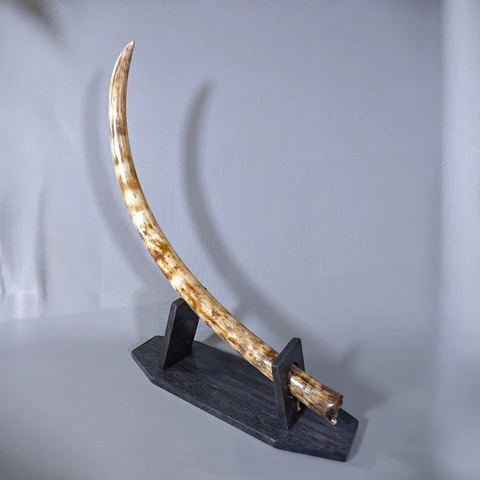
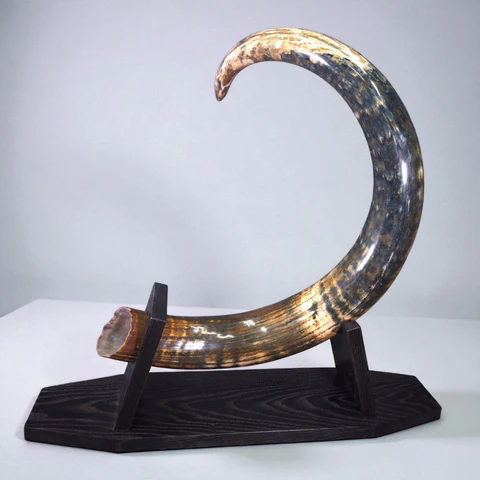
What counts as ivory art?
Ivory art is any artwork carved or engraved from ivory, from small figurines to large sculptures and finely detailed relief pieces. It spans thousands of years and almost every culture that could obtain the material.
The category is broad. It includes freestanding ivory sculpture and ivory statues, small ivory figurines and netsuke, engraved scrimshaw, religious and ceremonial objects, jewelry, and decorative panels and inlay. What unites them is the material: a dense, fine-grained substance that takes detail beautifully and glows with a soft warmth when polished. As an art form, ivory carving is prized for the skill it demands and the fine work it allows. This guide is about appreciating and collecting that art. For how ivory is actually carved, the tools, and the process, see our companion guide to the ivory-carved tusk, which covers the making of these pieces in detail.
The first question: is it legal?
Before you value or admire a piece of ivory art, establish whether it is legal, because the material decides everything. Legal ivory art means genuine mammoth ivory or a properly documented antique; illegal ivory art means unprovenanced elephant ivory.
Elephant ivory comes from an endangered living animal, and its trade is banned across most of the world under CITES and national laws. Mammoth ivory comes from an animal extinct for thousands of years, is not CITES-protected, and is legal in most places. Genuine antiques may qualify for narrow legal exemptions, but only with documentation proving age and origin. So the first question a serious collector asks of any ivory artwork is not “How beautiful is it?” but “What is it made of, and can its legality be proven?” A stunning carving with no legal standing is a liability, not an asset, because you cannot lawfully sell it and may not lawfully own it. Our guide on whether mammoth ivory is legal sets out the rules in full. Get this right first, and everything else follows.
How to tell real ivory from fake
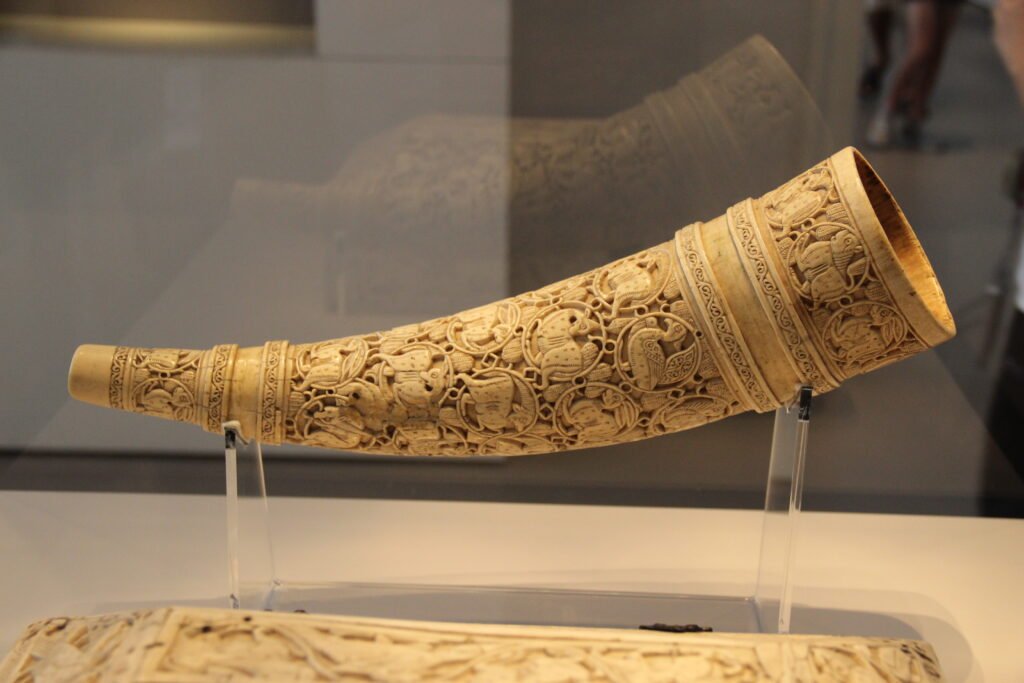
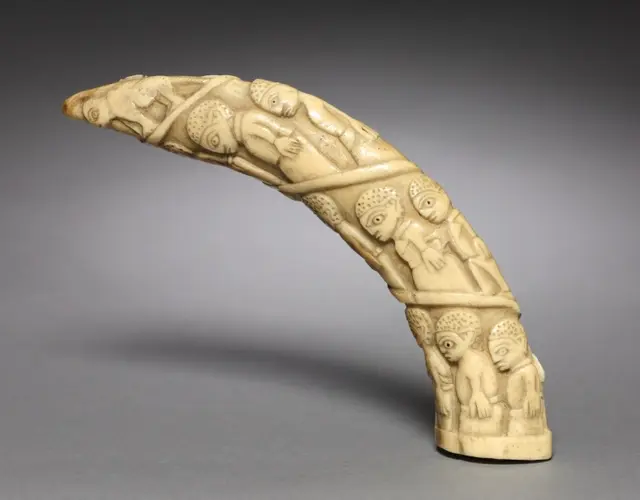
You tell real ivory from fakes by checking the Schreger lines, the grain, the temperature, and the way it ages. Real ivory has features that bone, plastic, and resin cannot fully copy. Here is how to spot the genuine article.
Schreger lines are the crosshatched pattern in a cross-section, unique to true ivory (mammoth and elephant), and their angle even tells the two apart. Grain in real ivory is fine and slightly translucent, with subtle lines; plastic is uniform and dead, bone shows tiny dark pores and channels that ivory lacks. Temperature helps a little: ivory feels cool and dense, plastic feels warm and light. Ageing shows in real ivory as fine surface cracks (craquelure) and a warm patina that fakes struggle to fake convincingly. Here is the quick comparison:
| Material | Schreger lines | Grain | Tell |
|---|---|---|---|
| Real ivory | Yes. | Fine, translucent | Cross-hatch pattern, cool feel |
| Bone | No | Pores and channels | Tiny dark specks and holes |
| Plastic / resin | No | Uniform, dead | Warm, light, mould seams |
| Vegetable ivory | No | Fine but different | Smaller pieces, different cell structure |
The single most reliable test is the Schreger pattern, so learn to see it. For the full method, including how the angle separates legal mammoth from banned elephant, read our mammoth versus elephant ivory guide.
Real ivory vs. bone: the common mix-up
The most common authentication mistake is confusing ivory with bone, and the difference is easy to see once you know it. Ivory has no visible pores; bone is full of tiny dark channels.
Bone is cheaper, widely used for carvings, and often sold, honestly or not, alongside ivory. Under a loupe, bone reveals a scatter of tiny dark dots and short lines, the remains of the channels that carried blood vessels in the living animal. Real ivory has none of these; instead it shows fine, even grain and, in cross-section, the Schreger lines. So a quick glance through magnification usually settles it: pores and specks mean bone, clean fine grain and cross-hatching mean ivory. This matters for value, since ivory art is worth more than bone carving, and it matters for legality, since a bone carving carries none of ivory’s restrictions. An honest seller states plainly whether a piece is ivory or bone, and a good collector checks.
Types of ivory art worth collecting
Several distinct categories of ivory art attract collectors, each with its own market, and knowing them helps you focus a collection. The main types are sculptures, figurines, netsuke, scrimshaw, and functional art.
Ivory sculpture and statues are the grandest form, freestanding carved figures and groups, valued for artistry and scale. Ivory figurines are smaller collectible figures, often sold in sets or themes. Netsuke are miniature Japanese toggle carvings of astonishing detail, a serious collecting field in their own right. Scrimshaw is engraved ivory, historically by whalers, prized for its folk-art character. Functional ivory art includes carved handles, boxes, fans, and inlaid objects where art meets use. Each category has its own experts, price levels, and pitfalls, so many collectors specialize. Whichever draws you, the same rules apply: authenticate the material and confirm the legality before you fall for the beauty.
Netsuke: a collecting field of its own
Netsuke are small Japanese ivory toggle carvings, and they form one of the most respected and studied fields in all of ivory art. If you collect ivory, netsuke are worth understanding in their own right.
A netsuke is a miniature carving, often only a few centimetres across, originally made to secure a pouch or box to a kimono sash. Within that tiny format, master carvers produced astonishing detail: animals, figures, myths, and everyday scenes, each fully realized in the round. Antique netsuke by known carvers can be highly valuable, and the field has its own scholarship, signatures, schools, and reference works. For a collector, netsuke offer a lifetime of study in a form small enough to display in a single cabinet. As always, legality applies: antique netsuke need documentation, and modern makers work legal materials, including mammoth ivory. The field is well described on Wikipedia’s netsuke page.
Understanding ivory patina and age
Patina is the surface character ivory develops over time, and reading it is a key skill for dating and authenticating ivory art. Genuine age shows in ways that are hard to fake convincingly.
As ivory ages, it develops a warm, mellow color, deepening from white towards cream, honey, and brown, and often a fine network of surface cracks called craquelure. Handling over generations adds a soft sheen to raised areas and leaves darker tones in recesses where dirt and oils settle. These signs of genuine age are subtle and uneven, following how a piece was actually used and stored. Fakers try to reproduce patina with stains and artificial aging, but the result is usually too even, too uniform, or wrong in the details, sitting on the surface rather than growing from the material. Learning to read patina, ideally by studying authenticated pieces, is one of the most useful skills a collector can develop, both for dating antiques and for catching fakes. On genuine mammoth ivory, the “patina” also includes fossil staining from thousands of years in the ground, a different and even harder thing to fake.
How to value ivory art
Ivory art is valued on artistry, age, provenance, material and condition, but legality sits above all of them, because an unsaleable piece has no realisable value. A masterpiece you cannot lawfully sell is worth only what you paid for the pleasure of it.
The artistry comes first among the positive factors: fine, skilled, detailed carving by a known hand commands the most. Age and origin add value, with documented antiques and identifiable cultural traditions worth more. Material matters for both beauty and legality; legal mammoth ivory and documented antiques have market value, but undocumented elephant ivory does not. Condition counts, since cracks, repairs, and losses reduce worth. And provenance underpins everything, because documentation is what makes value realizable. Here is how the factors stack:
| Factor | Adds value | Reduces value |
|---|---|---|
| Artistry | Fine, detailed, skilled work | Crude or damaged carving |
| Age | Documented antique | Unknown or recent |
| Provenance | Full documentation | None (unsaleable) |
| Material | Legal mammoth or documented antique | Undocumented elephant (no legal value) |
| Condition | Sound, complete | Cracked, repaired, incomplete |
The practical takeaway: buy the best artistry you can afford in a legal, documented piece, and keep the paperwork, because provenance is not a formality here; it is the value. Our mammoth tusk value guide explains valuation for legal mammoth ivory in detail.
How to spot fake and misrepresented ivory art
Fakes and misrepresentation are common in ivory art, and they take three forms: fake material, fake age, and fake provenance. A careful buyer checks all three.
Fake material is bone, plastic, or resin sold as ivory, caught by the Schreger and grain tests above. Fake age is when new work is passed off as antique to claim a legal exemption or a higher price, caught by examining wear, patina, tool marks, and style against genuine period pieces. Fake provenance is invented or borrowed paperwork, the hardest to catch and the most dangerous, since provenance is what legality often rests on. The defenses are simple but firm: test the material yourself or have it tested, be skeptical of “antique” claims without solid documentation, and buy from established, transparent dealers who stake their reputation on honesty. Above all, if a piece seems too cheap for what it claims to be, assume something is wrong. In ivory art, a bargain is usually a warning.
Famous ivory art and where to see it
Some of the world’s great museums hold major ivory collections, and studying real pieces is the best way to train your eye. Seeing authenticated ivory art up close teaches you what genuine work looks like.
Collections at institutions like the Metropolitan Museum of Art span medieval European ivory panels, Asian carvings, netsuke and more, all authenticated and documented. Some of the oldest art known to humanity is carved from mammoth ivory, small Ice Age figures tens of thousands of years old. Studying museum pieces, in person or through their online collections, sharpens your sense of quality, style and period, which makes you a far better judge when you are looking at a piece to buy. The more genuine ivory art you have really looked at, the harder you are to fool. Treat museum visits as part of your education as a collector.
The ethics of collecting ivory art
Collecting ivory art raises real ethical questions, and the responsible position is clear: never buy anything that could reward elephant poaching, and favor legal mammoth ivory and documented antiques. Ethics and legality point the same way here.
The elephant ivory trade has driven a poaching crisis that has killed vast numbers of elephants, which is why the bans exist. Every purchase of unprovenanced ivory risks feeding that trade, even indirectly, by keeping demand alive. Legal mammoth ivory sidesteps the problem entirely, since the animal has been extinct for thousands of years and no living creature is harmed. Genuine antiques, properly documented, represent ivory already worked long ago rather than new demand. So the ethical collector’s path matches the legal one: choose mammoth ivory or documented antiques, refuse anything undocumented, and never let the beauty of a piece override the question of where its material came from. Collecting this way lets you love the art form without contributing to the harm that surrounds part of it.
How to start an ivory art collection legally
Start an ivory art collection by learning to authenticate, buying only legal documented pieces, keeping records, and focusing on a theme you love. A legal collection is built on knowledge and paperwork as much as on taste.
Begin by training your eye on genuine pieces and learning the material tests so you can tell ivory from bone and real from fake. Buy only legal material, mammoth ivory, or documented antiques from transparent dealers, and keep every scrap of documentation with each piece, since provenance is both value and legal protection. Pick a focus that appeals to you, a period, a culture, or a type like netsuke or scrimshaw, so your collection has coherence and you become an expert in your niche. Store and display pieces carefully, and consider insurance for a valuable collection. Above all, buy slowly and buy well: one excellent, legal, documented piece is worth more than a shelf of doubtful ones. Our woolly mammoth tusk collection offers genuine, legal mammoth ivory as a sound foundation.
Where to buy and sell ivory art safely
Buy and sell ivory art only through channels that respect the law: reputable specialist dealers, established auction houses, and sellers of documented legal material. The wrong channel is a legal risk even for a genuine piece.
Established antique dealers who specialise in ivory understand the rules, provide provenance, and stake their reputation on honest description, making them the safest source for antique pieces. Auction houses vet consignments and document lots, though you must still confirm a piece meets your country’s rules before bidding. Specialist sellers of legal mammoth ivory offer the simplest route to lawful material, since the legality is clear. Be cautious with general marketplaces, where ivory listings are often poorly described, wrongly labelled, or non-compliant, and where the burden of checking legality falls entirely on you. When selling, the same care applies: you need documentation to sell legally, and a reputable dealer or auction house is the responsible route. Wherever you buy or sell, keep records of the transaction and the provenance, since those documents are what protect the piece’s legal standing and value over time.
Caring for and insuring an ivory art collection
Ivory art needs stable conditions, gentle handling, and, for valuable pieces, proper insurance and documentation. Ivory is durable but sensitive to its environment, so care protects both the art and its value.
Keep ivory art out of direct sunlight and away from heat sources and damp, because swings in humidity are the main cause of cracking. A stable room at moderate household humidity suits it. Handle pieces with clean hands, since oils and dirt lodge in fine detail, and dust with a soft dry brush. For a collection of any value, photograph and document each piece, keep provenance records safe, and consider specialist insurance, which will usually require that documentation. Displaying pieces in a cabinet protects them from dust and knocks while showing them off. Our fossil display and mounting guide covers cases and cabinets that suit small art objects. Cared for properly, ivory art lasts for centuries, which is part of why so much antique ivory survives.
Frequently asked questions
What is ivory art?
Ivory art is any sculpture, figurine, engraving, or decorative object carved from ivory. It includes ivory sculpture and statues, figurines, netsuke, scrimshaw, and functional pieces. It is prized as an art form for the skill it demands and the fine detail the material allows.
How can you tell if ivory art is real?
Look for Schreger lines, the crosshatch pattern in a cross-section unique to true ivory, and fine, slightly translucent grain. Bone shows tiny dark pores and channels; plastic is uniform, warm, and light. Real ivory feels cool and dense and ages with fine surface cracks and a warm patina.
What is the difference between ivory and bone carving?
Ivory has no visible pores and shows fine grain and Schreger lines; bone is full of tiny dark channels and specks visible under magnification. Ivory art is worth more than bone carving, and bone carries none of ivory’s legal restrictions. An honest seller always states which piece is.
How much is ivory art worth?
It depends on artistry, age, provenance, material, and condition, but legality sits above all. Fine, documented, legal pieces command real value, while undocumented elephant ivory has no realisable value because it cannot be lawfully sold. Provenance is central to worth.
Is it legal to collect ivory art?
It can be, if the material is legal. Mammoth ivory art is legal in most places, and genuine antiques may qualify for narrow exemptions with documentation. New elephant ivory is banned almost everywhere. Always confirm the material and provenance before buying, and check your country’s rules.
How do you spot fake ivory art?
Check for three fakes: fake material (bone or plastic, caught by the grain and Schreger tests), fake age (new work aged to look antique, caught by examining wear and style), and fake provenance (invented paperwork). Buy from transparent, established dealers, and treat a suspiciously low price as a warning.
What is the most collectible type of ivory art?
Netsuke, fine antique sculptures, and quality scrimshaw are all strong collecting fields, along with legal mammoth ivory carvings. The most collectible pieces combine fine artistry, documented age or origin, and, crucially, clear legal standing.
Collect ivory art with confidence.
Ivory art rewards the collector who leads with knowledge: authenticate the material, confirm the legality, judge the artistry, and keep the paperwork, and you can enjoy one of the world’s oldest art forms responsibly. The beauty is real, but so are the rules, and a great collection respects both.
Ready to start with genuine, legal material? Browse our woolly mammoth tusk collection for documented mammoth ivory, legal to own and shipped worldwide in secure, insured packaging where lawful. To go deeper, read our companion guide to the ivory carved tusk, our mammoth versus elephant ivory guide, and our guide on whether mammoth ivory is legal. Questions? Message us on WhatsApp, we are happy to help.