
A Genuine Human Skull for Sale, Prepared for Study
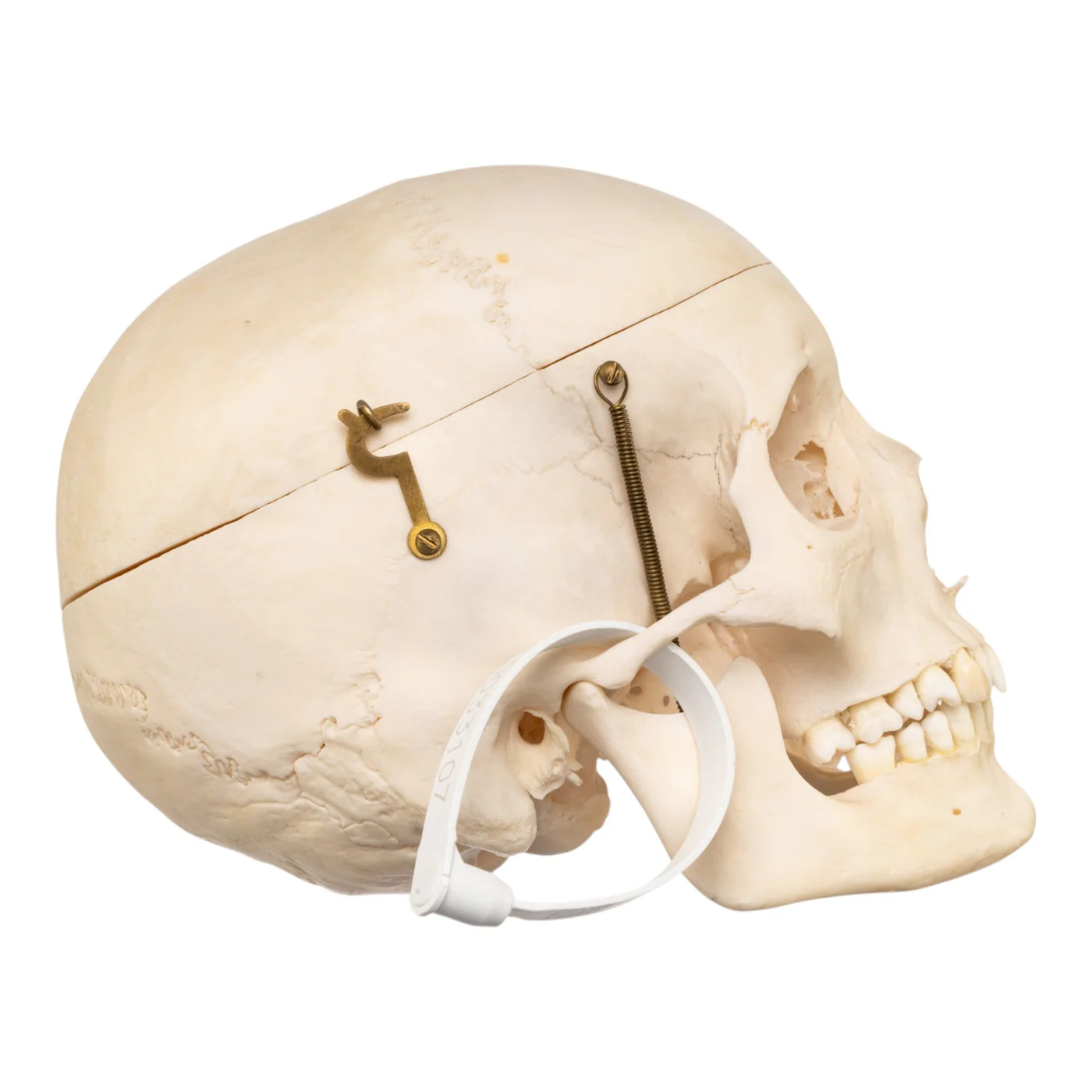
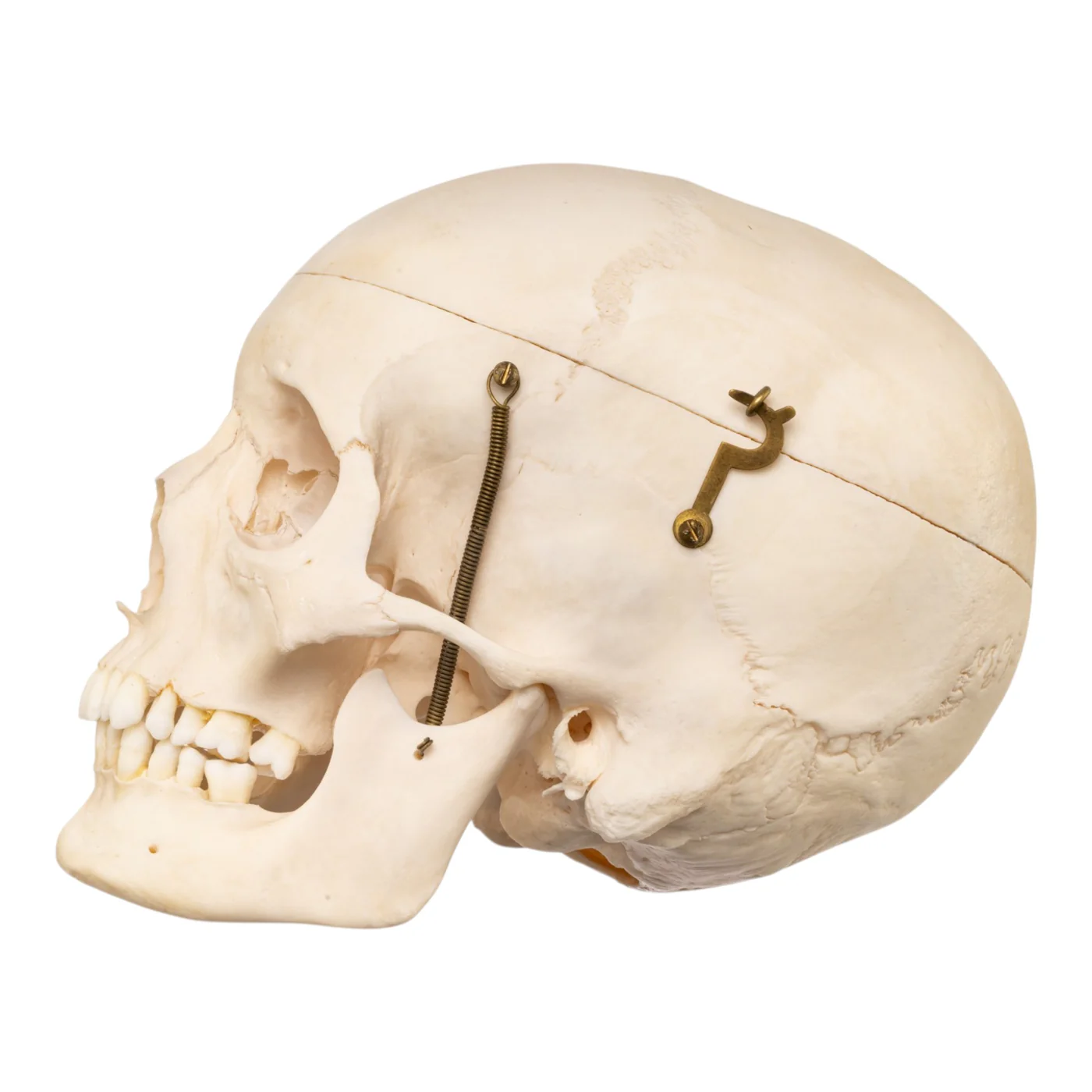
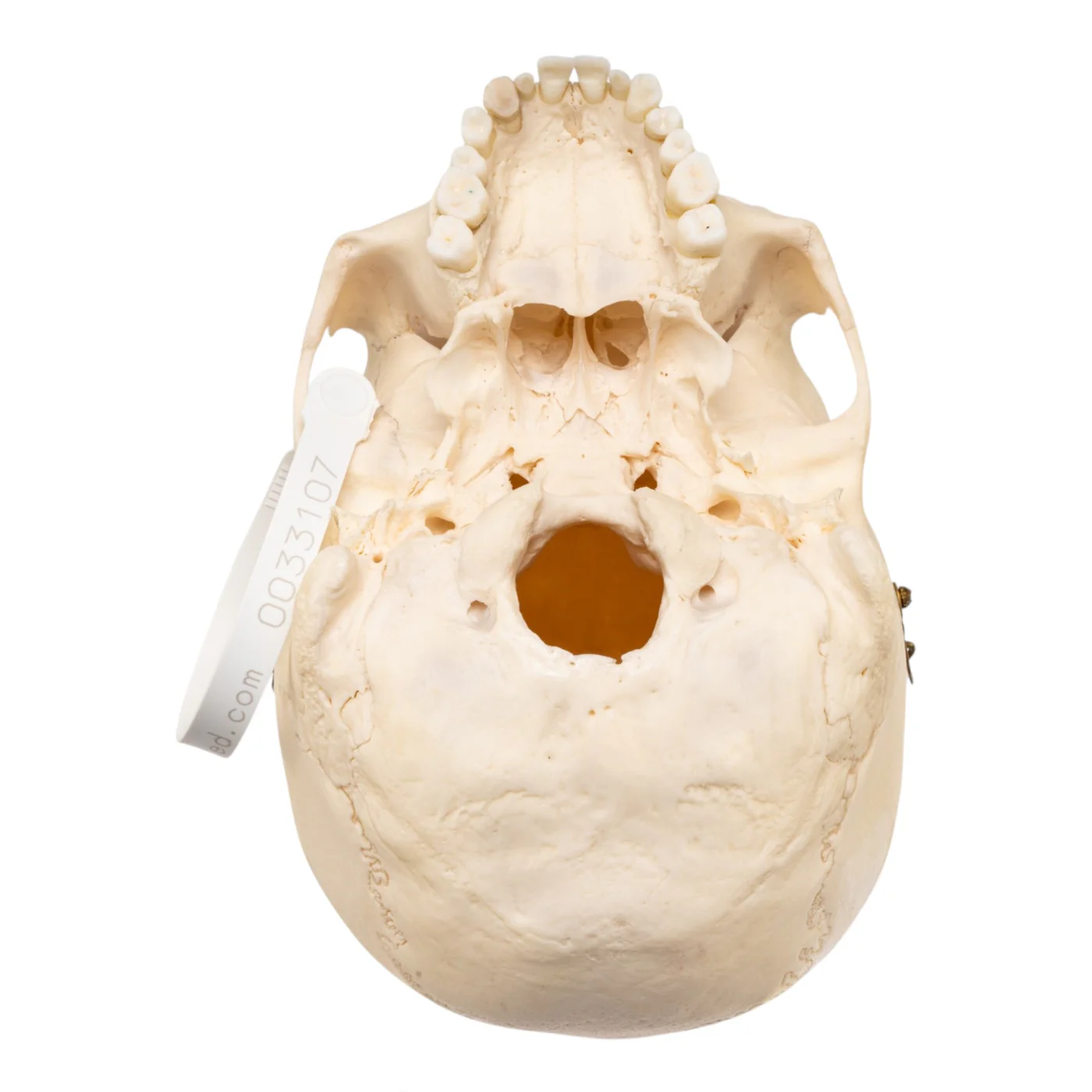
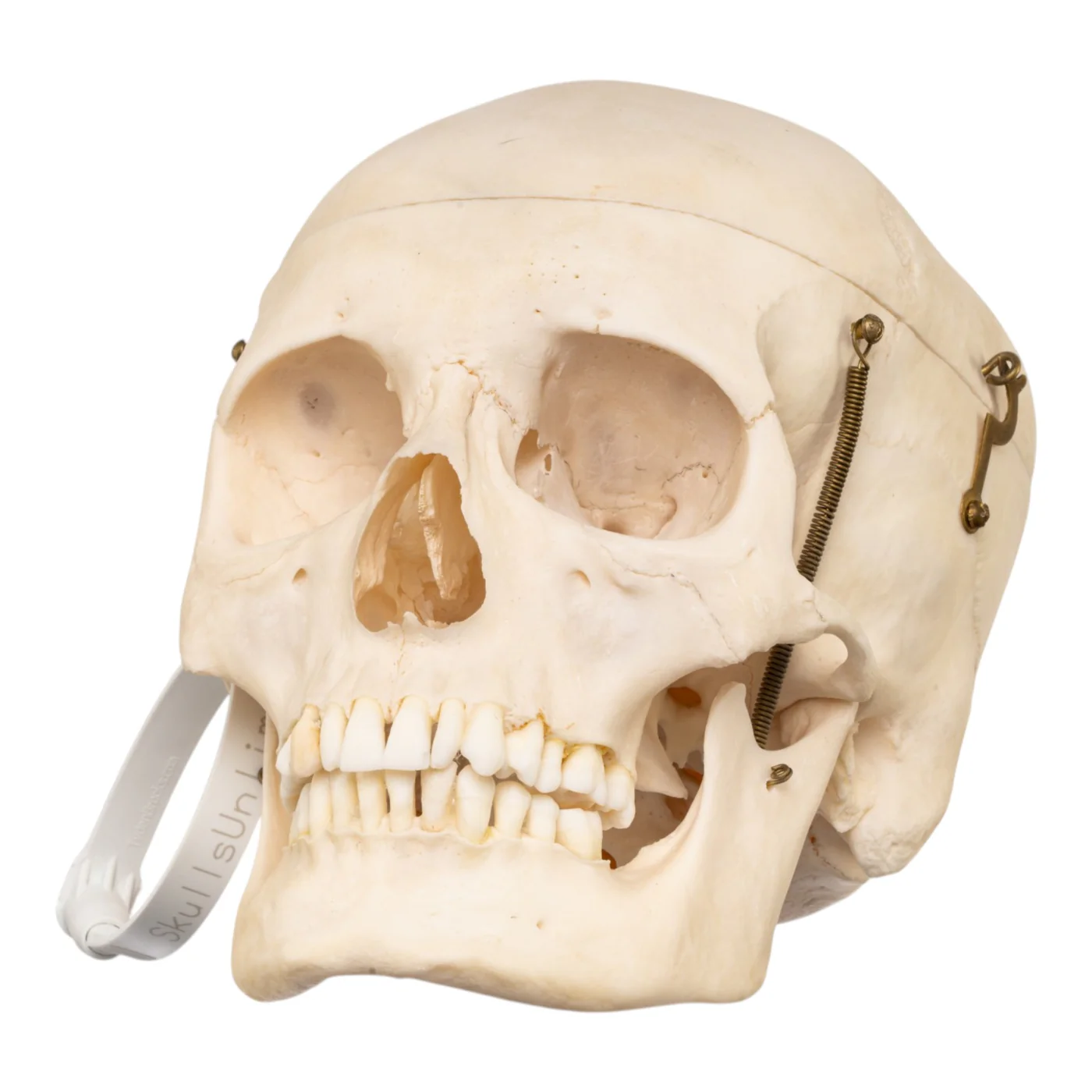
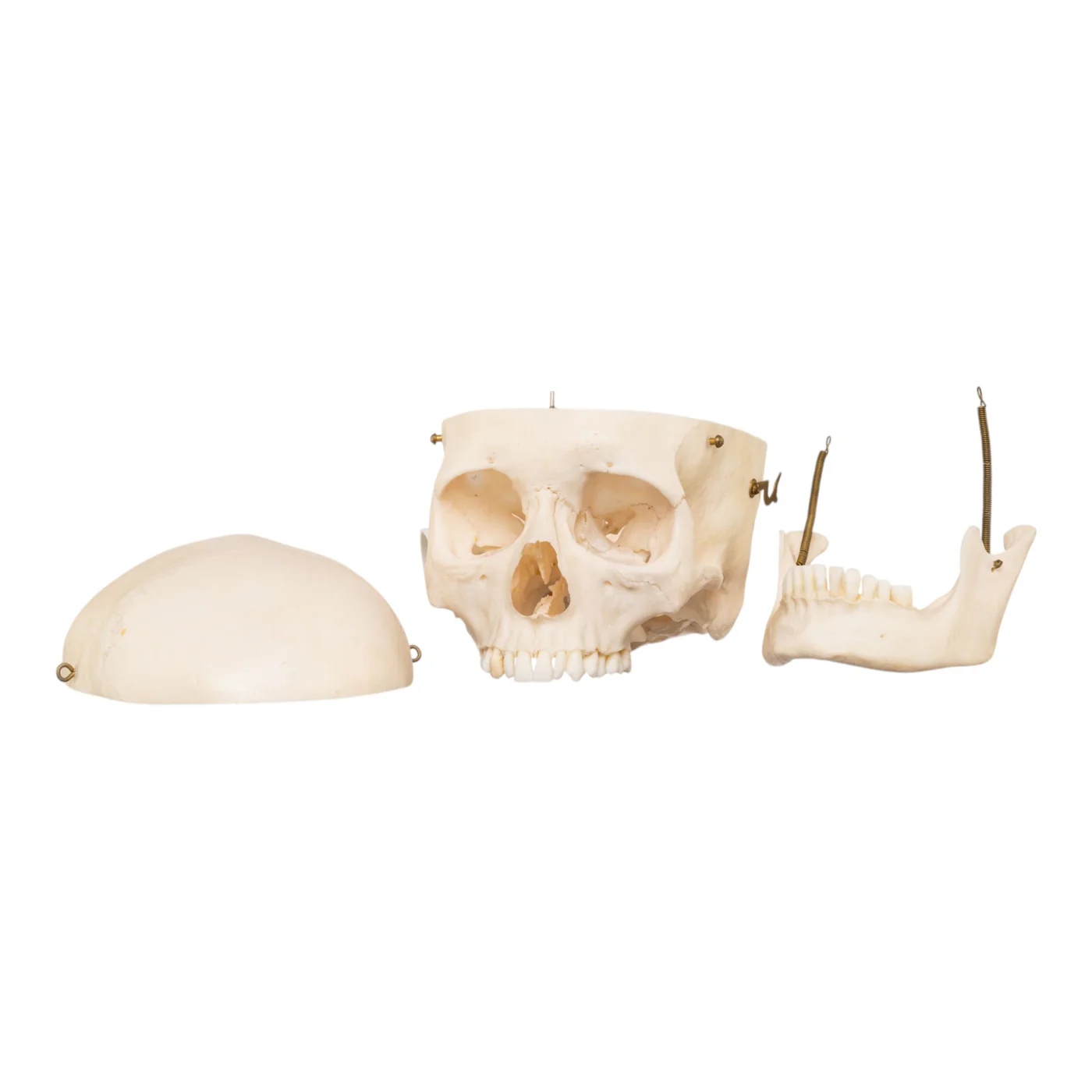
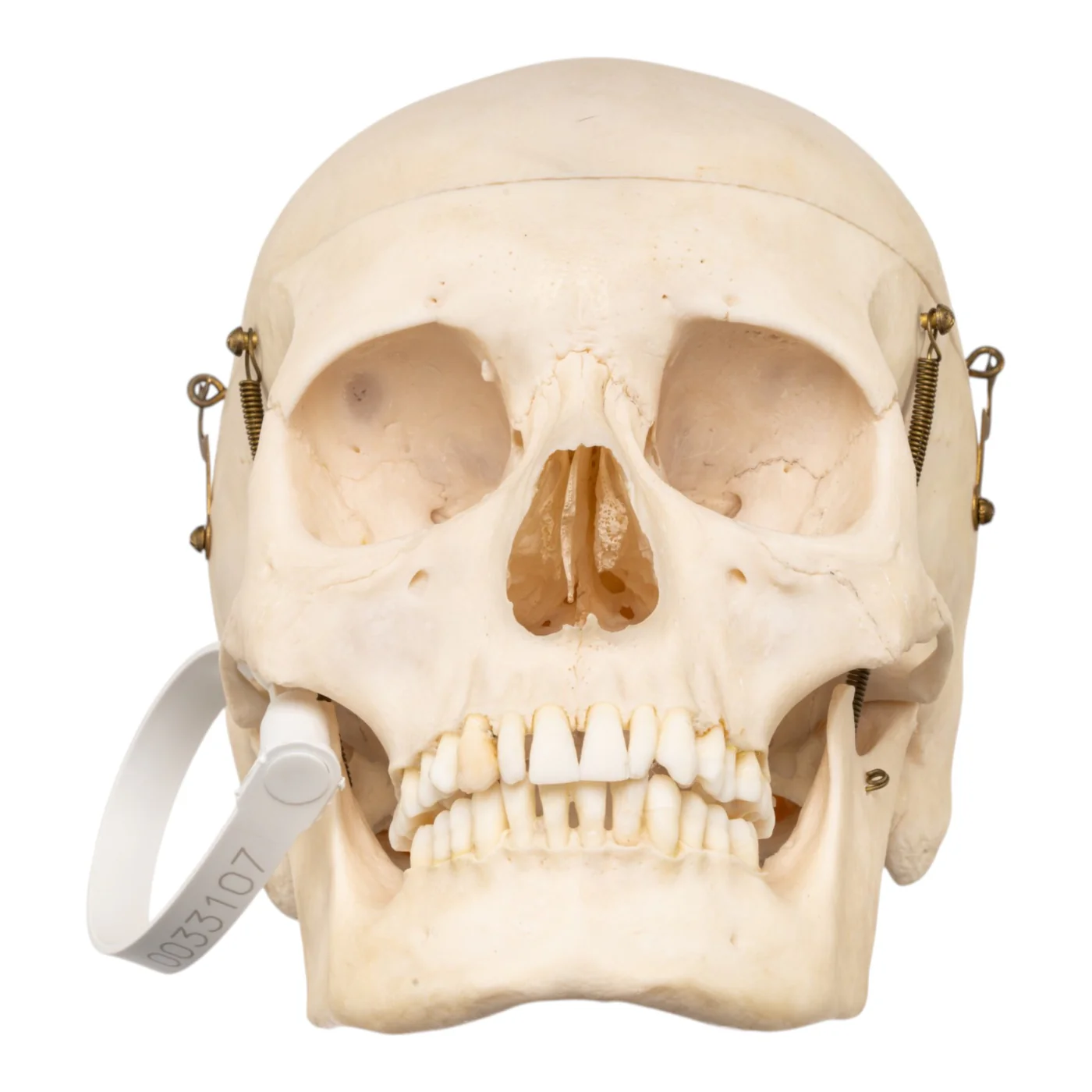
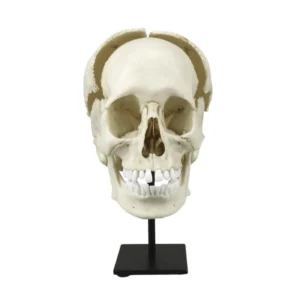
This is an authentic human skull for sale, a complete ex-medical teaching specimen with a cut calvarium, a spring-held mandible and 26 teeth in excellent condition. It is real bone, not a cast. Every feature you see was formed by a living person and prepared by hand for anatomical instruction.
Specimens like this were the backbone of medical education for more than a century. Today they are finite, because the trade that produced them has ended. What you are buying is a piece of that history, in sound condition, ready for study or display.
About this specimen
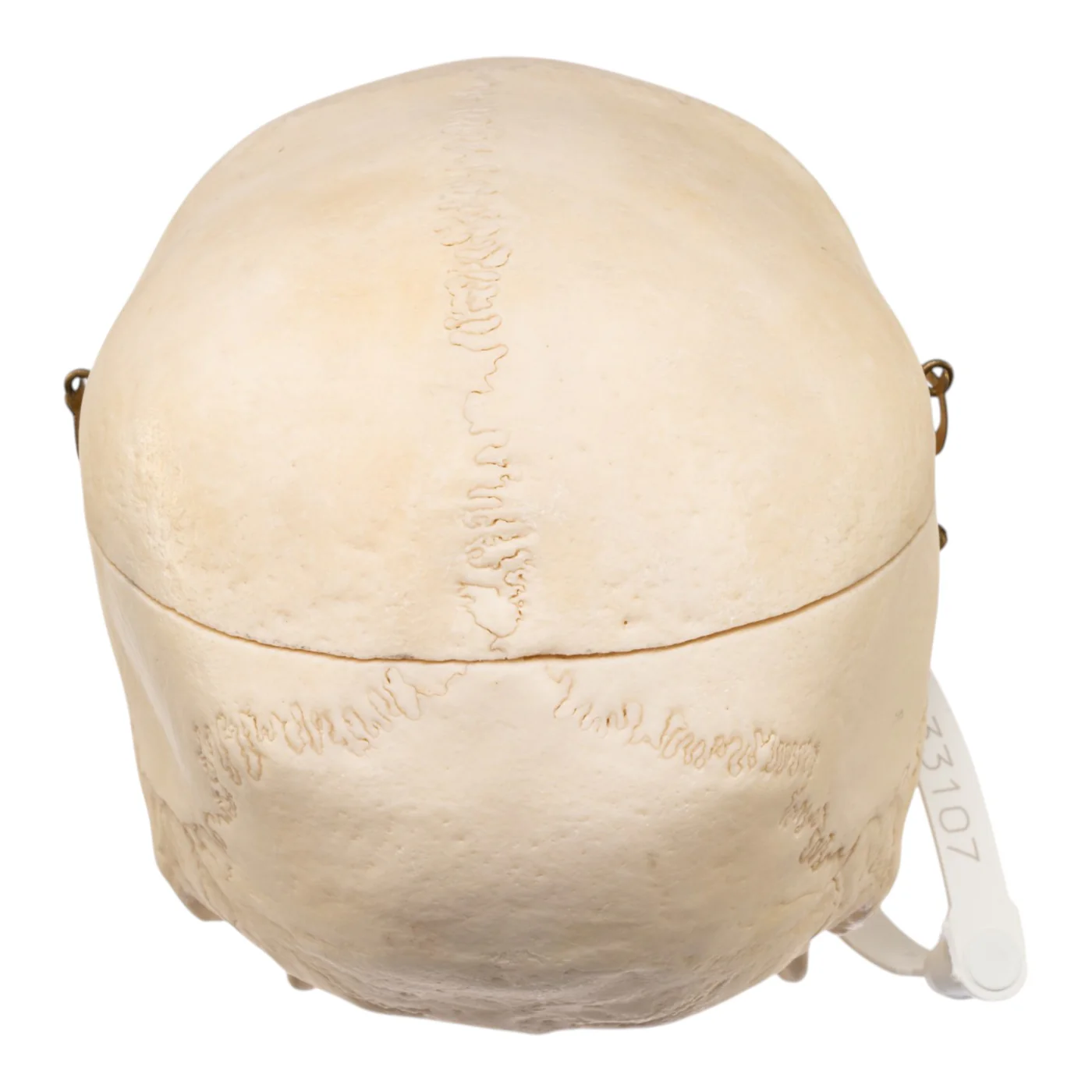
This particular skull is complete and structurally sound. The cranium is clean and even in tone, consistent with proper laboratory preparation rather than burial or exposure. The sutures are sharp and clearly defined, and because suture patterns are unique to each individual, they are one of the surest signs that a skull is genuine rather than a mould-made copy.
The dentition is a highlight. Twenty-six teeth remain in place, showing natural wear, root structure and the subtle colour variation you only ever see in real bone. Cast replicas reproduce teeth uniformly across every copy. Real teeth do not behave that way, and this specimen shows exactly the kind of individual character that separates authentic material from reproduction.
The calvarium cut explained
A calvarium cut is a precise horizontal incision through the skull cap. It allows the top of the cranium to be lifted away so you can examine the internal cranial floor, the sinus cavities and the structures that surround the brain case.
This is a hallmark of a prepared teaching specimen. Nobody cuts a skull this way by accident, and grave-recovered material never carries it. When you are assessing any real human skull for sale, a clean calvarium cut is strong evidence of legitimate ex-medical origin. On this specimen the cut is neat and the cap seats correctly.
The spring-held mandible
The lower jaw is articulated with a quality spring system, so it opens and closes naturally and stays in position. This was standard preparation for teaching skulls, allowing students to demonstrate mastication, jaw alignment and the temporomandibular joint without the mandible falling away.
Like the calvarium cut, spring articulation is an ex-medical signature. It is a feature you will not find on decorative pieces or on the fake human skulls for sale that circulate on social media and marketplace listings.
Full specifications
| Attribute | Detail |
|---|---|
| Class | Mammalia |
| Order | Primates |
| Family | Hominidae |
| Genus | Homo |
| Species | Sapiens |
| Specimen type | Real ex-medical teaching skull |
| Dentition | 26 teeth, excellent condition |
| Preparation | Cut calvarium, spring-held mandible |
| Circumference | 47.2 cm (18.6 in) |
| Length | 19.5 cm (7.7 in) |
| Width | 13 cm (5.1 in) |
| Height | 14.7 cm (5.8 in) |
| Stand | Not included, mounting available on request |
| Price | €1,700.00 |
If you would like this specimen mounted on a display stand, contact us before ordering and we will talk through the options.
Where this skull comes from
Almost every genuine specimen on the market today is an antique ex-medical teaching skull, and this one is no exception. For most of medical history, students learned anatomy from real bone. A substantial industry supplied cleaned skulls and skeletons to medical and dental schools across Europe and North America, with preparation centred on India.
That supply ended. India banned the export of human remains in 1985, and China, which had partly filled the gap, followed in 2008. No new medical osteology has been produced at scale since. The specimens in circulation today are being rehomed from retiring physicians, closing teaching collections and long-held private holdings.
This is why provenance matters more than anything else when you buy, and why an unusually low price should concern you rather than tempt you. We source responsibly, we are transparent about origin, and we will always answer questions about a specimen’s history before you commit.
How to tell a genuine specimen from a replica
If you are new to this, it helps to know what you are looking at. Genuine ex-medical skulls carry marks of their original purpose that replicas cannot fake.
- Weight and feel. Real bone is surprisingly light and cool to the touch. Solid resin feels heavy and slightly warm.
- Surface texture. Authentic bone is faintly porous, with fine nutrient foramina and a matte grain. Casts are smooth and often carry a mould seam.
- Sutures. Real suture lines are three-dimensional and unique to the individual. On replicas they are shallow and identical across every copy.
- Teeth. Natural wear, staining and variation, versus uniform moulded dentition.
- Preparation marks. Hardware, a cut calvarium and old institutional labelling all point to ex-medical origin.
Warning signs run the other way: soil, roots or residue suggest recent exhumation rather than teaching use, and a listing offering a human skull for sale cheap with no provenance is one to walk away from. Our real vs replica guide covers all seven tells in detail.
Who this specimen suits
Real human skulls for sale of this quality go to a mix of buyers, and the motivation is almost always study, teaching or preservation.
Medical and dental students use them to learn cranial anatomy in three dimensions, which no screen reproduces. Clinicians, surgeons and physiotherapists keep a reference specimen to hand for their own work and for explaining procedures to patients. Forensic anthropologists and archaeologists study skeletal markers. Artists and sculptors work from true anatomical form. And private collectors value the science, the history and the craft of preparation.
If you are unsure whether a real specimen or a replica suits you better, read our guide on buying your first human skull.
Is it legal to buy a human skull?
In most places, yes. Owning a lawfully obtained human skull is legal across most of the world, and the specimen itself is rarely the issue. Origin is what the law cares about.
In the United States there is no federal ban, though Native American remains are protected under NAGPRA and a few states restrict sales. In the United Kingdom private ownership is generally lawful, but a licence is required to publicly display remains under 100 years old, and legislation is currently under review. Some countries restrict import entirely.
Before ordering, please confirm the rules where you live. We will also confirm that we can lawfully ship to your address before we take payment. Our full country-by-country breakdown is in the guide on whether it is legal to own a human skull, and you can read more about sourcing in our piece on ethically sourced human bones.
Prefer a replica?
If the legal considerations of real remains are a concern, or if you need something robust enough for daily classroom handling, a replica is the sensible choice. A high-quality human skull replica for sale reproduces full anatomical detail, ships anywhere without complication, and costs a fraction of authentic bone. Browse our museum-grade replica human skulls.
What you can study with this specimen
A prepared skull like this teaches things a diagram cannot. With the calvarium removed you can trace the cranial floor, examine the three fossae that cradle the brain, and see the foramina where nerves and vessels pass through bone. The sinus cavities become obvious in a way no illustration conveys.
The articulated mandible lets you work through the temporomandibular joint, jaw movement and occlusion directly. With 26 teeth present you can study root structure, natural wear patterns and the relationship between dentition and the surrounding bone.
The sutures reward close attention too. Their pattern is unique to the individual, and their degree of fusion is one of the markers forensic anthropologists use when assessing skeletal remains. Sex and ancestry also leave traces in cranial architecture, which is why a real specimen remains a standard reference in forensic and anthropological training.
This is the value of authentic bone over a cast. A replica shows you the shape. A real skull shows you a person.
Why buy from The Bones Vault
We deal in osteology full time, and we are transparent about it. Every specimen is responsibly sourced, honestly described and photographed in detail, so you know exactly what is arriving. We answer questions about provenance and condition before you buy rather than after. We confirm we can lawfully ship to you before taking payment. And we pack properly and ship discreetly, because both the specimen and your privacy matter.
If you want a skull we do not currently list, or you are looking for something specific for a teaching collection, contact us and we will tell you honestly whether we can help.
Care and handling
A genuine skull is fragile and irreplaceable, so treat it accordingly. Keep it out of direct sunlight, which yellows and dries bone over time. Aim for stable, moderate humidity, since damp encourages mould and very dry air causes cracking. Support the cranium and mandible together when you lift it, and never carry a skull by the zygomatic arches or the teeth. Dust with a soft, dry brush only. Do not wash bone or use household cleaners, which stain and degrade it. A stable display case protects the specimen and looks better too.
Shipping and discretion
Your specimen is double-boxed, with the mandible secured so it cannot move in transit. We ship worldwide in plain, unmarked packaging. Your purchase is nobody else’s business. We confirm destination eligibility before every sale, and we are happy to answer any question about condition, provenance or delivery before you order.
Learn more before you buy
- Start here: our complete human skull buyer’s guide.
- The law explained: is it legal to own a human skull?
- Real or replica? 7 easy ways to tell.
- What it costs and why: how much does a human skull cost?
- The anatomy in full: our guide to the human skull and detailed skull anatomy.
Reviews
There are no reviews yet.