
The Ivory Carved Tusk: Art, History, and What Is Legal to Own
An ivory carved tusk is a whole or partial tusk worked into a sculpture or relief, a craft practiced for tens of thousands of years across many cultures. If you love the art but want to collect it responsibly, the key fact is this: carving new elephant ivory is banned almost everywhere, while legal mammoth ivory and genuine documented antiques offer a way to own carved ivory lawfully.
This guide covers the art of carving ivory, the difference between legal mammoth ivory and banned elephant ivory, how tusks are carved, the history of the craft, and how to collect a carved ivory piece without breaking the law. Let’s get into it.
Products by Category
-
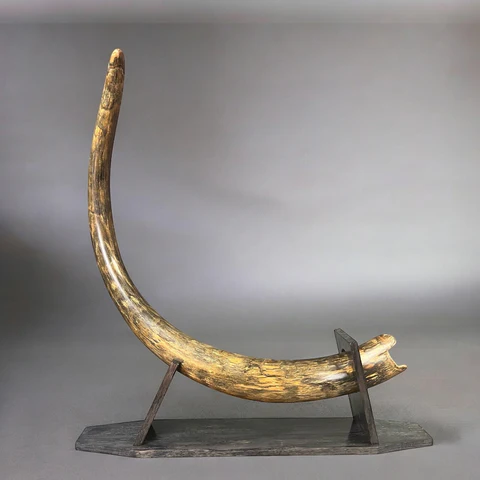
Fossilized Woolly Mammoth Tusk (Mammuthus primigenius, 64″)
€12,500.00 -
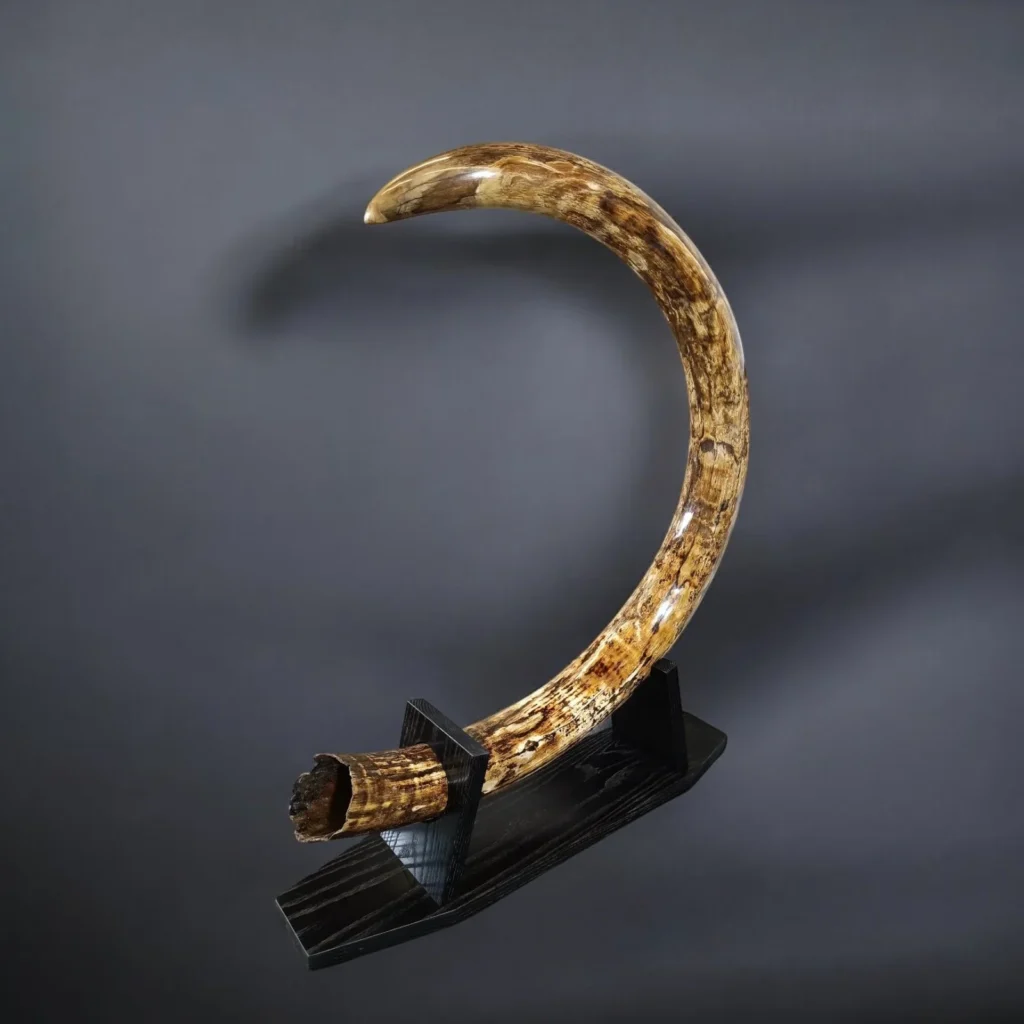
Large Woolly Mammoth Tusk (Mammuthus primigenius, 9′ / 100 lbs)
€44,000.00 -
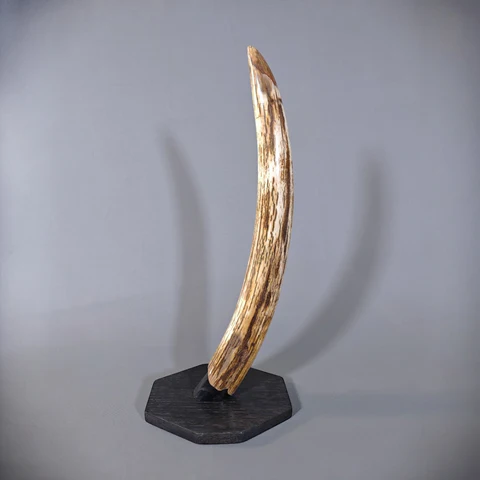
Woolly Mammoth Ivory Tusk (Mammuthus primigenius, 23.5″)
€2,800.00 -
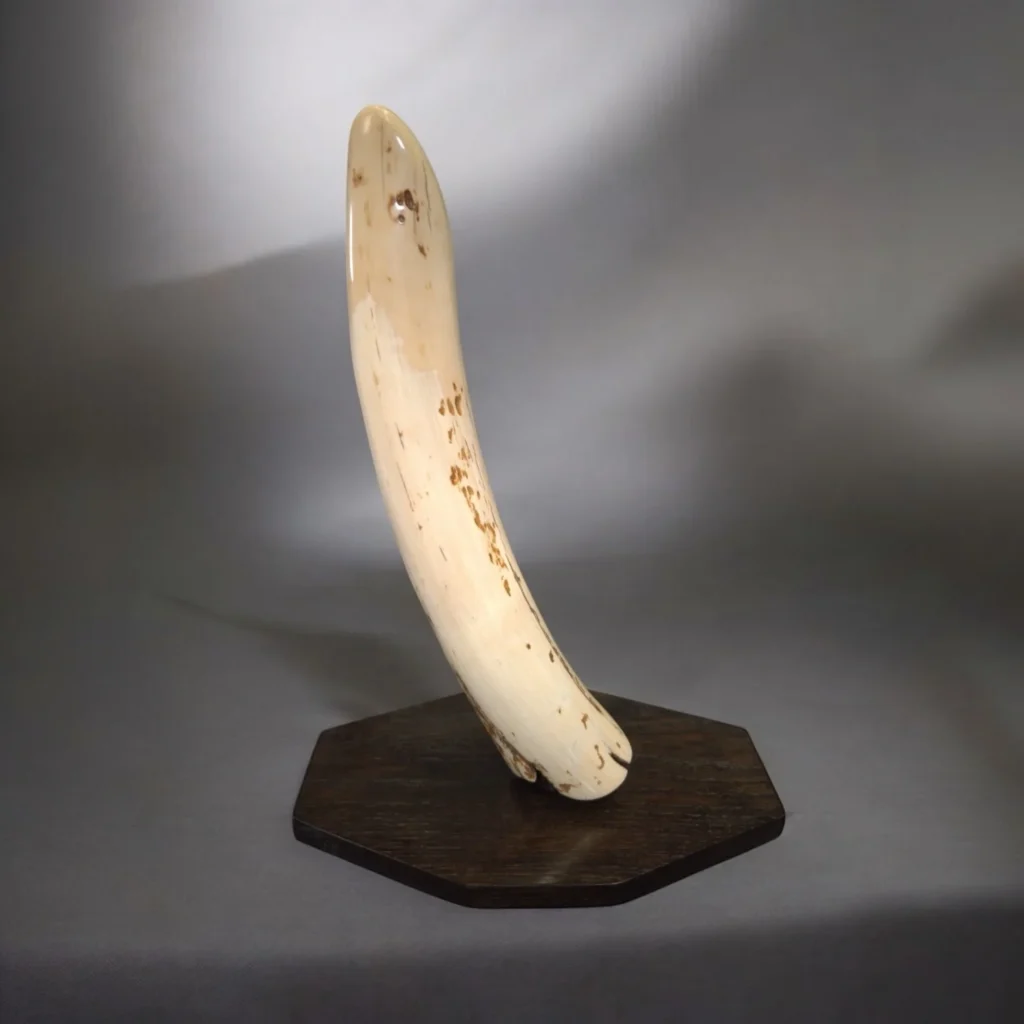
Woolly Mammoth Tusk (Mammuthus primigenius, 18″)
€2,300.00 -
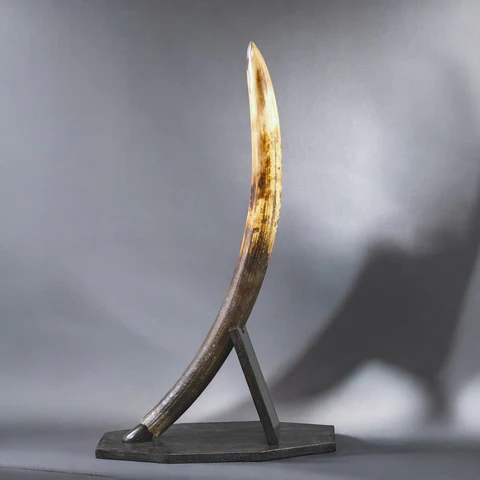
Woolly Mammoth Tusk (Mammuthus primigenius, 32.5″)
€4,000.00 -
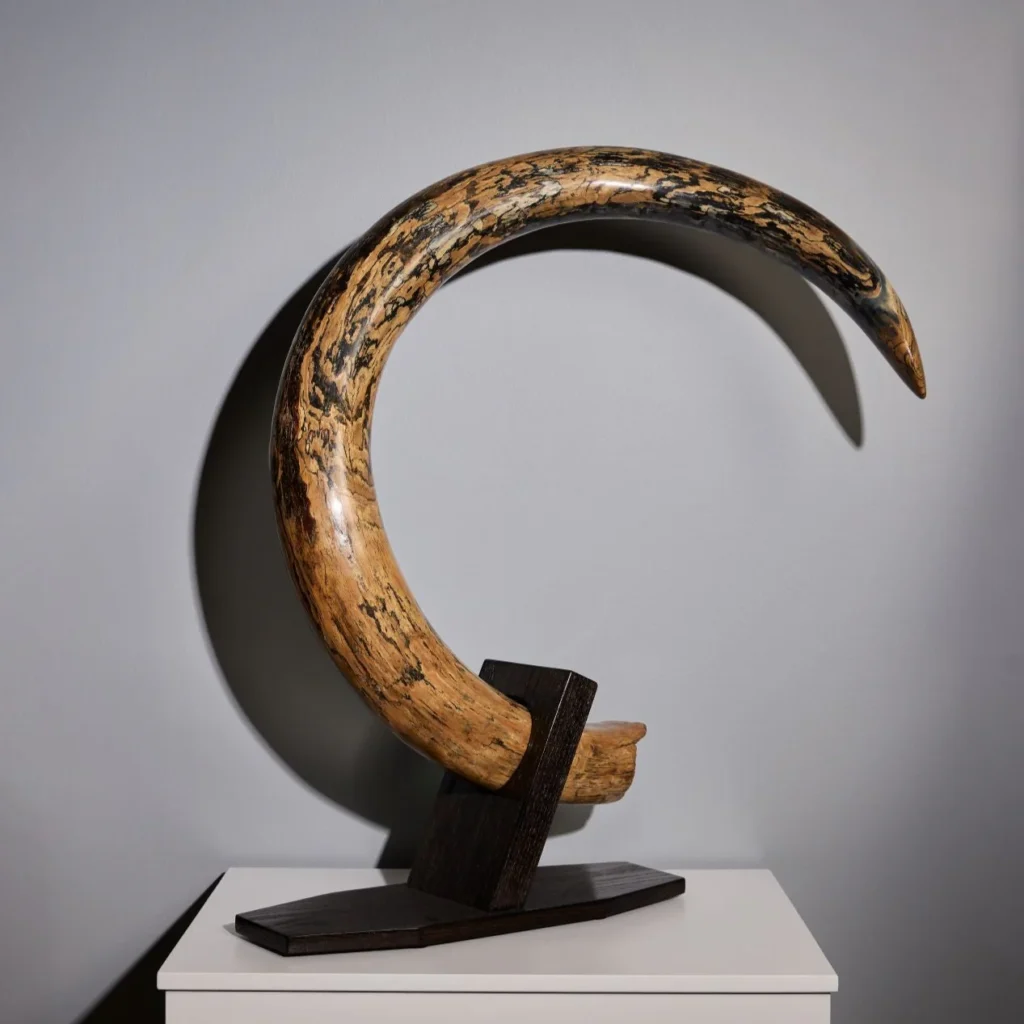
Woolly Mammoth Tusk (Mammuthus primigenius, 69″)
€20,000.00 -
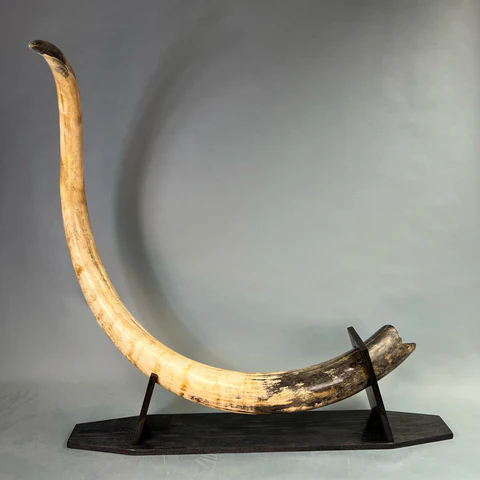
Woolly Mammoth Tusk (Mammuthus primigenius, 7′ 6″)
€18,500.00 -
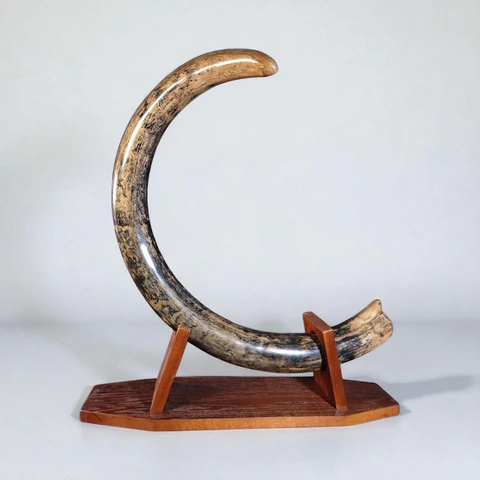
Woolly Mammoth Tusk (Mammuthus primigenius, 8′ / 86 lbs)
€35,500.00 -
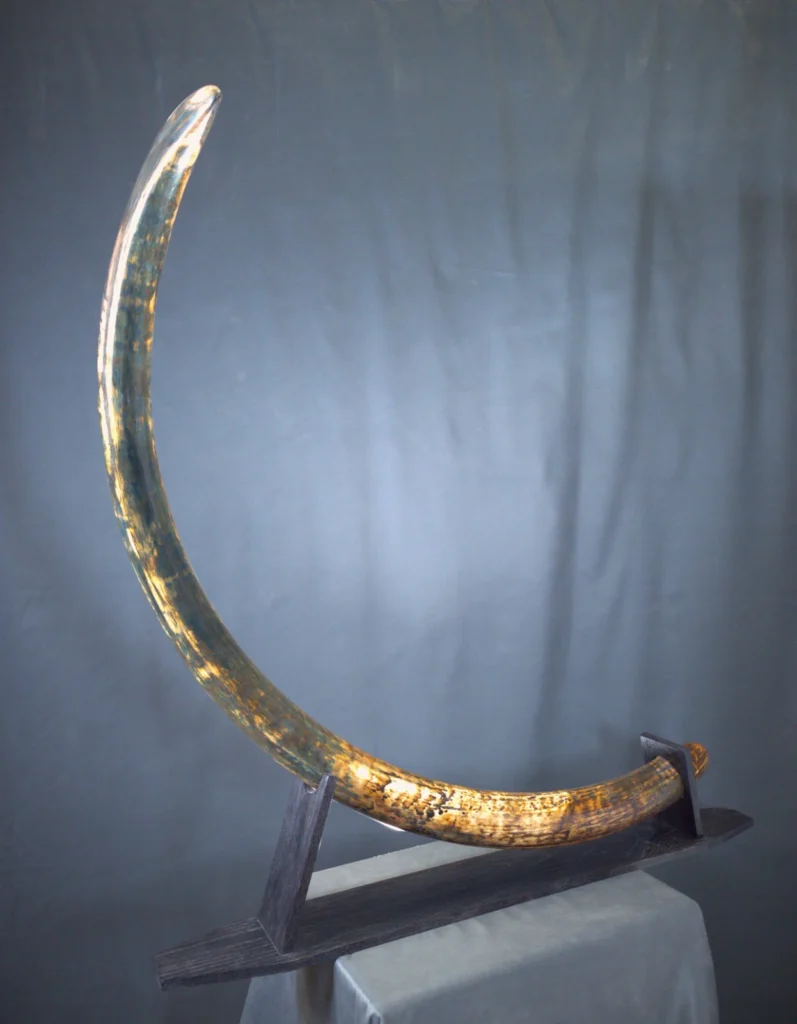
Woolly Mammoth Tusk (Mammuthus primigenius, 8′ 2″)
€24,500.00
What is an ivory carved tusk?
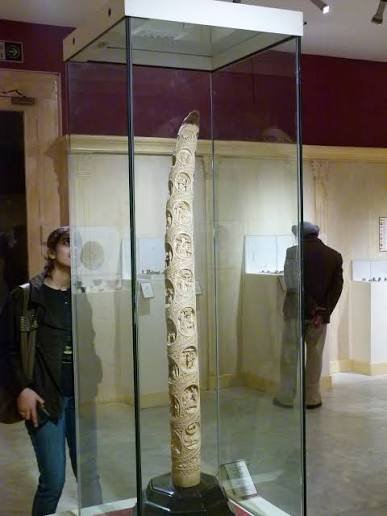
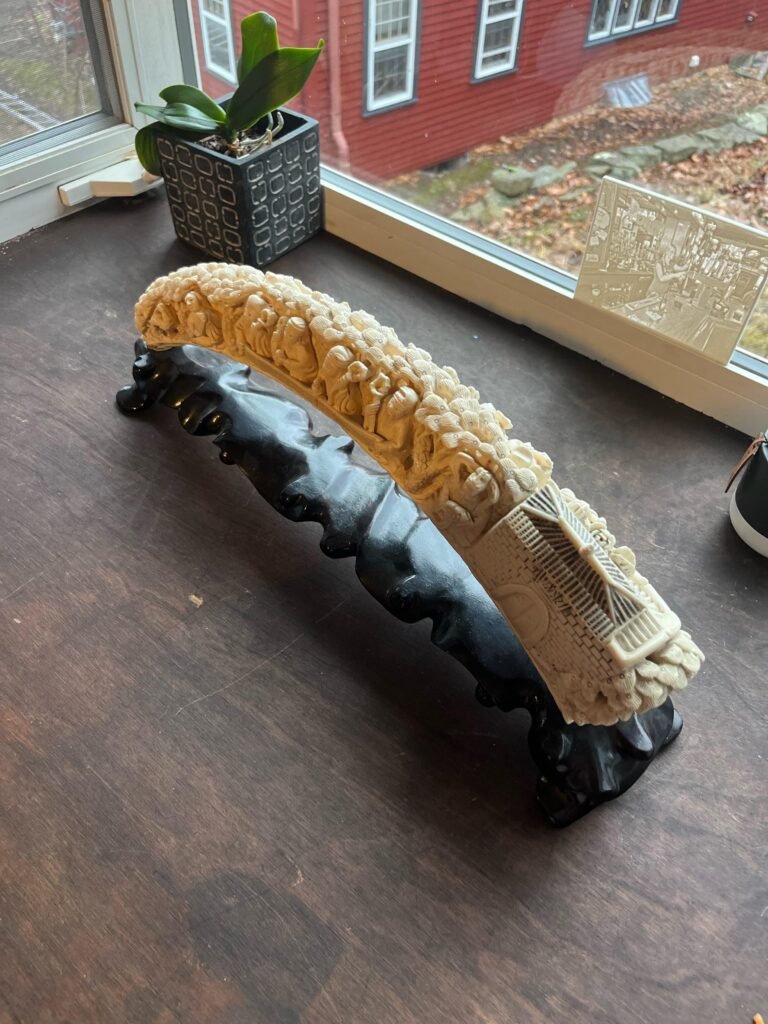
An ivory carved tusk is a tusk, or a section of one, that an artist has carved into a decorative or sculptural object. The tusk’s natural curve and size make it a canvas for everything from delicate relief scenes to full three-dimensional figures.
Ivory has been prized by carvers for millennia because it is dense, fine-grained, and takes fine detail without splitting. A carved tusk might show a procession of figures winding along its length, a scene in low relief, or be worked into a single sculpture. The material comes from several animals, historically the elephant, but also the extinct mammoth, the walrus, and others. Today the animal the ivory came from matters enormously, because it decides whether a carved tusk is legal to own and sell. That is where any responsible look at carved ivory has to begin.
Legal mammoth ivory vs. banned elephant ivory
This is the most important thing to understand about carved ivory: mammoth ivory is legal in most places, while elephant ivory is banned in most of the world. Getting this right is the difference between a lawful collection and a criminal offense.
Elephant ivory comes from a living, endangered animal. Because of the poaching crisis that has devastated elephant populations, the international trade in elephant ivory is banned under CITES, and many countries, including the United States, the United Kingdom, China, and others, have added their own strict domestic bans. Buying, selling, or carving new elephant ivory is illegal in most of the world.
Mammoth ivory comes from an animal that has been extinct for thousands of years. The woolly mammoth is not a CITES species, so genuine mammoth ivory is legal to buy, own, carve, and sell in most places, and owning it harms no living animal. This is why modern ivory carvers who work legally use mammoth ivory, recovered from the Siberian and Alaskan permafrost, rather than elephant ivory.
| Elephant ivory | Mammoth ivory | |
|---|---|---|
| Source animal | Living, endangered | Extinct thousands of years |
| CITES status | Protected, trade banned | Not listed |
| Legal to sell? | Banned in most of the world | Legal in most places |
| Harms a living animal? | Yes. | No |
| Used by legal carvers today? | No | Yes. |
If you want to own or commission carved ivory legally, mammoth ivory is the answer. Our guide on whether mammoth ivory is legal covers the rules in full, and our mammoth tusk versus elephant ivory guide shows how to tell the two apart.
How do you tell mammoth ivory from elephant ivory?
You tell mammoth ivory from elephant ivory by the Schreger lines, the cross-hatch pattern visible in a cross-section. Mammoth ivory shows acute angles under 90 degrees; elephant ivory shows obtuse angles over 115 degrees. This test matters because it separates legal material from banned material.
The Schreger lines are the intersecting arcs you see when you look at the flat end of a tusk or a cut piece. The angle where they cross is the key: sharp, acute angles point to mammoth, while wide, obtuse angles point to elephant. Color and condition help too; mammoth ivory often carries fossil staining and fine surface cracks from its long burial, while fresh elephant ivory looks pale and uniform. For a carved piece where the shape hides the tusk’s structure, this identification becomes harder, which is exactly why documentation and provenance matter so much. Our full guide to telling mammoth from elephant ivory covers the science, including the newest laboratory methods.
The art of carving ivory
The art of carving ivory is one of the oldest continuous crafts in human history, worked with knives, chisels, files, and drills to bring detail out of a dense, forgiving material. Ivory carving rewards patience and precision above all.
Ivory is a joy to carve because it is dense and fine-grained, holding crisp detail that softer materials lose, yet it is workable with hand tools. A carver studies the natural shape of the tusk, its curve, its taper, and the hollow at the base, and plans the design around it, often letting the tusk’s form suggest the subject. The work moves from rough shaping with saws and rasps to fine detail with small chisels, gravers, and needle files, and finishes with progressive smoothing and polishing that brings up ivory’s soft, warm sheen. A single elaborate carved tusk could take a skilled artist months. The craft is described in depth by Britannica and by Wikipedia’s ivory carving article.
Scrimshaw: carving and engraving on ivory
Scrimshaw is the art of engraving detailed designs into ivory and then rubbing in pigment to make them stand out, a tradition strongly associated with whalers and, today, with legal materials like mammoth ivory. It is one of the most collectible forms of ivory art.
A scrimshander scratches a fine design into the smooth surface of ivory with a sharp point, then rubs ink or pigment into the lines so the image appears in dark detail against the pale ground. Historic scrimshaw was made by sailors on long whaling voyages, using whale teeth and ivory, and antique pieces are prized by collectors. Modern scrimshaw artists work on legal materials, and mammoth ivory is a favourite for its fine surface and fossil color. The tradition is covered well on Wikipedia’s scrimshaw page. Scrimshaw shows how ivory’s fine grain suits not just three-dimensional carving but delicate surface art too.
A short history of ivory carving
People have carved ivory for at least 40,000 years, making it one of humanity’s oldest art forms, and the craft has flourished in cultures across the world. The story of carved ivory is really the story of human art itself.
Some of the oldest known figurative art is carved from mammoth ivory: small Ice Age figures tens of thousands of years old, made by the same people who hunted mammoths. From there, ivory carving flourished almost everywhere ivory could be obtained. Ancient civilizations used it for religious and royal objects. Medieval European carvers made intricate ivory panels and caskets. Chinese and Japanese artists produced astonishingly detailed carvings, from concentric puzzle balls to tiny netsuke figures. African carvers created ceremonial and decorative works. In each culture, ivory signalled skill and status, because it was precious, durable, and demanded a master’s hand. That deep history is part of why carved ivory remains so collectible and why antique pieces carry such interest. Museums like the Metropolitan Museum of Art hold major collections that trace this history.
Antique carved ivory: collecting it legally
Antique carved ivory can often be owned and sometimes sold legally, but the rules are strict and vary by country, so provenance and paperwork are essential. Genuine antiques are treated differently from new ivory, but “antique” has a precise legal meaning you must respect.
Many ivory bans include limited exemptions for genuine antiques, often defined as items of a certain age (frequently pre-1947 in some jurisdictions) with documented provenance, and sometimes only below a certain ivory content. But these exemptions are narrow, the definitions vary between countries, and the burden is on the seller to prove an item qualifies. An undocumented “antique” carving is a legal risk, because without provenance it cannot be distinguished from illegal modern ivory. If you collect antique ivory, keep every piece of documentation, buy only from dealers who provide provenance, and check the specific rules for your country before you buy or sell. When the paperwork is missing, the safe assumption is that a piece cannot be legally traded. This is one area where “when in doubt, do not” is the right rule.
Modern carved mammoth ivory
Modern carved ivory made legally today is almost always mammoth ivory, worked by artists who want the beauty of ivory without the illegality and cruelty of the elephant trade. It is the living continuation of a 40,000-year-old craft.
Mammoth ivory gives modern carvers the same dense, fine-grained material that made ivory prized for millennia, with the added character of fossil color, from creams and tans to the rare blues and browns of mineral staining. Contemporary artists carve mammoth ivory into sculptures, jewelry, scrimshaw, knife handles, and decorative objects, each piece legal to own and free of any harm to living animals. Because each tusk is a unique fossil, no two carved pieces are alike. If you love ivory art but want it to be lawful and ethical, a carved mammoth ivory piece, or a genuine uncarved tusk you display as it is, is the way to have it. Our woolly mammoth tusk collection offers genuine fossil tusks, and our complete woolly mammoth guide tells the fuller story.
Products by Category
-
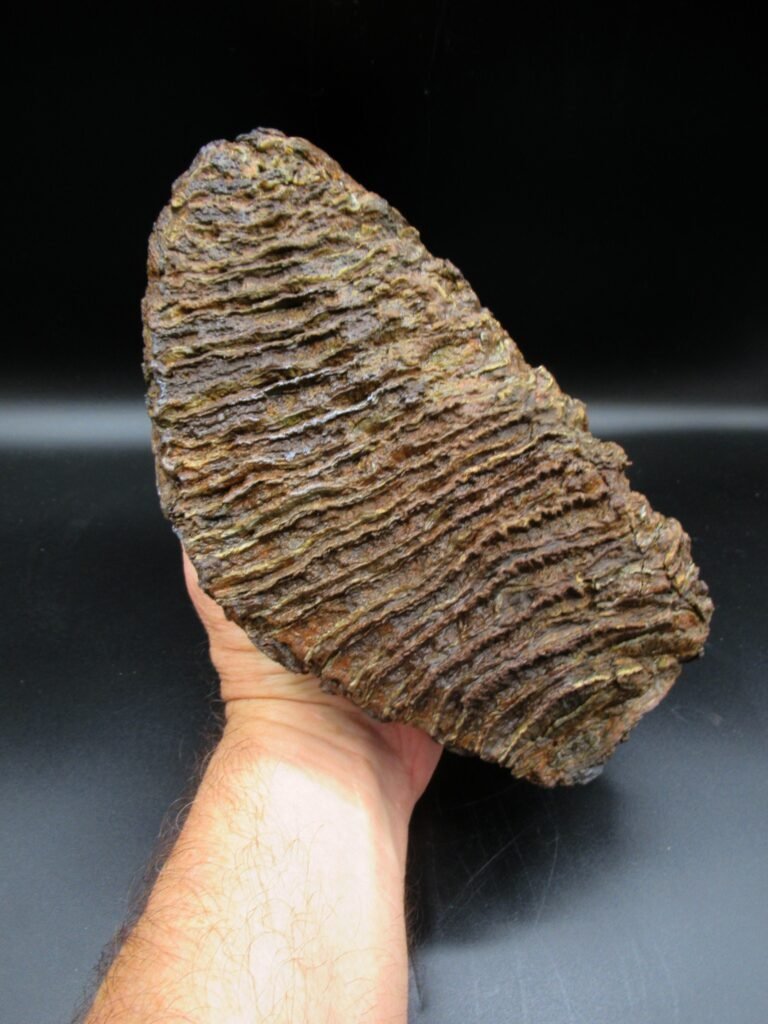
Genuine Woolly Mammoth Tooth Fossil #10, Ice Age Alaska
€690.00 -
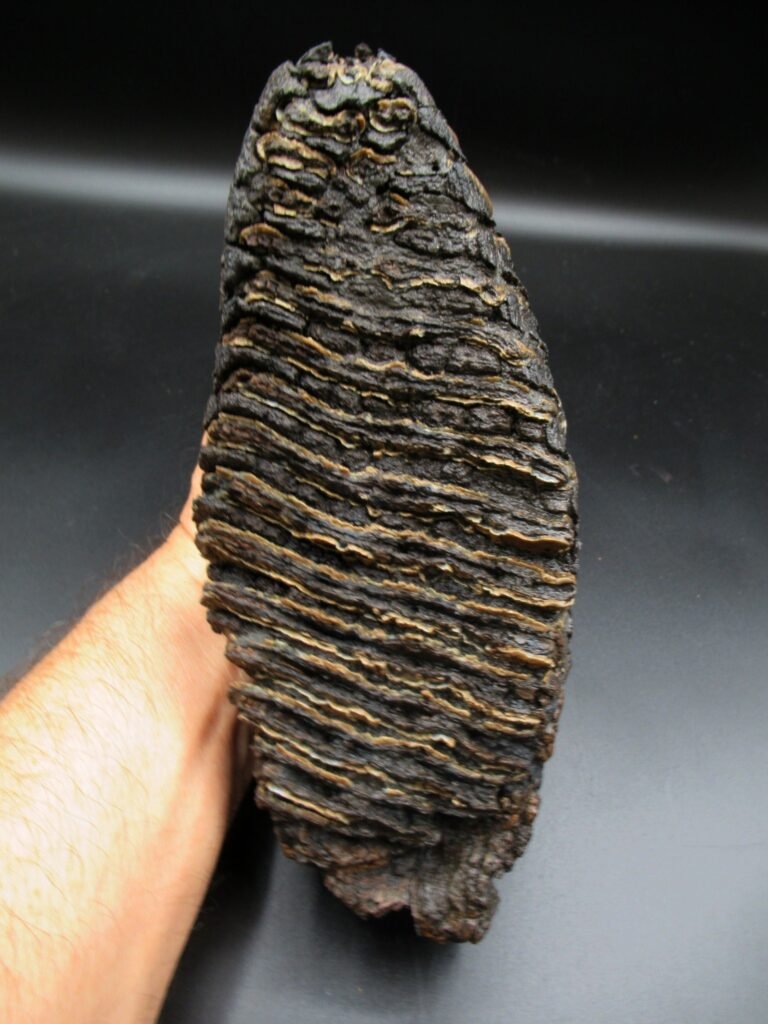
Genuine Woolly Mammoth Tooth Fossil #11, Ice Age Alaska
€600.00 -
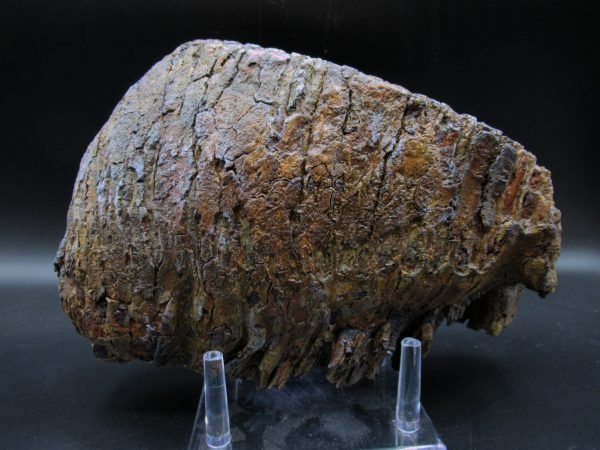
Genuine Woolly Mammoth Tooth Fossil #12, Ice Age Alaska
€600.00 -
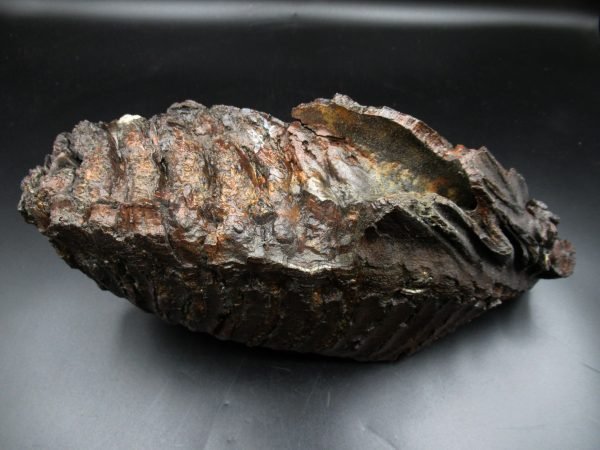
Genuine Woolly Mammoth Tooth Fossil #13, Ice Age Alaska
€600.00 -
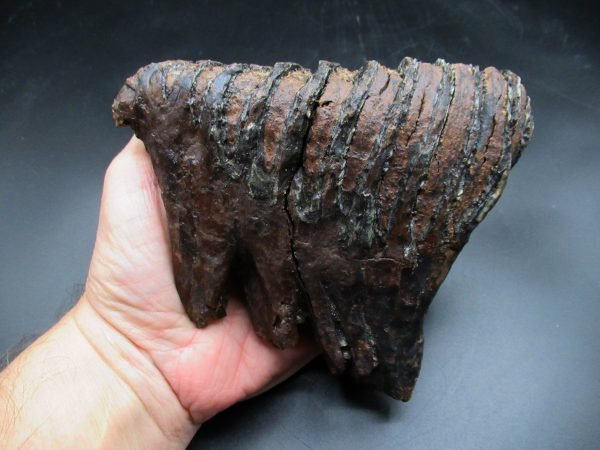
Genuine Woolly Mammoth Tooth Fossil #15, Ice Age Alaska
€300.00 -
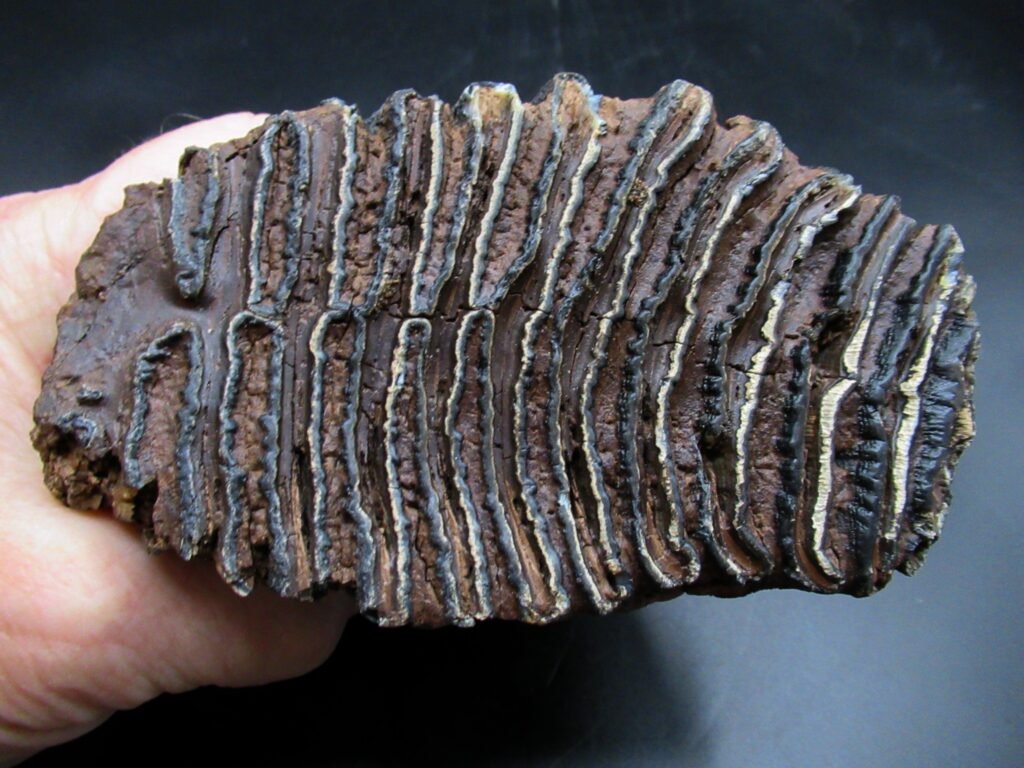
Genuine Woolly Mammoth Tooth Fossil #16, Ice Age Alaska
€330.00 -
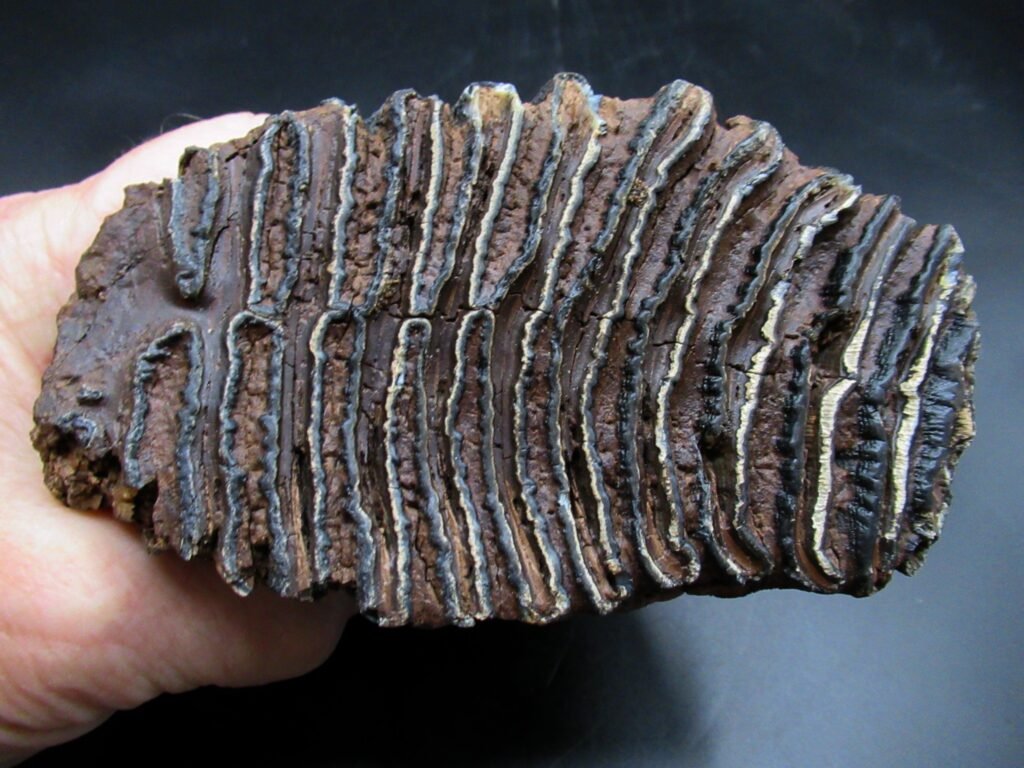
Genuine Woolly Mammoth Tooth Fossil #17, Ice Age Alaska
€495.00 -
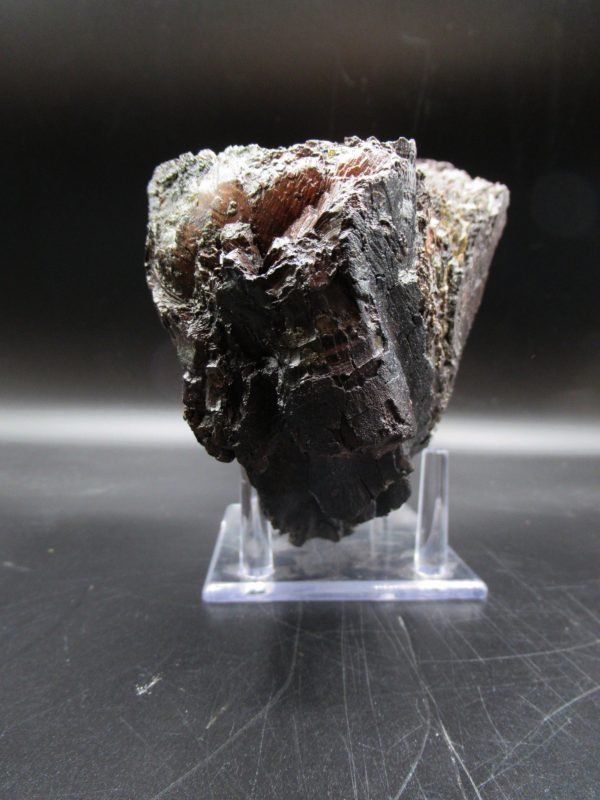
Large Genuine Woolly Mammoth Tooth Fossil #14, Ice Age Alaska
€850.00
Styles and traditions of ivory carving
Ivory carving developed distinct styles across the world’s cultures, and knowing them helps you appreciate and identify a carved piece. The major traditions each have a recognizable character.
Chinese ivory carving is famous for extraordinary technical feats, concentric puzzle balls carved from a single piece, intricate scenery, and delicate figures, prized for their precision. Japanese ivory carving produced netsuke, small toggle figures of astonishing detail, and okimono display pieces, valued as miniature sculpture. European ivory carving ran from medieval religious panels and caskets to Renaissance and Baroque sculpture. African ivory carving created ceremonial objects, figures, and decorative works with strong regional styles. Inuit and Alaska Native carving worked walrus and mammoth ivory into figures of animals and people rooted in Arctic life, a tradition that continues today with legal materials.
Each tradition reflects its culture’s aesthetics and beliefs, which is part of what makes antique carved ivory so studied and collected. It is also why identification and provenance matter: the style can suggest origin and age, but only documentation confirms legality. When you look at a carved tusk, you are seeing not just an object but a whole cultural tradition of working this remarkable material.
What subjects appear on carved tusks?
Carved tusks depict an enormous range of subjects, from processions of figures and mythological scenes to animals, scenery, and narrative panels. The tusk’s long, curving shape naturally suits flowing compositions.
A classic carved tusk runs a continuous scene along its length: a procession, a battle, and a story unfolding around the curve. Others are worked into single sculptures, a figure, an animal, or a group, using the tusk’s mass in three dimensions. Relief carving, where the design is raised from a cut-back background, suits narrative scenes, while pierced and openwork carving creates lace-like effects. The subject often reflects the carving tradition: religious and courtly scenes in some cultures and natural and everyday subjects in others. Understanding the subject and style helps place a piece, but as always, it is documentation that establishes whether it can be legally owned and sold.
How to value a carved ivory tusk
A carved ivory tusk’s value depends on the artistry, the age, the material, the condition, and, above all, the legality and provenance. A beautiful carving with no legal standing is worth nothing, you can realize, because you cannot sell it.
The quality and intricacy of the carving is the first driver of value, since ivory carving is prized as art. Age and origin matter, with documented antiques and pieces by known artists commanding more. The material matters both for beauty and for legality: legal mammoth ivory and documented antiques have realizable value, while undocumented elephant ivory has none you can lawfully access. Condition counts, as cracks and damage reduce value. But provenance sits above all of it, because without documentation, even a genuine, beautiful piece cannot be legally sold and is a liability rather than an asset. The lesson for collectors is to buy legal, documented pieces, keep the paperwork, and treat provenance as part of the value. Our mammoth tusk value guide explains how these factors work for mammoth ivory specifically.
The colors of mammoth ivory
One thing mammoth ivory offers that fresh elephant ivory never could is color, from creamy whites through tans and browns to rare blues, created by thousands of years in mineral-rich ground. These colors make each carved mammoth piece unique.
Freshly formed ivory is pale and uniform. Mammoth ivory, buried for tens of thousands of years, absorbs minerals from the surrounding earth, which stain it in ways no living animal’s ivory shows. The outer layer, or bark, often takes rich browns, tans, and caramels, while iron and other minerals can produce the prized blue-grey of vivianite staining. Carvers use these colors deliberately, working a design so the colored bark contrasts with the paler ivory beneath, or choosing a blue-stained piece for its rarity. This natural palette is part of why collectors and artists value mammoth ivory in its own right, not merely as a legal substitute. Our guide to the blue patina mammoth tusk explains how that striking color forms.
Ivory alternatives for carvers and collectors
If you love the look of ivory but want to avoid the legal and ethical issues entirely, several materials offer a similar effect. Legal mammoth ivory is the closest, but there are others worth knowing.
Mammoth ivory is the genuine article, real ivory, legal, and beautiful, the first choice for anyone who wants the real material lawfully. Walrus ivory is another genuine ivory, though it carries its own legal rules depending on origin and species protection, so it needs the same provenance care. Bone is worked similarly and is legal and affordable, though it lacks ivory’s fine grain and shows a different internal structure. Vegetable ivory (tagua nut) is a plant material that carves and polishes like ivory for small pieces, with no animal or legal issues at all. Synthetic ivory substitutes exist for those who want the look with none of the sourcing questions. For most collectors who want the real thing legally, mammoth ivory remains the answer, but it helps to know the alternatives exist.
How to display and care for a carved tusk
A carved ivory tusk needs gentle care and a stable environment, because ivory reacts to changes in humidity and can crack if it dries out or swings between damp and dry. Display it thoughtfully, and it lasts for generations.
Keep a carved tusk out of direct sunlight, which fades and dries ivory, and away from radiators, heating vents, and dampness, since big swings in humidity are what crack ivory over time. A stable room at normal household humidity suits it well. Dust gently with a soft, dry brush rather than a wet cloth, and handle carved pieces with clean hands, as oils and dirt build up in fine detail. Display a carved tusk on a cradle or stand that supports its curve without stressing it, the same principles as displaying any tusk, covered in our fossil display and mounting guide. With simple, consistent care, carved ivory remains stable and beautiful indefinitely.
Buying carved ivory responsibly
Buy carved ivory only when you can confirm it is legal, which in practice means genuine mammoth ivory or a properly documented antique from a transparent dealer. Responsible buying protects you legally and refuses to reward the elephant trade.
Before you buy any carved ivory, ask what animal the ivory is from and demand honest documentation. For mammoth ivory, a good seller confirms the fossil origin and the material. For antiques, they provide provenance that meets your country’s rules. Walk away from any piece where the seller is vague about the material, cannot prove age or origin, or brushes off legality, because an undocumented carving is both a legal risk and, potentially, a product of elephant poaching. The responsible path is clear: choose legal mammoth ivory or documented antiques, insist on paperwork, and never buy ivory whose legality you cannot verify. Our woolly mammoth tusk collection offers genuine, documented mammoth ivory, legal to own and shipped worldwide in secure, insured packaging where lawful.
Frequently asked questions
What is an ivory carved tusk?
An ivory carved tusk is a whole or partial tusk that an artist has carved into a sculpture or relief. The craft is tens of thousands of years old. Today, legal carved ivory is made from mammoth ivory or exists as documented antiques, since carving new elephant ivory is banned in most of the world.
Is it legal to buy a carved ivory tusk?
It depends entirely on the material. Carved mammoth ivory is legal in most places because the mammoth is extinct and not CITES-protected. New elephant ivory is banned almost everywhere. Genuine antiques may qualify for narrow exemptions with documented provenance, but the rules vary by country, and the burden of proof is on the seller.
How can you tell mammoth ivory from elephant ivory?
Look at the Schreger lines in a cross-section: mammoth ivory shows acute angles under 90 degrees, while elephant ivory shows obtuse angles over 115 degrees. Mammoth ivory also often carries fossil color and fine cracks. In carved pieces the structure is harder to read, which is why documentation matters.
What is scrimshaw?
Scrimshaw is the art of engraving a design into ivory and rubbing in pigment so the image stands out. It was traditionally made by whalers, and antique pieces are collectible. Modern scrimshaw artists work on legal materials such as mammoth ivory.
Why do artists use mammoth ivory instead of elephant ivory?
Because mammoth ivory is legal and elephant ivory is not. Mammoth ivory offers the same dense, fine-grained material prized for carving, with the added beauty of fossil color, and it comes from an animal extinct for thousands of years, so it harms no living creature.
How do you care for a carved ivory tusk?
Keep it out of direct sunlight and away from heat and dampness, since humidity swings crack ivory. Dust it gently with a soft dry brush, handle it with clean hands, and support it on a stable cradle. Consistent, moderate household conditions keep carved ivory stable for generations.
Is antique ivory worth anything?
Genuine, documented antique ivory can carry significant value as art, especially fine carvings and pieces by known makers. But value depends on provenance and legality: without documentation proving it qualifies for a legal exemption, an antique carving cannot be lawfully sold and has no realisable value.
Own ivory art the legal way.
The ivory carved tusk is one of humanity’s oldest and most beautiful art forms, and you can still own it responsibly by choosing legal mammoth ivory or genuine documented antiques and refusing anything you cannot verify. The craft continues today in the hands of artists who work mammoth ivory, harming no living animal and keeping a 40,000-year tradition alive.
Want to own genuine, legal mammoth ivory? Browse our woolly mammoth tusk collection for documented fossil tusks, legal to own and shipped worldwide in secure, insured packaging where lawful. To learn more, read our complete woolly mammoth guide, our mammoth versus elephant ivory guide, and our guide on whether mammoth ivory is legal. Questions about a specimen? Message us on WhatsApp; we are happy to help.