
How Much Does Taxidermy Cost? A 2026 Price Guide
Taxidermy cost depends on the animal, the type of mount, and the taxidermist’s skill. As a rough guide, a deer shoulder mount typically runs from a few hundred to around a thousand, a bird from the low hundreds, a fish from the low-to-mid hundreds, and a life-size big-game mount into the thousands. This guide breaks down what taxidermy costs by animal and mount type, what drives the price up or down, and how to find and choose a good taxidermist, so you know what to expect before you commit.
This is a companion to our complete guide to taxidermy, focused specifically on cost and services. Prices in this guide are given as general ranges rather than exact figures, because taxidermy is priced individually and varies by region, taxidermist, and the specific animal. Use them to set expectations, then get a firm quote for your own piece. If you would rather buy a finished mount than commission one, browse our taxidermy collection.
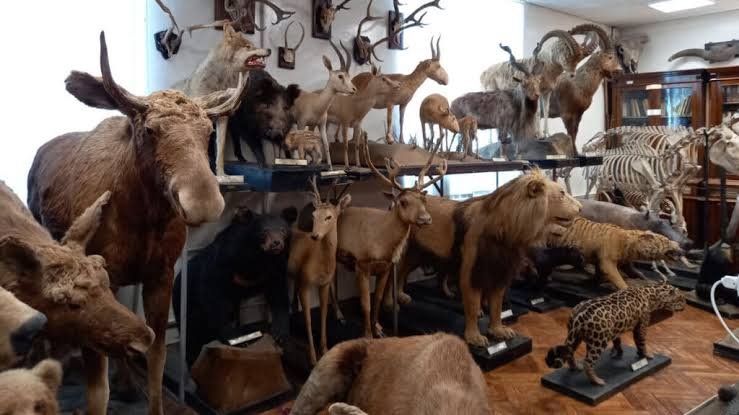
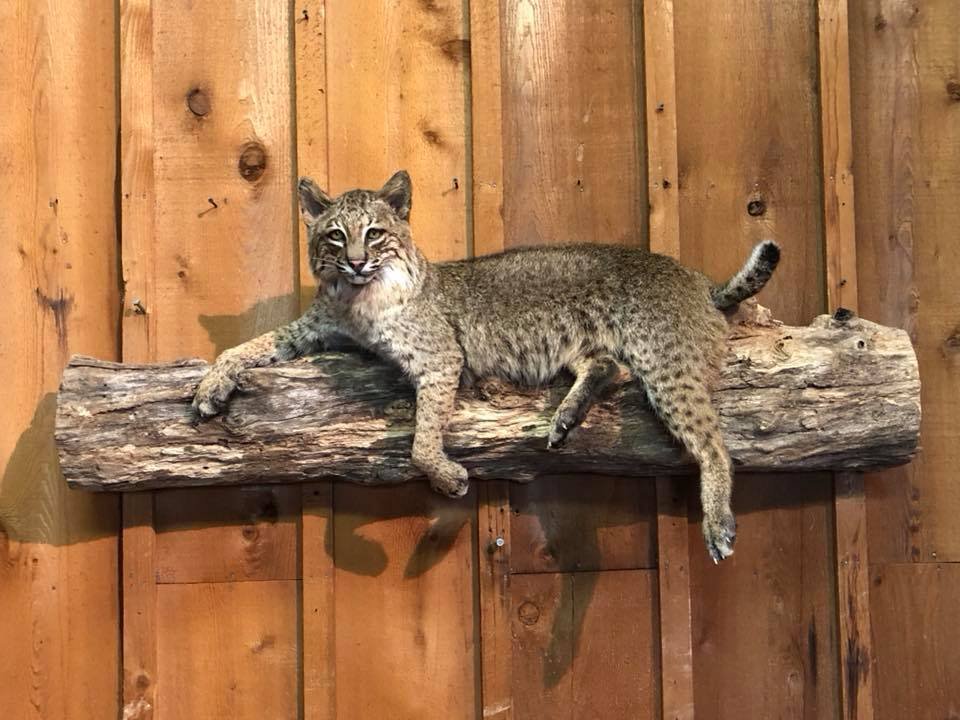
What does taxidermy cost? A quick price guide
Prices vary by region and taxidermist, but the ranges below reflect typical costs and give you a realistic starting point. These are for commissioning a taxidermist to prepare your own animal.
| Mount | Typical price range |
|---|---|
| Deer shoulder mount | Mid hundreds to ~1,000 |
| Deer European mount | Low hundreds |
| Bird (duck, pheasant, turkey) | Low to mid hundreds |
| Fish (skin mount or replica) | Low to mid hundreds |
| Small mammal (fox, bobcat) | Mid-hundreds |
| Life-size big game (bear, wolf) | Low to several thousand |
| Full-size African trophy | Thousands |
Note that a European mount, the cleaned skull and antlers only, is always cheaper than a full shoulder mount, because there is no skin to preserve and mount. This is part of why European mounts have become so popular.
How much does it cost to mount a deer head?
A deer head shoulder mount is the most common taxidermy commission, and it typically costs from the mid-hundreds up to around a thousand, depending on your taxidermist and region. This is the price most people mean when they ask how much taxidermy costs.
Several things move that number. A standard pose costs less than a custom or complex one. A skilled, in-demand taxidermist charges more than a beginner, and the difference usually shows in the result. A European mount of the same deer, just the skull and antlers, costs a fraction of a full shoulder mount. And turnaround time varies, with some taxidermists offering faster service at a premium.
How much does it cost to mount a fish?
Fish taxidermy typically costs from the low to mid hundreds, and it is often priced by the inch of length. There is an important choice here that affects both price and result.
A skin mount uses the real fish, but because fish color fades almost immediately after death, the mount must be repainted to look lifelike. A replica or reproduction mount uses a painted cast from a mold, so no real fish is needed, and many anglers now choose this because it lasts better and allows catch-and-release. Replica fish mounts are often priced similarly to skin mounts by length. Our fish taxidermy guide explains the difference in full.
How much does it cost to mount a bird?
Bird taxidermy typically costs from the low to mid hundreds, depending on the species and pose. Ducks, pheasants, and turkeys are the most common commissions. A full-body turkey mount, being large and complex with its fanned tail, sits at the higher end, while a small songbird or duck costs less. Delicate feather work is what makes bird taxidermy skilled, so quality varies and is worth paying for.
How much does it cost to taxidermy a cat or a pet?
Pet taxidermy is possible but sits apart from the rest, both in cost and in nature. It typically costs more than wild taxidermy of a similar-sized animal, often several hundred and up, because recreating a familiar pet’s expression is difficult and delicate work.
Many pet owners choose freeze-drying instead of a traditional mount, which preserves the whole animal and can capture a sleeping or curled pose more naturally, though it also costs more and takes longer. This is an emotional decision as much as a financial one, and there is no wrong choice. Most who go ahead find a specialist pet taxidermist rather than a general one.
What drives the cost of taxidermy?
Several factors decide where a mount sits in the price range. Understanding them helps you judge a quote.
- The animal. Larger and more complex animals cost more. A life-size mount costs far more than a shoulder mount of the same species.
- The mount type. Shoulder mounts cost more than European mounts. Full and pedestal mounts cost more than shoulder mounts.
- The pose. A standard pose is cheaper than a custom or action pose that needs extra sculpting.
- The taxidermist’s skill. Experienced, award-winning taxidermists charge more, and the quality usually justifies it.
- Turnaround. Faster service can carry a premium, and quality work naturally takes time.
- Extras. Habitat bases, custom plaques, and repairs to a damaged specimen all add to the cost.
A very low quote can signal an inexperienced taxidermist. In this craft, as in most, you tend to get what you pay for.
Why does taxidermy take so long?
It is worth knowing that commissioned taxidermy is slow. Turnaround of six months to a year is common, and this surprises many first-time customers. The reason is that the process cannot be rushed: the skin must be properly tanned, the mount carefully built, and then it must dry fully before finishing, which takes weeks on its own. Many taxidermists also carry a backlog, especially after hunting season.
If you want a mount quickly, buying a ready-made piece is instant, whereas a commission is a long wait. This is one of the main practical differences between the two routes.
Finding a taxidermist near you
If you want to commission work, finding a good local taxidermist matters more than finding the nearest one. A mount is a long-lasting object, and quality varies enormously, so it is worth travelling for a good one.
To find and judge a taxidermist:
- Ask to see their work. A portfolio of finished mounts tells you everything. Look at the eyes, the pose, and the finishing.
- Read reviews and ask for references. Other customers reveal reliability and turnaround honesty.
- Check they work with your animal. Some specialize in fish, birds, or big game rather than everything.
- Confirm the price and turnaround in writing before you commit.
- Ask about the care of your specimen while it is with them.
Waterfowl, turkey, and deer are common specialisms, so a taxidermist near you who focuses on your animal will often do better work than a generalist.
How much does each type of deer mount cost?
The type of mount changes the price as much as the animal does, and for a deer the four main formats span a wide range. A European mount is the cheapest, a shoulder mount is the standard, a pedestal costs more, and a full-body mount is the most expensive by far.
| Deer mount type | Typical price range | Why |
|---|---|---|
| European (skull) mount | Low hundreds (or DIY for far less) | No skin to preserve; can be done at home |
| Shoulder mount | Mid hundreds to ~1,000+ | The standard trophy: skin, form, tanning |
| Wall pedestal | Higher than a shoulder mount | More sculpting and a projecting base |
| Floor pedestal | Higher still | Freestanding base, viewable all round |
| Full-body / life-size | Several thousand and up | The whole animal, months of skilled work |
The gap between a European mount and a full-body mount is large, which is why the format is the first thing to decide when you budget. A European mount is the affordable, space-saving choice and can be done yourself; a pedestal mount is a premium, museum-style display. Our complete guide to taxidermy mounts compares every format.
How much does it cost to mount a duck, turkey, or other animal?
Mounting cost scales roughly with the size and complexity of the animal and the mount, so a small duck costs less than a turkey, which costs less than a deer, which costs less than a bear. Here is a rough guide across common commissions.
| Animal | Typical mounting cost | Notes |
|---|---|---|
| Duck / small bird | Low hundreds | Delicate feather work |
| Turkey (full fan) | Mid-hundreds | Large, complex tail display |
| Fish | Low to mid hundreds | Often priced by the inch |
| Deer (shoulder) | Mid hundreds to ~1,000+ | The standard benchmark |
| Fox / bobcat | Mid-hundreds | Small mammal, full body |
| Bear (life-size) | Several thousand | Large, complex |
| African big game | Thousands | Plus shipping and permits |
These are commission prices, what a taxidermist charges to prepare your own animal. If you are not a hunter and simply want a finished piece, the buying route below is often simpler and lets you see exactly what you are getting.
Commissioning a mount vs. buying a finished one
Here is the honest comparison. Commissioning a taxidermist to prepare your own animal makes sense when the animal has personal meaning, a hunting trophy, or a specific specimen, and you are willing to wait months for the result and pay for skilled labor.
Buying a finished mount from a specialist makes sense when you want a specific look, a museum-quality result immediately, and the certainty of seeing exactly what you are getting. There is no long wait, no sourcing of an animal, and no gamble on a taxidermist’s skill. For collectors and decorators, a ready-made mount is usually the simpler, safer choice. Browse our finished taxidermy collection, from birds and mammals to big-game mounts.
| Commission your own | Buy a finished mount. | |
|---|---|---|
| Best for | A trophy with personal meaning | Collectors, decorators, gifts |
| Wait. | Months | Ready now |
| What you get | Depends on your taxidermist. | Exactly what you see |
| Animal needed | Yes, your own | No |
| Certainty | You gamble on skill. | You judge the finished piece. |
Products by Category
-
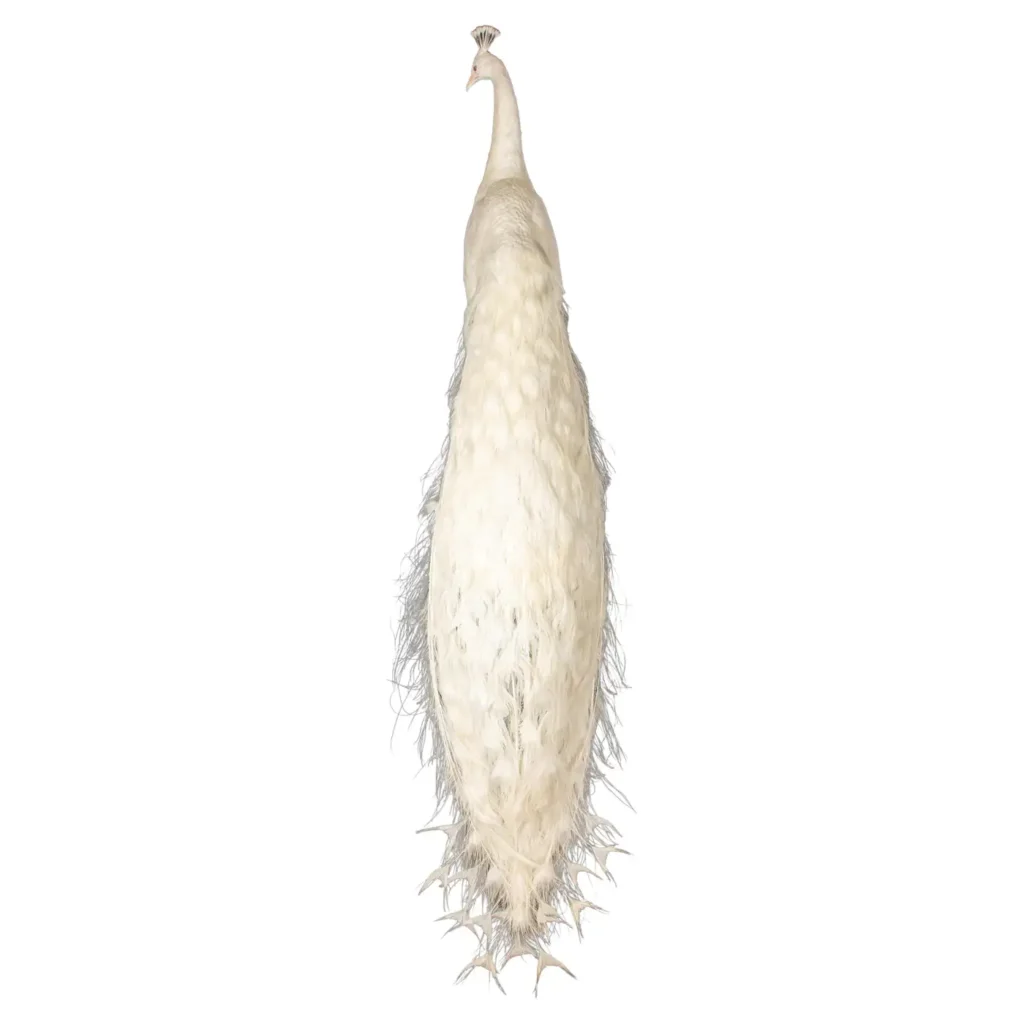
Albino (Leucistic) Peacock Display (Pavo cristatus, White)
-
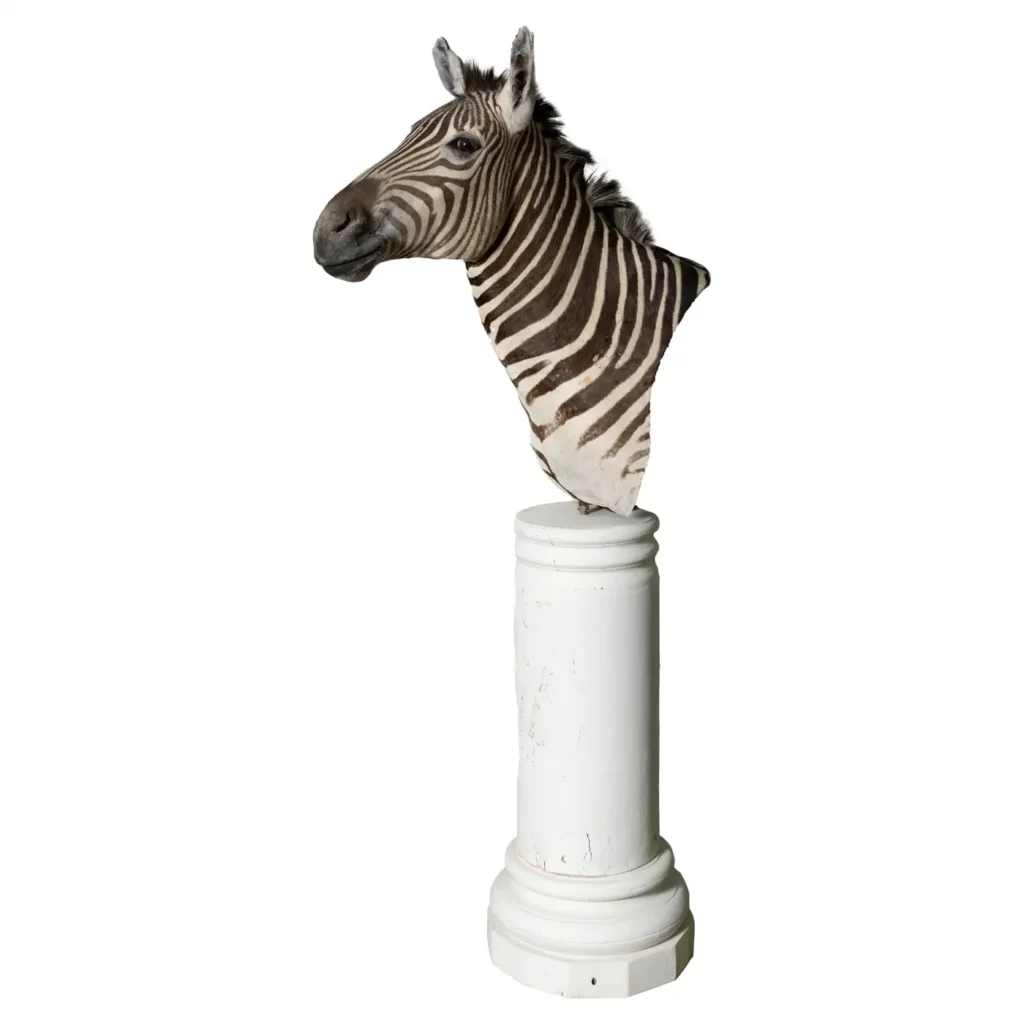
Burchell’s Zebra Premier Quality Shoulder Mount (Equus quagga burchellii)
-
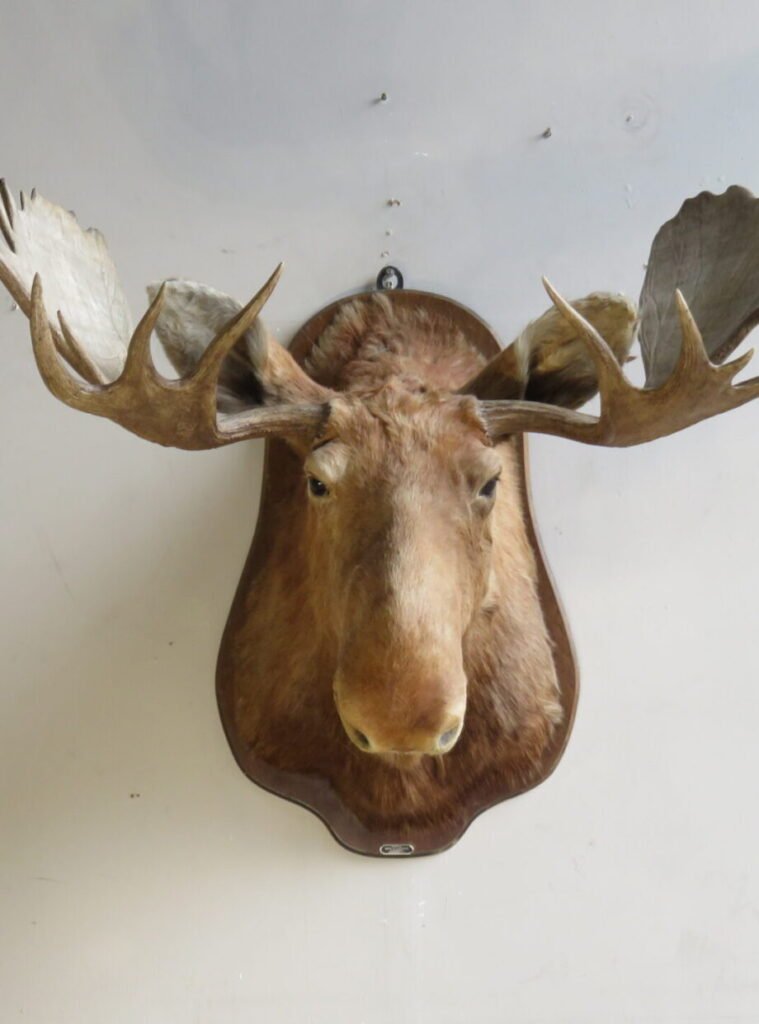
Canadian Moose Shoulder Mount, 49″ Rack (Alces alces)
-
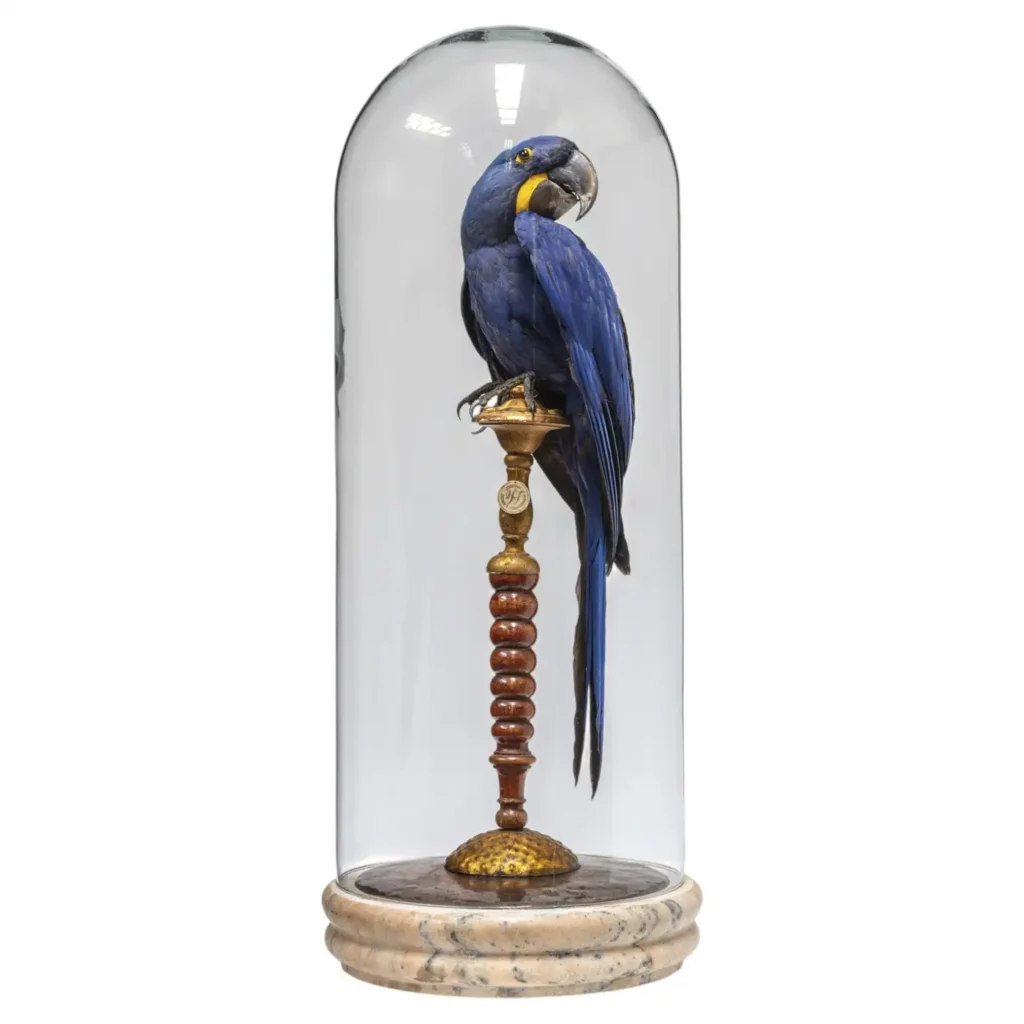
Fine Taxidermy Hyacinth Macaw (Anodorhynchus hyacinthinus) by Sinke & Van Tongeren
-
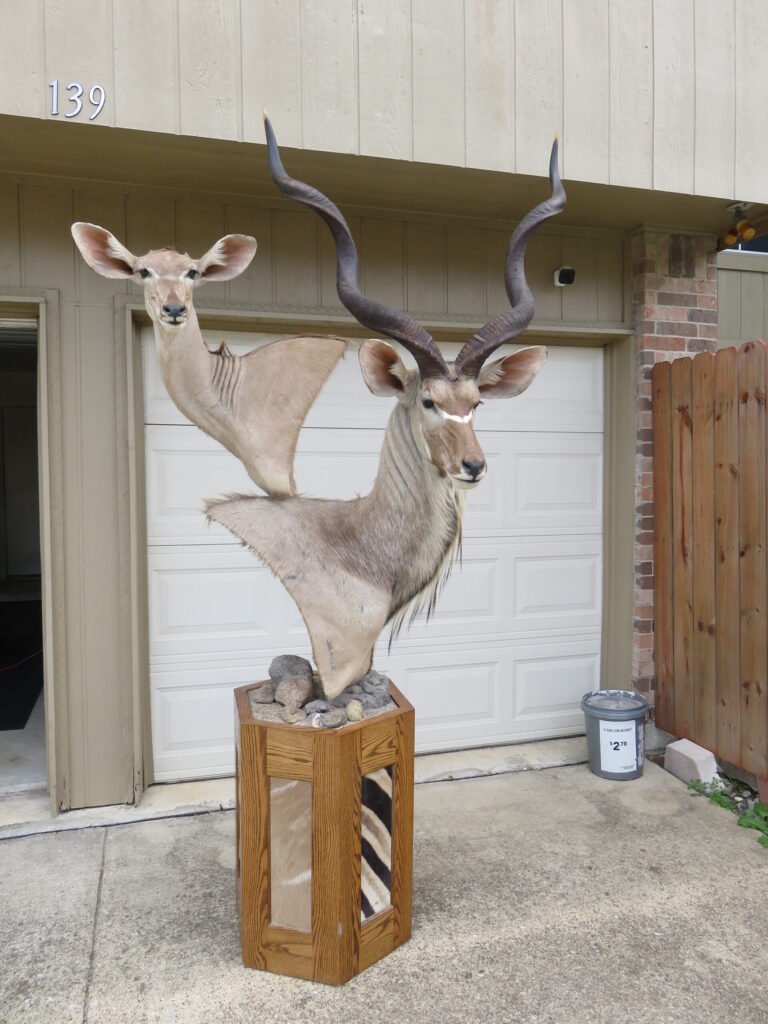
Greater Kudu Pair Shoulder Mount (Tragelaphus strepsiceros)
-
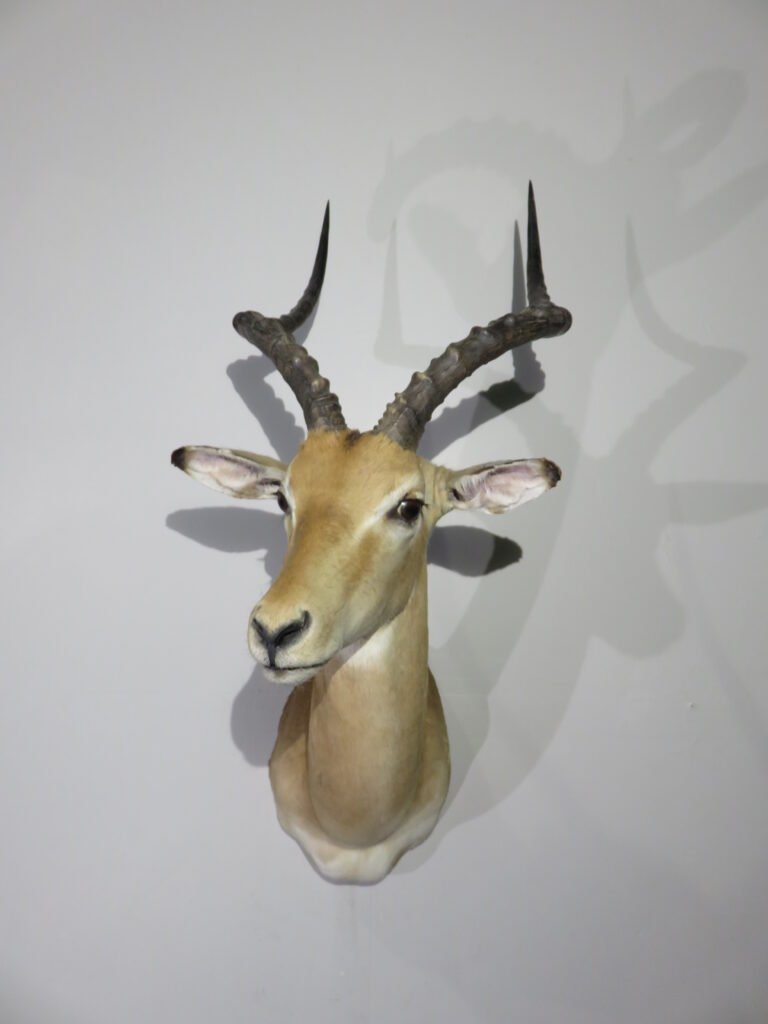
Impala Shoulder Mount, SCI Silver Class (Aepyceros melampus)
-
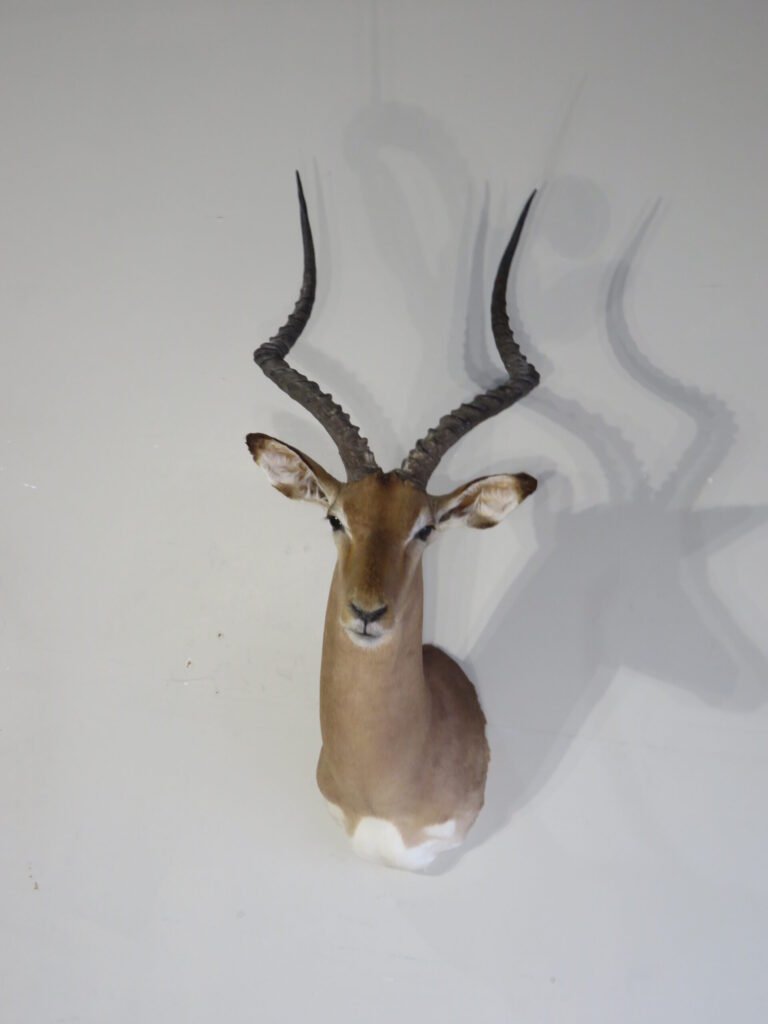
Impala Trophy Shoulder Mount, SCI Gross Score (Aepyceros melampus)
-
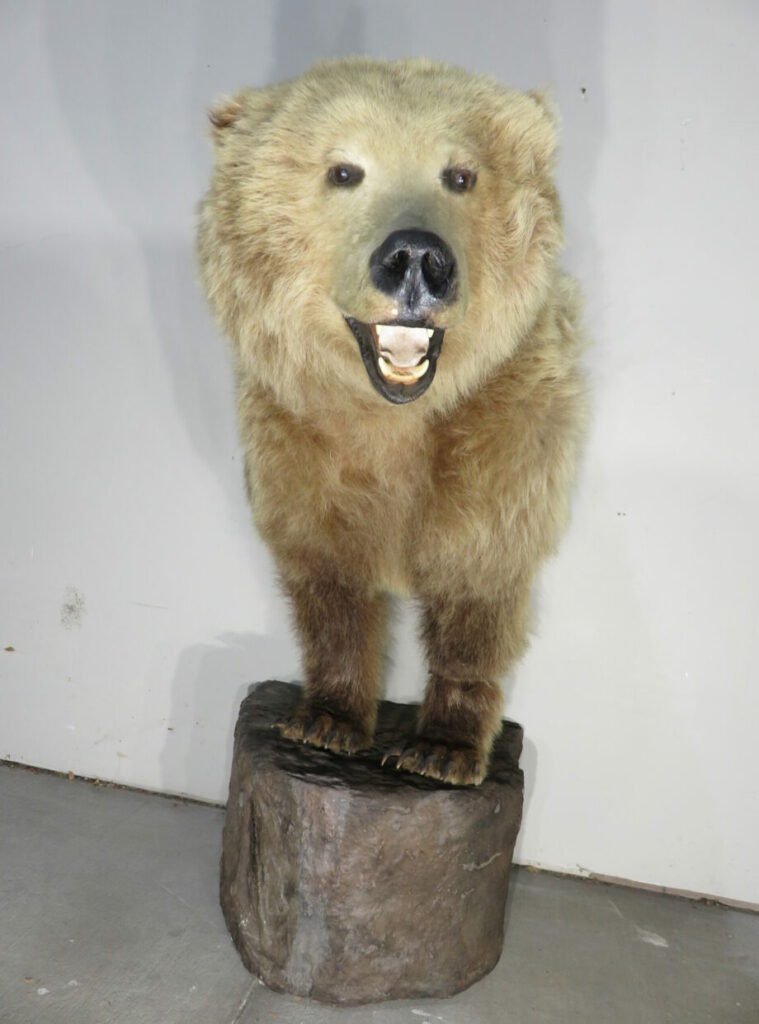
Kodiak Brown Bear Taxidermy Mount (Ursus arctos middendorffi)
-
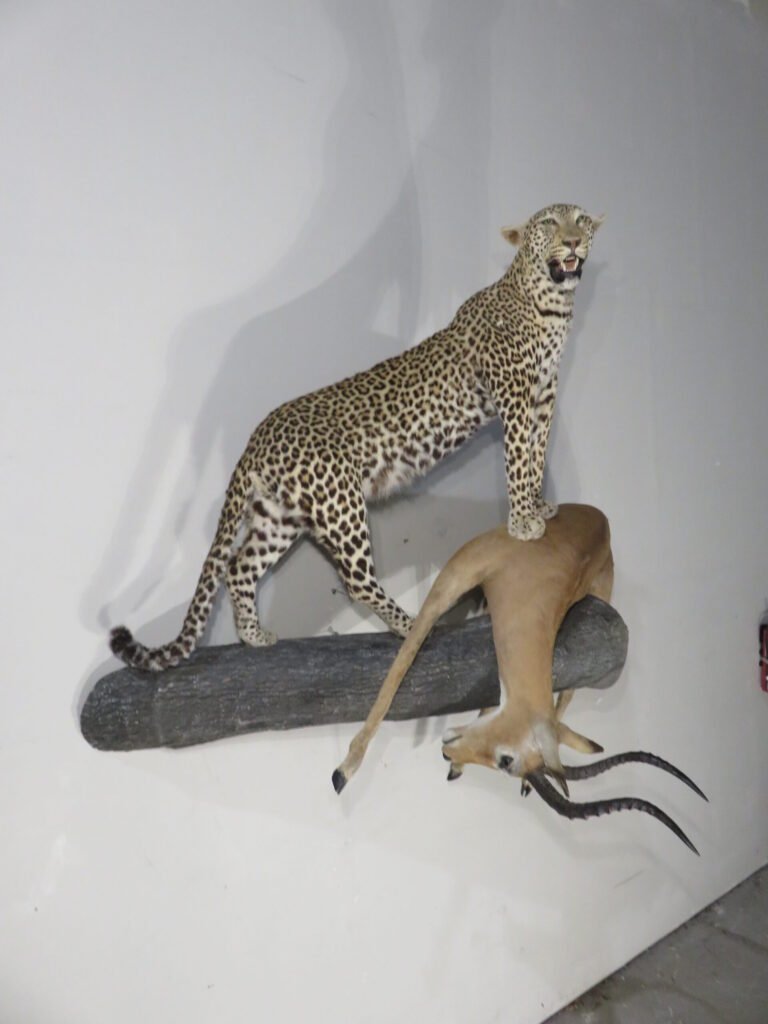
Leopard and Impala Trophy Mount (Panthera pardus & Aepyceros melampus)
If you want finished deer and game mounts ready to display, see our taxidermy mounts for sale.
Hidden costs to budget for
The mount price is not always the whole cost, and first-time customers are sometimes caught out. Budget for these extras so the final bill holds no surprises.
- Field care and shipping. If your animal is not local, getting the cape, skin, or whole animal to the taxidermist properly preserved and shipped adds cost. Poor field care can also ruin a specimen before it arrives.
- Caping and skinning. Some taxidermists charge separately to prepare the skin, especially if you bring a whole animal rather than a properly caped one.
- Bases, habitats, and plaques. A habitat base, driftwood, or a custom plaque is often quoted on top of the mount itself.
- Tanning fees. On larger mounts, tanning may be a separate line item.
- Storage and rush fees. A faster turnaround, or long storage of a finished mount, can add to the price.
Ask for an itemized quote up front so you can compare taxidermists fairly and know what is included.
Why taxidermy prices vary by region
You will find that quotes differ widely from place to place, and it helps to know why. Prices reflect local demand, the cost of living, and how many skilled taxidermists compete in an area. In regions with a strong hunting culture, more taxidermists compete, which can keep deer and game prices reasonable, though the best artists still command a premium anywhere. Exotic and big-game work is more specialized, so it is priced higher and offered by fewer people.
This is why a “taxidermy near me prices” search returns such a range, and why comparing a few local quotes is worthwhile. Just remember that the cheapest quote is rarely the best value. A poorly made mount is a permanent disappointment, while a well-made one lasts for generations. Judge on the portfolio first and the price second.
Frequently asked questions
How much does taxidermy cost?
It depends on the animal and mount type. A deer shoulder mount typically runs from the mid-hundreds to around a thousand, birds and fish from the low to mid-hundreds, and life-size big-game mounts into the thousands. European mounts cost less than shoulder mounts.
How much does it cost to mount a deer head?
A deer head shoulder mount usually costs from the mid-hundreds up to around a thousand, depending on the taxidermist, region, and pose. A European mount of the same deer costs far less.
How much does it cost to mount a fish?
Fish taxidermy typically costs from the low to mid hundreds, often priced by the inch. Replica mounts, painted casts that use no real fish, are common and priced similarly.
How much does it cost to mount a duck or turkey?
Bird mounting scales with size and complexity. A duck or small bird typically costs from the low hundreds, while a full turkey mount with its fanned tail sits at the mid hundreds because of the size and detailed feather work.
Which type of deer mount is cheapest?
The European mount is the cheapest deer mount, since it is just the cleaned skull and antlers with no skin to preserve, and it can even be done at home for the price of supplies. A shoulder mount is the next step up, and a full-body mount is the most expensive.
Why is taxidermy so expensive?
It is skilled, slow, and handwork. Tanning, sculpting, mounting, drying, and finishing each take time and expertise, and quality materials and forms add cost. A cheap mount often reflects inexperience.
How long does taxidermy take?
Commissioned work commonly takes six months to a year, because the skin must be tanned, the mount built, and then fully dried before finishing. Buying a ready-made mount is immediate.
How do I find a good taxidermist near me?
Look at portfolios, read reviews, and check they specialize in your animal. Quality varies a lot, so it is worth travelling for good work rather than choosing the nearest option.
Is it cheaper to buy a mount or commission one?
It depends. A common ready-made mount can be cheaper and is available instantly. Commissioning makes sense mainly for a personal trophy or a specific custom piece, and it costs more in both money and time.
What does a taxidermist do?
A taxidermist skins an animal, preserves the skin by tanning, mounts it over a sculpted form, and finishes it with glass eyes and detail work so it looks lifelike. Many also offer European mounts, repairs, and habitat bases.
Understand the cost, then choose your route.
Knowing what taxidermy costs helps you decide between commissioning a piece and buying one ready-made. If you have a personal trophy and time to wait, a good local taxidermist is worth the cost. If you want a museum-quality piece now, with no wait and no guesswork, browse our curated taxidermy collection, or read the complete guide to taxidermy for the full picture. Every piece is responsibly sourced and ships worldwide in 3 to 5 days.