
Skull Models and Replicas: The Complete Buyer’s Guide
A skull model is an accurate reproduction of a human skull, cast in resin or plastic, used for anatomy study, art reference, medical teaching, and display. A good replica skull captures every bone, suture, and feature of a real specimen but is durable, affordable, and legal everywhere. This guide explains the types of skull models, from anatomically detailed teaching models to artistic and decorative replicas, what to look for when buying, and how to choose the right one for your purpose.
This is a companion to our complete guide to the human skull, focused on models and replicas rather than real specimens.
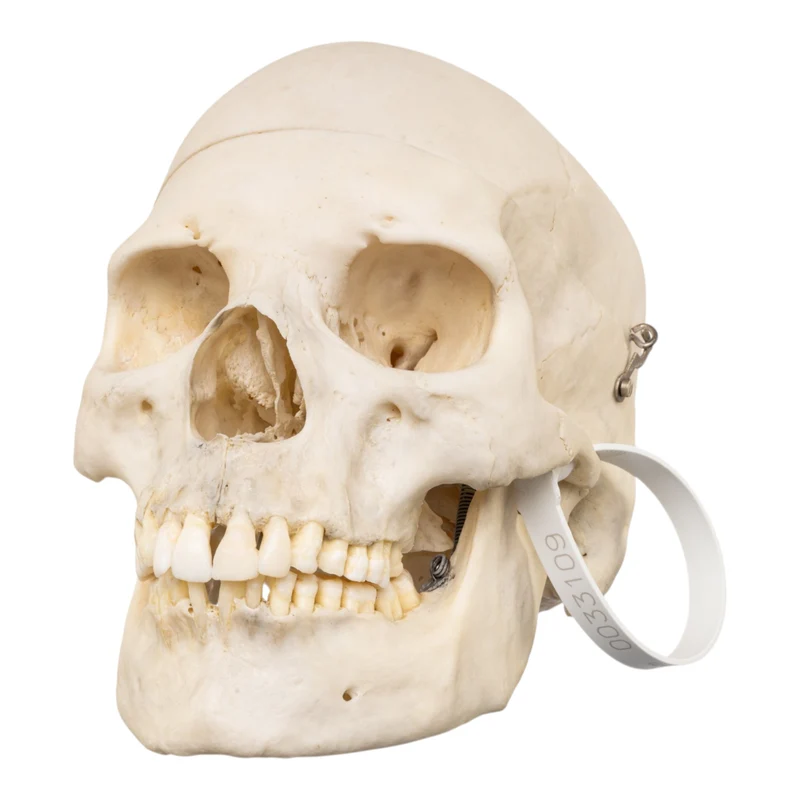
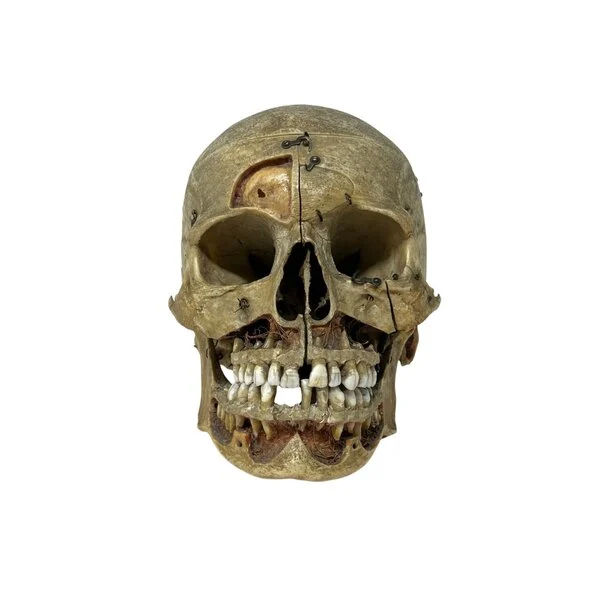
What is a skull model?
A skull model, also called a replica skull, is a manufactured copy of a human skull. The best models are cast directly from real specimens, so they reproduce the exact anatomy, the bones, sutures, foramina and teeth, in fine detail. They are usually made from resin or PVC plastic, materials chosen to be durable and to hold detail well.
Skull models exist because a real skull, while unmatched for authenticity, is not always the right choice. A replica is far more affordable, indestructible in daily use, identical every time for teaching, and free of the legal and ethical questions that surround genuine human remains. For most students, artists and decorators, a high-quality replica is the practical choice, which is why the market for skull models is so large.
Why choose a replica over a real skull?
Both real and replica skulls have their place, but replicas offer clear advantages for many buyers. Understanding them helps you decide which you need.
- Cost. A quality replica costs a fraction of a genuine specimen, making it accessible to students and hobbyists.
- Durability. Resin and plastic withstand daily handling, dropping and transport in a way fragile real bone cannot.
- Legality. Replicas are legal to own and ship almost everywhere, avoiding the restrictions that apply to human remains in some places.
- Consistency. For teaching a class, identical models mean every student sees exactly the same anatomy.
- Ethics. A replica raises none of the sourcing and consent questions that surround real human remains.
- Features. Many models offer things a real skull cannot: colour-coding by bone, numbered parts, removable sections and clear labelling.
The one thing a replica cannot offer is the authenticity and natural variation of genuine bone, which is why serious researchers and collectors still value real specimens. For the full comparison, see our real vs replica skull guide.
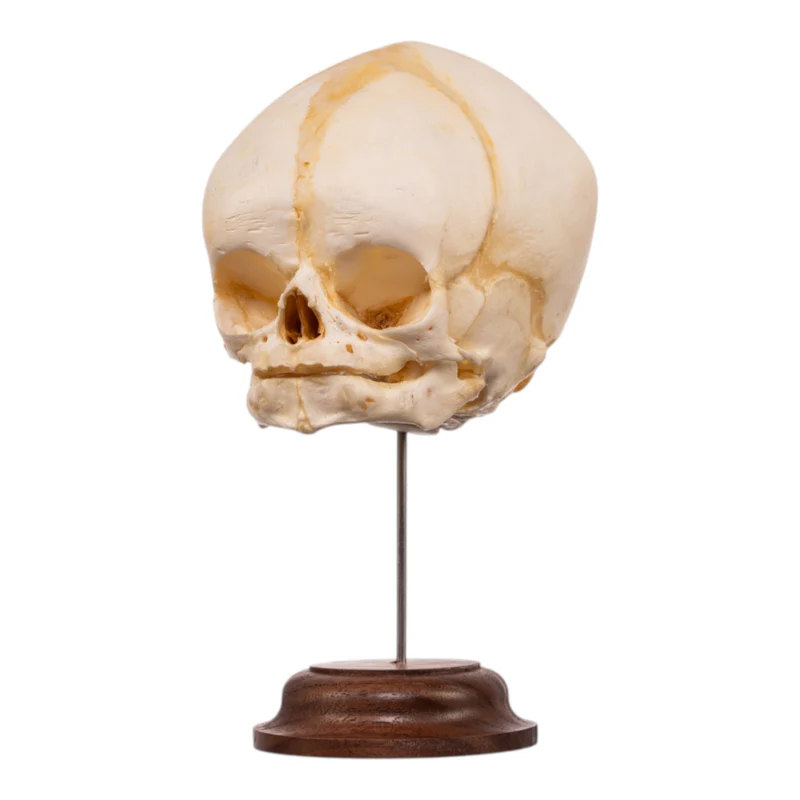
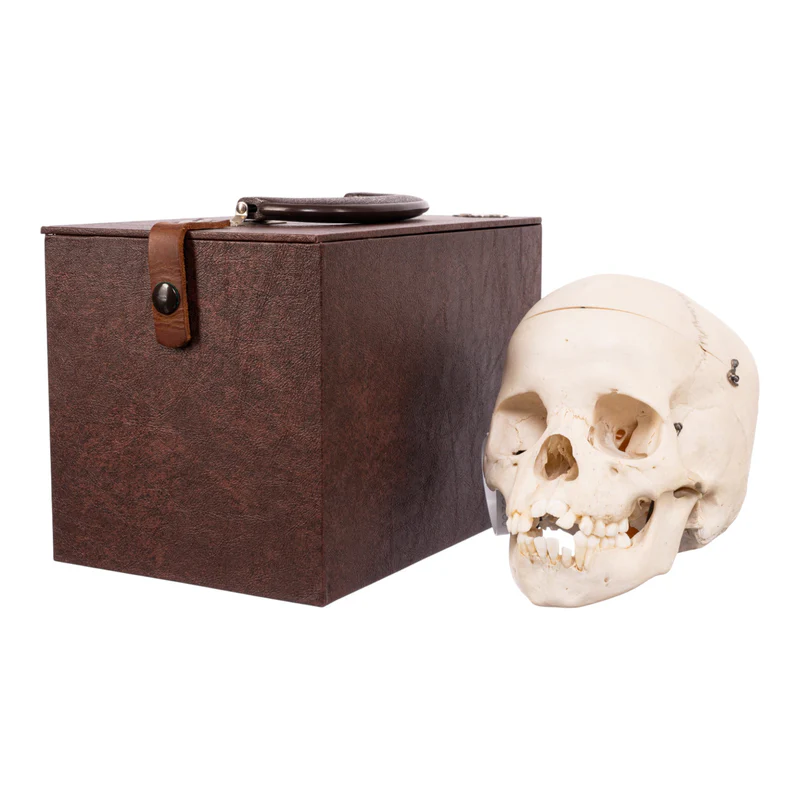
Types of skull models
Not all skull models are the same. They fall into three broad categories, each designed for a different purpose, and choosing the right type is the most important decision you will make.
Anatomical and medical models
These are precise, educational models designed for studying anatomy. They reproduce the bones, sutures, and foramina accurately, and the best come apart to show the internal structure. Anatomical skull models often feature:
- Removable sections, such as a detachable calvarium (skull cap), to reveal the cranial base and interior.
- A three-part construction (cranium, skull cap, and mandible) with the jaw on a spring or hinge.
- Colour-coding or numbering to identify individual bones, nerves, or the parts of the base.
- Life-size accuracy cast from a real specimen.
The “3D skull model taken apart” that many people search for is exactly this: a medical model that disassembles so you can study how the pieces fit. These are the standard tools in medical schools, dental schools, and anatomy courses.
Artistic and reference models
Artists use skull models to understand the structure beneath the face. These prioritize accurate external form over internal detail, since the goal is to study proportions, planes, and the way light falls on the skull. A realistic skull for drawing does not need a removable cap or color-coding; it needs a faithful, well-proportioned exterior. Many artists consider a skull an essential studio reference, which is why “realistic skull” and “skull for drawing” are such common searches.
Decorative and prop replicas
The third category is display and decor. Decorative skull replicas prioritize appearance and atmosphere over anatomical precision. They range from realistic ornaments for a shelf or cabinet of curiosities to stylized and colored art pieces to Halloween and film props. These are chosen for their look rather than their accuracy, and they are the most affordable type. A decorative replica is perfect for styling a room or a gothic interior, though it is not the right tool for serious study.
What to look for in a skull model
Once you know which type you need, a few quality markers separate a good model from a poor one. Look for these before buying.
Accuracy. The best models are cast from real human skulls, so they reproduce true anatomy rather than an artist’s approximation. Check whether a seller states this.
Material and weight. Quality resin or PVC holds fine detail and feels substantial. Very cheap, lightweight plastic often loses the crispness of the sutures and teeth.
Detail. Look at the sutures, the teeth, and the foramina. On a good model these are sharp and correct; on a poor one they are soft or simplified.
Construction. For study, decide whether you need a solid one-piece model or a multi-part model with a removable cap and articulated jaw. For art or decor, a solid model is usually fine.
Size. Most anatomical and reference models are life-size, cast to the dimensions of a real adult skull, which matters for study and drawing. Decorative pieces vary.
Finish. Natural bone color suits study and realistic display. Color-coded or numbered finishes suit teaching. Painted or stylized finishes suit decor.
How skull models are made
Understanding how a skull model is manufactured helps explain why quality varies so much. The best models begin with a real human skull, from which a detailed mold is taken. This master mold captures every suture, tooth, and foramen, and casts made from it reproduce that anatomy faithfully. Models made this way are described as “cast from a real specimen,” and it is the single biggest marker of quality.
The casting material is usually a polyurethane resin or PVC plastic, poured or injected into the mold and cured to a hard, durable finish. Higher-end models use dense resin that holds crisp detail and has a realistic weight; cheaper ones use thin, hollow plastic that loses definition. After casting, a model may be finished in natural bone color or painted, numbered, or color-coded for teaching. Multi-part models are cast in separate pieces, the cranium, cap, and jaw, and fitted with springs or hinges.
The gap between a mold taken from a real skull and a generic sculpt is why two models of the same size can look completely different up close. When accuracy matters, always ask how a model was originally created.
How to spot a cheap or inaccurate model
Because skull models vary so widely, it helps to recognize the signs of a poor one before you buy. A cheap or inaccurate model usually shows several of these tells.
- Soft, blurry sutures. On a good model the sutures are crisp, wandering lines. On a poor one they are shallow, smooth, or barely visible.
- Simplified teeth. Accurate models show individually defined teeth; cheap ones show a vague, molded row.
- Missing foramina. The small openings of the skull base are often absent or reduced to dimples on low-quality casts.
- Wrong proportions. A model not cast from a real skull may have an oversized cranium, a misshapen jaw, or a generic “cartoon skull” look.
- Very light weight. Thin, hollow plastic feels toy-like and rarely holds fine detail.
- No origin information. A seller who cannot say what a model is made of or whether it is anatomically accurate is usually selling a decorative piece.
None of this matters if you only want a Halloween prop. But for study or art, these tells separate a useful tool from a frustrating one.
Choosing the right skull model for your needs
The right model depends entirely on what you will use it for. Here is a simple guide to matching the model to the purpose.
| If you are a… | Choose a… |
|---|---|
| Medical or dental student | Multi-part anatomical model with removable cap and numbered bones |
| Anatomy teacher | Color-coded or numbered didactic model, life-size |
| Artist or art student | Realistic, well-proportioned reference model, solid construction |
| Collector or decorator | A realistic display replica or a stylized art piece |
| Halloween or film use | Durable prop replica, appearance over accuracy |
Matching the model to your purpose saves you money and frustration. A student does not need a decorator’s stylized piece, and a decorator does not need a numbered teaching model. Browse our range of accurate replica and real human skulls to find the right fit.
Skull models for anatomy study
For medical, dental, and biology students, a skull model is an essential learning tool, and it earns its place because skull anatomy is genuinely hard to learn from flat diagrams. Holding a three-dimensional model, turning it, and taking it apart builds an understanding that pictures cannot.
The most useful study models come apart into the cranium, the skull cap, and the mandible, revealing the cranial base and the interior with its foramina and fossae. Many are numbered or color-coded so you can identify each bone and the openings for the cranial nerves. Studying with a model alongside our detailed skull anatomy guide is one of the most effective ways to master the subject, because you can locate on the model exactly what you read about. For learning the bones and sutures, nothing beats a model in hand.
Skull models for artists
Artists have used the skull as a reference for centuries because the skull determines the shape of the face. A realistic skull model lets an artist study the underlying structure, the planes of the forehead and cheek, the depth of the eye sockets, and the line of the jaw that gives a portrait its foundation.
For drawing and sculpture, the exterior form matters most. Artists look for a model with accurate proportions and realistic surface detail in a natural bone color that shows form and shadow clearly. A skull is a classic subject for practicing light and shade, which is why “realistic skull drawing” and “skull for drawing” are so widely searched. Whether you work in pencil, paint, or clay, a good reference skull is one of the most useful objects in a studio.
Real dinosaur and animal skull replicas
Beyond human skulls, replicas open up specimens that would be impossible or unaffordable to own for real. Museum-grade replicas reproduce dinosaur skulls, ancient hominins, and rare animals at a fraction of the cost of a genuine fossil and legally.
A dinosaur skull replica brings the drama of a T. rex or raptor to a room or classroom without the six-figure price of a real fossil. Replica hominin skulls let students and collectors handle the stages of human evolution. And replica animal skulls allow comparative study across species. Because these are casts, they are legal, durable, and accurate, which is why museums themselves display replicas of their most precious specimens. Explore our prehistoric replica skulls for this side of the collection.
Skull models in medical and dental training
Skull models are a cornerstone of medical and dental education, and it is worth understanding why they have largely replaced real skulls in the classroom. A teaching model can be handled by every student, dropped without disaster, and replaced cheaply, which real specimens cannot. A whole class can work from identical models, so everyone learns the same landmarks in the same place.
Dental students rely especially on skull models, since understanding the maxilla, mandible, and temporomandibular joint is central to their training. Medical students use them to learn the cranial nerves and the foramina they pass through, which is far easier on a model where the openings are clear and sometimes labelled. Surgical trainees use detailed base-of-skull models to understand the complex cranial fossae. In each case the model provides a safe, repeatable, three-dimensional way to learn anatomy that would otherwise depend on scarce and fragile real specimens. Paired with our skull anatomy guide, a good model turns abstract diagrams into something you can hold.
A brief history of anatomical models
Anatomical skull models have a longer history than you might expect, and it reflects the enduring problem of teaching anatomy. For centuries, the only way to learn the skull was from real bone, which was scarce, fragile, and, at times, difficult to obtain legally. This drove a long search for accurate substitutes.
Early anatomical models were crafted in wax and papier-mâché, painstakingly handmade objects used in the great medical schools. Famous wax anatomical collections survive in European museums to this day. The arrival of durable plastics and resins in the twentieth century transformed the field, making accurate, affordable models available to every student rather than a privileged few. Today’s cast-from-real-specimen resin models are the direct descendants of those wax pioneers, solving the same problem: how to study human anatomy without a constant supply of real remains, with modern materials. It is the same logic that makes a quality replica such a sensible choice for study today.
Skull replicas for Halloween, film, and props
Not every skull replica is for study. A large part of the market is display and props, and these have their own considerations. For Halloween, theater, and film, a skull prop needs to look convincing at a glance and survive handling, but it does not need anatomical precision. Lightweight, inexpensive replicas are ideal here, and stylized or aged finishes often work better on camera or in a display than a clinical bone-white model.
Prop skulls range from cheap molded plastic for a Halloween shelf to high-quality realistic replicas used in professional film and photography. For a themed interior, a gothic display, or a cabinet of curiosities, a realistic replica gives the atmosphere of a real skull without the cost or the ethical questions. If your goal is look and mood rather than study, a decorative replica is exactly the right choice, and it frees you to pick the finish and style that suit your space. Our cabinet of curiosities guide covers styling with skulls and specimens.
3D-printed and digital skull models
A newer category worth knowing about is the 3D-printed skull and the digital models behind it. As 3D scanning and printing have advanced, it has become possible to reproduce a skull from a digital file, and “3D skull model” and “human skull 3D model” are now common searches.
Digital skull models are used in education, research, forensics, and design. A scanned model can be rotated on screen, sectioned, measured, and even printed at any size. For teaching, a 3D-printed skull offers many of the advantages of a cast model and can be produced on demand. For research and forensics, digital models allow precise measurement and comparison without handling a fragile original. The detail of a 3D-printed skull depends on the quality of the underlying scan and the printer, so as with cast models, the source matters. This technology sits alongside traditional casting rather than replacing it, giving buyers more ways than ever to own an accurate skull.
Skull models and the wider skeleton
Many people who want a skull model are also interested in the wider skeleton, and it is worth knowing how the two relate. A skull model can be bought on its own or as the head of a full articulated skeleton model. Full skeleton and half-skeleton models are standard in anatomy labs, mounted on stands with the bones connected so the whole framework can be studied together.
If your interest is specifically the skull, a standalone skull model gives you the most detail for the lowest cost and takes up little space. If you want to understand the skull in the context of the whole body, a full skeleton model places it correctly atop the spine and shows how it balances there, an arrangement reflecting our upright posture. Life-size skeleton models are popular in classrooms and studios for exactly this reason. For most buyers focused on the skull itself, though, a dedicated skull model is the better and more affordable choice.
Caring for a skull model
A replica skull needs very little care, which is part of its appeal, but a few simple steps keep it looking its best. Dust it regularly with a soft, dry cloth or brush, and for a deeper clean, wipe resin or plastic models gently with a slightly damp cloth. Keep painted or color-coded models out of direct sunlight, which can fade the finish over time.
For multi-part anatomical models, handle the removable sections and spring-mounted jaw gently to preserve the fittings, and store the parts together so nothing is lost. Unlike a real skull, a replica will not crack from humidity or attract pests, so it tolerates ordinary room conditions easily. With minimal care, a quality skull model lasts a lifetime of study or display.
Where to buy a skull model
Buy from a specialist who sells accurate, well-made models rather than a generic marketplace, where quality and accuracy vary wildly. A specialist can tell you whether a model is cast from a real specimen, what it is made of, how it comes apart, and whether it suits study, art, or display.
The cheapest generic skulls are often decorative pieces with soft, inaccurate detail, fine for a prop but frustrating for study or art. Investing a little more in an accurately cast model pays off in every use. Browse our curated collection of real and replica human skulls, each described honestly so you know exactly what you are getting, and see our buyer’s guide to human skulls for more.
Frequently asked questions
What is a skull model made of?
Most skull models are made of resin or PVC plastic, chosen to be durable and to hold fine detail. The best are cast directly from real human skulls, so they reproduce the anatomy accurately.
Are skull models anatomically accurate?
Quality models are because they are cast from real specimens. Cheaper decorative replicas prioritize appearance over accuracy, so if you need a model for study, check that it is described as anatomically accurate or cast from a real skull.
What is a “3D skull model taken apart”?
It is a medical anatomical model that disassembles, typically into the cranium, a removable skull cap, and the mandible, so you can study the internal structure, the cranial base, and how the bones fit together. It is the standard tool for anatomy study.
Is a replica skull legal to own?
Yes. Replica skulls are made of resin or plastic, not human remains, so they are legal to own and ship almost everywhere, unlike genuine specimens, which face restrictions in some places.
What is the best skull model for students?
A life-size, multi-part anatomical model that comes apart into the cranium, skull cap, and mandible, ideally numbered or color-coded to identify the bones. This lets you study the internal structure as well as the exterior.
What kind of skull model do artists use?
Artists use a realistic, accurately proportioned model with good surface detail, usually solid rather than in parts, in a natural bone color that shows form and shadow well. Internal detail matters less than a faithful exterior.
How much does a skull model cost?
Far less than a real skull. Decorative replicas are the most affordable, quality anatomical teaching models cost more, and specialist museum-grade casts of rare specimens sit at the top. All are a fraction of the cost of genuine bone.
Replica or real skull? Which should I buy?
A replica suit teaches art, decor, and any use where durability, cost, and legality matter. A real skull suits serious research and collecting where authenticity and natural variation are essential. For most people, a quality replica is the practical choice.
Find the right skull model.
Whether you need an anatomical model for study, a realistic reference for art, or a striking replica for display, the right skull model is accurate, well-made, and matched to your purpose. Explore our complete guide to the human skull and detailed anatomy guide, or browse our collection of real and replica human skulls and prehistoric replica skulls. Every piece is responsibly sourced and ships worldwide in 3 to 5 days.