
Deer Head Mounts: The Complete Guide to Buying a Real Mounted Deer Head
A deer head mount is a real deer’s head and shoulders preserved and mounted for display, most often as a shoulder mount on a wall or a clean European skull mount. It is the classic hunting trophy and a popular decor piece, but the market is full of faux resin and carved-wood copies, so knowing how to spot a genuine mount matters. This guide covers everything: the types of deer head mount, how to tell a real one from a fake, what they cost, and where to buy a genuine mounted deer head.
Whether you are buying your first trophy or a decorative centrepiece, you will learn how to choose a real, well-made deer head mount here. Let’s get into it.
What is a deer head mount?
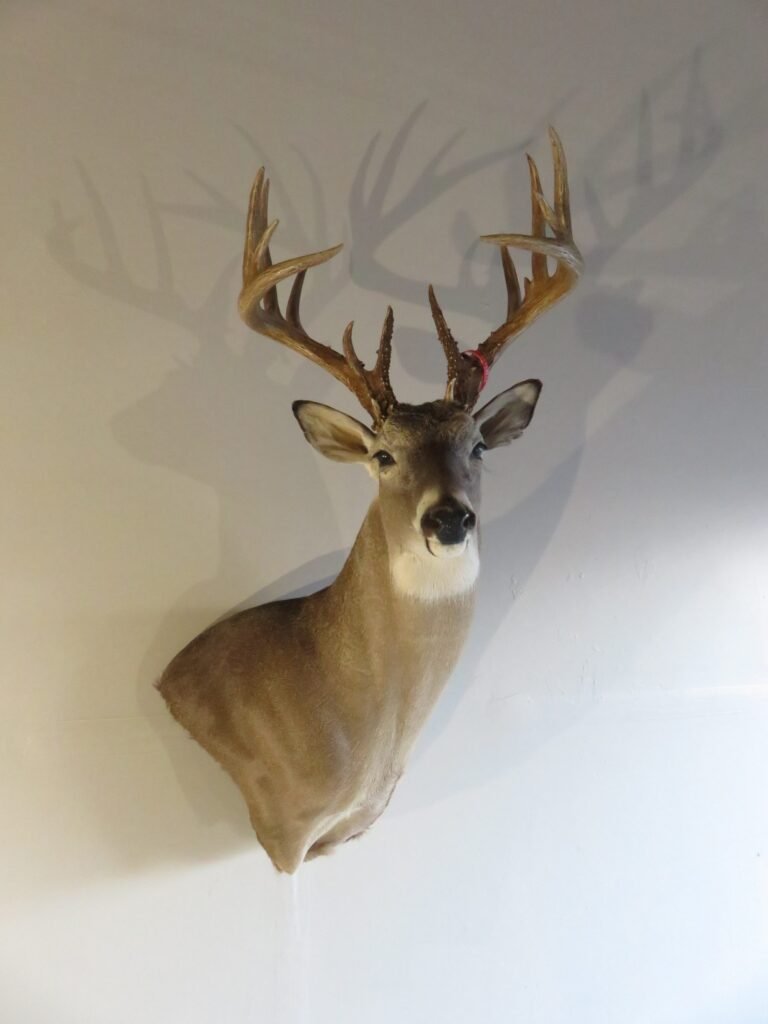
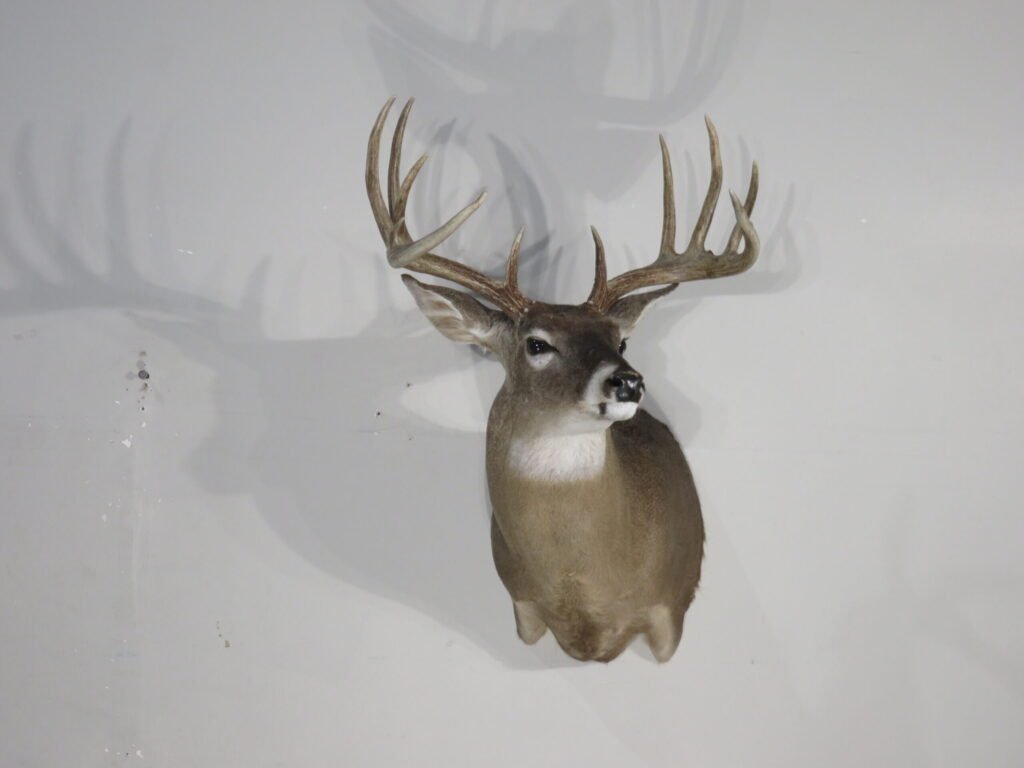
A deer head mount is a real deer’s head, usually including the neck and shoulders, preserved by a taxidermist and mounted for display. The most common form is the shoulder mount, the classic trophy that hangs on a wall showing the head and part of the shoulders.
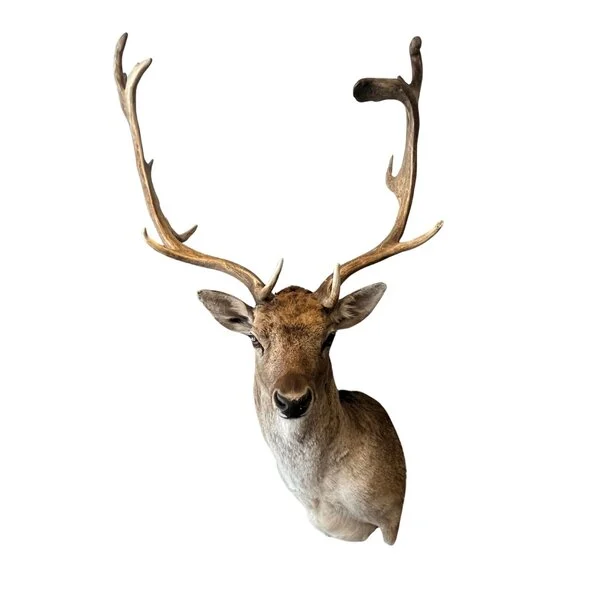
The skin and fur are preserved and fitted over a sculpted form that recreates the deer’s head and neck, with glass eyes set for a lifelike look. A deer head mount can also mean a European mount, the cleaned skull and antlers with no skin, or a wall pedestal, which projects out from the wall. The white-tailed deer is the classic subject, though mule deer, roe, fallow, and other species are all mounted the same way. Deer are the most commonly mounted animal, which is why deer head mounts set the standard for the whole craft.
Real vs. faux deer head mount: how to tell the difference
The single biggest thing to check when buying a deer head mount is whether it is real, because the market is full of faux resin, 3D-printed, and carved-wood copies sold alongside genuine taxidermy. A real mount is a preserved animal; a faux one is a decorative reproduction.
Here is how they compare:
| Feature | Real deer head mount | Faux / replica head |
|---|---|---|
| What it is | Preserved real deer, glass eyes | Resin, 3D print, or carved wood |
| Fur | Real hair, natural variation | Molded texture or fabric |
| Antlers | Real antler (or real on a mount) | Often molded plastic |
| Weight | Heavier, solid | Usually lighter |
| Price | Higher reflects the craft. | Often cheaper |
| Best for | Trophies, genuine collectors | Budget decor, vegan-friendly display |
Products by Category
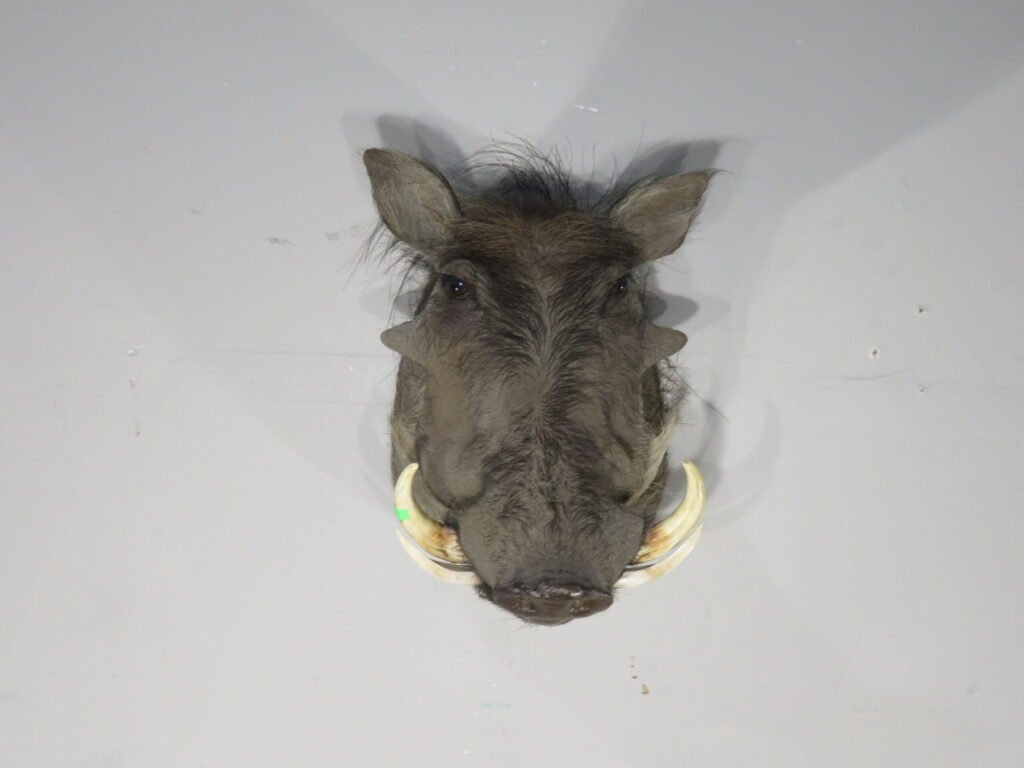
Neither is wrong if described honestly; a faux head is a fine budget or animal-free decor choice, but you should know which you are buying. If a listing avoids the word “real,” shows identical items in bulk, or is priced far below genuine taxidermy, it is likely a reproduction. A real mount shows natural fur variation, has real weight, and comes with an honest description of its origin. Buy from a seller who states plainly whether a piece is real taxidermy or a replica.
Types of deer head mount
There are three main ways to mount a deer head: the shoulder mount, the European (skull) mount, and the wall pedestal. Each gives a different look and suits a different space and budget.
| Type | What it shows | Look. | Cost |
|---|---|---|---|
| Shoulder mount | Head, neck, and shoulders with skin | Classic, lifelike trophy | Moderate to high |
| European mount | Clean skull and antlers, no skin | Minimalist, sculptural | Low |
| Wall pedestal | Head and shoulders projecting out | Dynamic, semi-3D | Higher |
The shoulder mount is the traditional deer trophy, viewed from the front on a wall. The European mount is the clean skull and antlers, affordable and space-saving, covered fully in our European mount guide. The wall pedestal angles the mount outward for a more dramatic presentation, part-way to a full pedestal mount. For every mount format across all animals, see our complete guide to taxidermy mounts.
Deer head mount poses
The pose of a shoulder mount sets its character, and there are four standard stances to choose from. The pose controls where the deer appears to be looking and how much life the mount has.
| Pose | Description | Best for |
|---|---|---|
| Upright | Head high, looking straight ahead | Alert, formal trophy look |
| Semi-upright | Head slightly turned and raised | A natural, balanced all-rounder |
| Semi-sneak | Head lowered a little and turned | Movement and Life, very popular |
| Full sneak | Head low, stalking posture | Dramatic, natural scenes |
The semi-sneak and semi-upright poses are the most popular because they look natural in most rooms. An upright pose suits a big formal trophy, while a full sneak creates a dynamic, wild look. If you are commissioning a mount, your taxidermist will help you pick; if you are buying a finished one, choose the pose that suits your wall and the deer’s antlers.
How much does a deer head mount cost?
A deer head mount’s cost depends on the type, the size, and whether it is real or a reproduction. A European mount is the cheapest option, a shoulder mount is moderate, and a large trophy or pedestal mount costs more.
A European mount can be done at home for very little or bought affordably. A professional shoulder mount reflects the taxidermist’s skill and the materials, and a finished antique or trophy shoulder mount for sale is priced by quality, size of the rack, and condition. Faux resin heads are usually cheaper than genuine taxidermy, which is part of why they are so common. Our guide to taxidermy costs breaks down the ranges in detail.
How to judge the quality of a deer head mount
You judge a deer head mount by the eyes, ears, the seams, the pose, and the grooming. These details separate a fine mount from a poor one, and they are easy to check once you know what to look for.
Look at the eyes first: they should be symmetrical, naturally set, and lifelike, not glassy or crooked. Check the ears for natural shape and no cracking or shrinkage. Inspect the seams where the skin was sewn, which should be invisible on good work. Assess the pose for a natural, balanced posture. And look at the grooming: the fur should be clean, well-directed, and free of bald patches or pest damage. On an older mount, watch for signs of insect damage, cracking around the nose and eyes, and fading from sun exposure. Always ask for clear photographs of the actual mount before buying.
How to display a deer head mount
You display a deer head mount by hanging it on a wall stud at or slightly above eye level, using a fixing rated for its weight. A large mount with a heavy rack needs a solid anchor, not just a drywall screw.
Hang the mount where it can be seen from the front, since a shoulder mount is a front-facing piece, and where it is safe from knocks and out of direct sunlight, which fades fur over time. Keep it away from radiators and humidity, which dry and damage the skin. Traditional trophy walls group several mounts together; a single mount works as a statement over a fireplace or in an entryway. Our guide to displaying taxidermy covers arrangement, and our care guide keeps it in good condition.
Whitetail and other deer species
The white-tailed deer is the most popular deer head mount by far, but mule deer, roe, fallow, sika, and red deer are all mounted the same way. The species affects the size, the antlers, and the character of the mount.
The whitetail is the classic North American trophy, prized for its antler racks and the reason “whitetail deer head mount” is such a common search. Mule deer are larger with distinctive forked antlers. Roe and fallow deer are smaller European species, common in antique mounts. Red deer and elk produce large, dramatic mounts that suit big walls. The mounting process and the pose options are the same across species; what changes is the scale and the shape of the antlers. When buying, the species, the antler size (often given as a point count or an SCI score for trophies), and the condition together set the value.
Antique and vintage deer head mounts
Antique and vintage deer head mounts are a collecting field of their own, valued for their age, patina, and craftsmanship. A genuine period mount can carry character and value beyond a modern piece.
Older mounts often come from European sporting estates, especially roe and red deer, and classic North American whitetail trophies. Value depends on age, condition, the antlers, and the skill of the original taxidermist. Watch the condition closely on antique mounts: check for insect damage, cracking around the nose and eyes, moth damage to the fur, and fading from decades of light. A well-preserved antique mount with honest provenance is a genuine collector’s piece. Be aware that some carved-wood “Black Forest” deer heads sold as antiques are decorative woodcarvings, not taxidermy, another reason to confirm exactly what a piece is. Our cabinet of curiosities guide explores antique natural-history collecting.
Where to buy a real deer head mount
You buy a genuine deer head mount from a specialist dealer who describes each piece honestly and confirms it is real taxidermy, not a reproduction. This is the safest way to avoid the faux and carved-wood pieces that fill the marketplaces.
When buying, choose a seller who states plainly whether a mount is real or a replica, shows clear photographs of the actual piece, describes its age and condition, and confirms it can be lawfully shipped to your location. Antique and vintage deer mounts have their own charm and can carry collector value, while a modern mount offers a fresh, clean piece. Browse our taxidermy mounts for sale for genuine deer head mounts, each documented, ethically sourced, and shipped worldwide in secure, insured packaging. Questions about a specimen? Message us on WhatsApp before you buy.
Frequently asked questions
What is a deer head mount?
A deer head mount is a real deer’s head, usually with the neck and shoulders, preserved by a taxidermist and mounted for display. The most common form is the shoulder mount, the classic wall-hung trophy. It can also mean a European skull mount or a wall pedestal.
How can I tell if a deer head mount is real?
A real mount has real fur with natural variation, real weight, real antlers, and an honest description of its origin. Faux heads are resin, 3D-printed, or carved wood, often lighter, cheaper, and sold in identical bulk. If a listing avoids the word “real” or looks mass-produced, it is likely a reproduction.
How much does a deer head mount cost?
It depends on the type and whether it is real. A European mount is the cheapest, a shoulder mount is moderate, and a large trophy or pedestal mount costs more. Faux resin heads are usually cheaper than genuine taxidermy. Our taxidermy cost guide breaks down the ranges.
What is the best pose for a deer head mount?
The semi-sneak and semi-upright poses are the most popular because they look natural in most rooms. An upright pose suits a big formal trophy, and a full sneak creates a dramatic, natural look.
Is it legal to buy a mounted deer head?
Deer mounts are legal to buy and own in most places, since deer are common game and not protected. Always buy from a seller who confirms the piece is legally sourced and can be lawfully shipped to your location.
Should I choose a shoulder mount or a European mount?
A shoulder mount is the classic lifelike trophy but larger and more expensive. A European mount is the clean skull and antlers, affordable and space-saving. Choose the shoulder mount for the traditional look, the European mount to save space and money.
Find your deer head mount.
Now you know the types of deer head mount, how to tell a real one from a faux copy, the poses, what they cost, and how to judge quality. The key to buying well is simple: choose a genuine, well-made mount from a specialist who describes it honestly.
Ready to browse? See our taxidermy mounts for sale for genuine deer head mounts, all documented, ethically sourced, and shipped worldwide in secure, insured packaging. Prefer the clean skull look? Read our European mount guide. Want a bolder display? See our pedestal mount guide. Questions? Message us on WhatsApp or email. We are happy to help.