
Rhino Skull: Species, Anatomy and Value (2026)
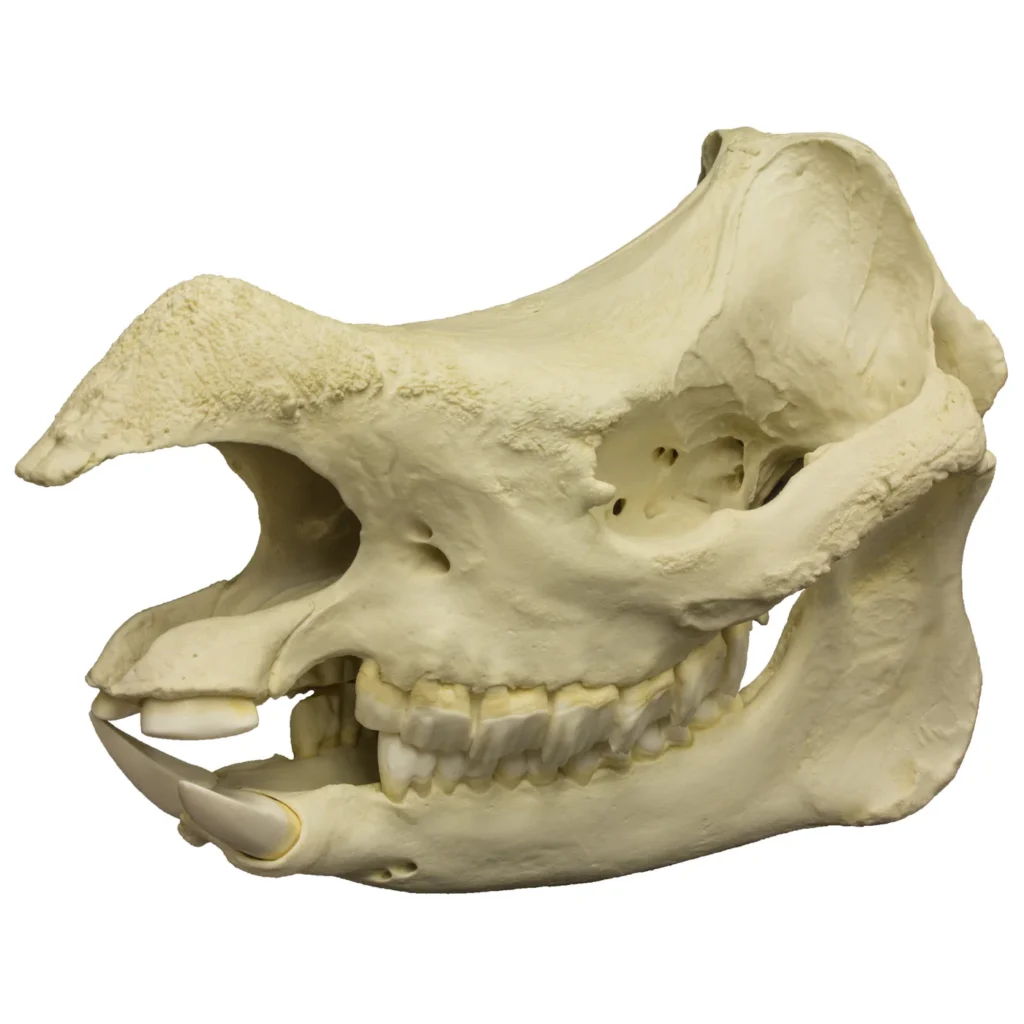
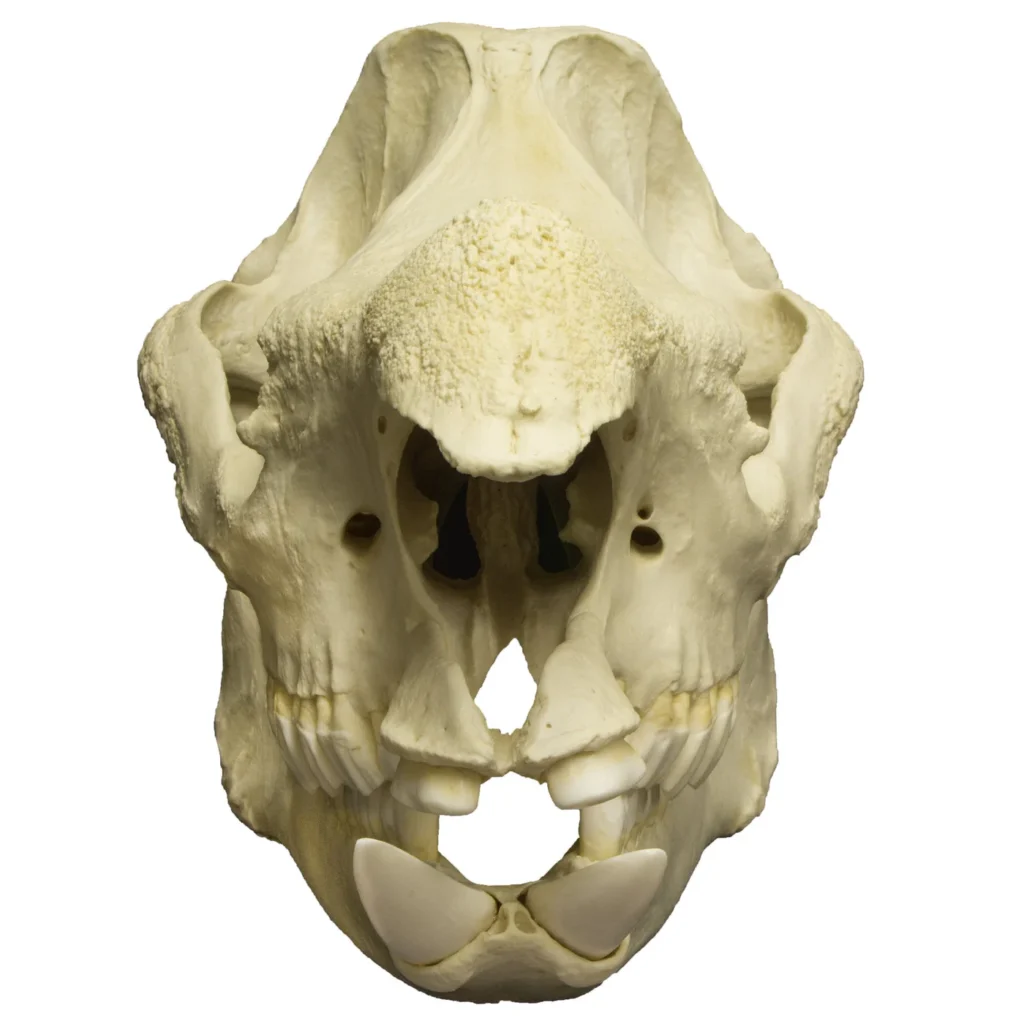
A rhinoceros skull is heavy, elongated, and, surprisingly, hornless: the rhinoceros horn is made of keratin and leaves no bony core, so a real skull shows only a roughened boss where the horn once sat. That single fact catches most people out and makes the rhino skull a great teaching piece. Add the animal’s conservation story and its sheer prehistoric bulk, and a rhino skull becomes one of the most compelling specimens a natural-history collector can own.
Why a rhino skull has no horn
Unlike antlers or ossicones, a rhino’s horn is not bone. It is compacted keratin, the same protein as hair and nails, growing from a roughened area on the nasal bones. On a cleaned skull this shows as a raised, pitted platform rather than a horn, which is why authentic rhino skulls never include a bony horn. For background on the rhinoceros and its five living species, the differences in skull shape track closely with diet and habitat.
Telling the species apart
Skull shape varies by species. Grazing species such as the white rhino have a longer, broader skull suited to feeding at ground level, while browsing species such as the black or Javan rhino have a more compact skull and a prehensile lip structure. The Javan rhinoceros, one of the rarest large mammals on Earth, is a single-horned species whose skull is especially sought after by collectors.
Real vs replica rhino skull
Because every rhino species is protected and several are critically endangered, a replica is the responsible choice. A museum-grade cast lets you display the distinctive skull structure with no impact on wild populations and no CITES complications. It is also far more affordable than genuine material.
Replica Javan Rhinoceros Skull: €1,100.00 A faithful cast of one of the world’s rarest mammals, ideal for display and teaching. View specimen →
This piece belongs to our wider range of prehistoric and animal skulls, where conservation-friendly replicas let you build a serious collection responsibly.
How much is a rhino skull worth?
Genuine rhino skulls are heavily restricted because of the animal’s protected status, so replicas dominate the legitimate market. A quality replica Javan rhino skull starts around €1,100. Avoid any seller offering real rhino material with a horn attached, as that is a serious legal and ethical red flag.
Frequently asked questions
Does a rhino skull have a horn?
No. The horn is keratin, not bone, so a cleaned skull shows only a roughened boss on the nasal bones where the horn grew. Authentic skulls never come with a bony horn.
Is it legal to own a rhino skull?
Real rhino material is heavily restricted under wildlife protection law. A replica is legal to own and ship in most places and is the responsible, conservation-friendly choice.
How can you tell rhino species apart by the skull?
Mainly by shape: grazing species like the white rhino have longer, broader skulls, while browsing species like the black and Javan rhinos have more compact skulls suited to feeding on leaves.
How much does a replica rhino skull cost?
A museum-grade replica Javan rhino skull starts around €1,100, far below the cost and legal risk of genuine material.
Collect responsibly. Browse conservation-friendly replica skulls and the wider natural-history range with secure worldwide shipping. Explore the collection →
Contact The bones Vault for inquiries